


Rail Gauge Rod
GNEE RAIL is a professional manufacturer and global supplier of Rail Gauge Rods, providing effective track gauge control solutions for railway, mining, and industrial rail systems. With solid expertise in railway fasteners and track components, GNEE RAIL supplies gauge rods designed to maintain correct rail spacing and enhance track stability in both permanent and temporary rail installations.
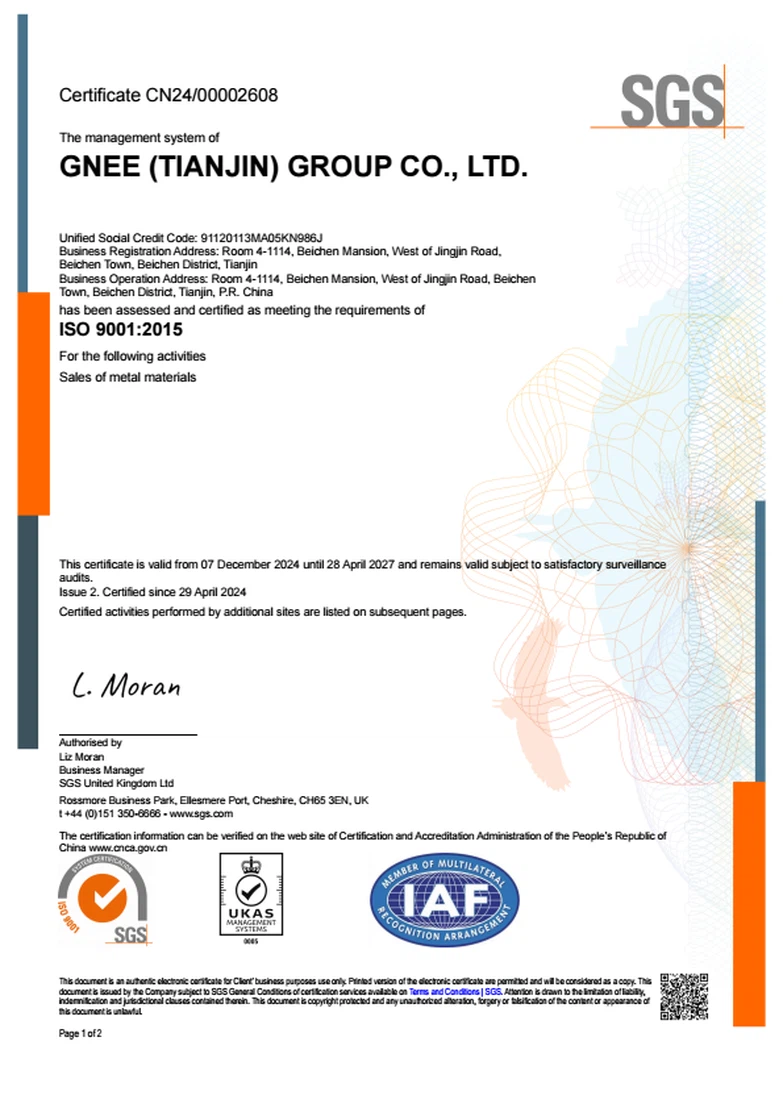
GNEE RAIL Rail Gauge Rods are manufactured from high-quality carbon steel or alloy steel, processed through precision cutting, threading, and forming operations. Surface treatments such as hot-dip galvanizing or anti-corrosion coating are applied to ensure long-term durability under harsh outdoor environments. Each gauge rod is produced in accordance with strict dimensional tolerances to guarantee accurate gauge control and reliable performance under operational loads. All manufacturing activities are managed under an ISO 9001 certified quality management system, with comprehensive inspections covering material quality, mechanical strength, and coating thickness.
Designed for compatibility with different rail profiles and fastening systems, GNEE RAIL gauge rods are widely used in curves, turnouts, bridges, and sections with high lateral forces. Customized lengths, thread types, end fittings, and coating specifications can be provided to meet various international standards and project requirements.
-
![Railway Track Gauge Rods]() Railway Track Gauge RodsRail gauge rod is a kind of steel member that is used to connect two rails together at the bottom of a rail gauge rod so as to improve the lateral stability of rails and improve the gauge-keeping...read more
Railway Track Gauge RodsRail gauge rod is a kind of steel member that is used to connect two rails together at the bottom of a rail gauge rod so as to improve the lateral stability of rails and improve the gauge-keeping...read more -
![Railroad Track Gauge Bars]() Railroad Track Gauge BarsRailroad track gauge bars or rail gauge bars are usually used to prevent the rails from stretching or tilting to stabilize the rails within a certain distance.read more
Railroad Track Gauge BarsRailroad track gauge bars or rail gauge bars are usually used to prevent the rails from stretching or tilting to stabilize the rails within a certain distance.read more -
![Insulated And Non-Insulated Types Rail Gauge Rod]() Insulated And Non-Insulated Types Rail Gauge RodRail gauge rod, also named gauge tie rod or gauge tie bar, is a member bar which is specially designed to joint two steel rails at the rail bottom to protect the rails from tilting and keep the...read more
Insulated And Non-Insulated Types Rail Gauge RodRail gauge rod, also named gauge tie rod or gauge tie bar, is a member bar which is specially designed to joint two steel rails at the rail bottom to protect the rails from tilting and keep the...read more -
![Rail Gauge Tie Rod For Railway Fastening]() Rail Gauge Tie Rod For Railway FasteningRailway gauge rods (also known as gauge tie rods) are rods connecting the bottoms of two rails on a railway track. Their main function is to maintain the track gauge, improve the lateral stability...read more
Rail Gauge Tie Rod For Railway FasteningRailway gauge rods (also known as gauge tie rods) are rods connecting the bottoms of two rails on a railway track. Their main function is to maintain the track gauge, improve the lateral stability...read more -
![Rail Gauge Tie Rods In Railway]() Rail Gauge Tie Rods In RailwayThe gauge tie rod is an important accessory of the railway line. It uses a rod to connect two rails at the bottom of the rail to improve the lateral stability of the rail and improve the ability...read more
Rail Gauge Tie Rods In RailwayThe gauge tie rod is an important accessory of the railway line. It uses a rod to connect two rails at the bottom of the rail to improve the lateral stability of the rail and improve the ability...read more -
![Rail Gauge Rod in Railway Fastening]() Rail Gauge Rod in Railway FasteningRail gauge rod is in orbit with a bar connects two rails, in order to improve the lateral stability of the rail, improve the ability to keep track the tracks.Some lines have track circuit, the...read more
Rail Gauge Rod in Railway FasteningRail gauge rod is in orbit with a bar connects two rails, in order to improve the lateral stability of the rail, improve the ability to keep track the tracks.Some lines have track circuit, the...read more -
![Track Gauge Rods]() Track Gauge RodsGauge rod is a kind of track material used to keep track in gauge by improving the lateral stability of the rail. It is a very important reinforcement accessory for railroad tracks. Gauge rods are...read more
Track Gauge RodsGauge rod is a kind of track material used to keep track in gauge by improving the lateral stability of the rail. It is a very important reinforcement accessory for railroad tracks. Gauge rods are...read more -
![Rail Gauge Tie Rod -Railroad Fasteners]() Rail Gauge Tie Rod -Railroad FastenersRail gauge rod, also known as gauge tie rod or gauge tie bar, is a steel connecting rod installed between two rails. It is mainly used to improve the lateral stability of the railway track and...read more
Rail Gauge Tie Rod -Railroad FastenersRail gauge rod, also known as gauge tie rod or gauge tie bar, is a steel connecting rod installed between two rails. It is mainly used to improve the lateral stability of the railway track and...read more -
![Single & Double Ended Rail Gauge Control Rods]() Single & Double Ended Rail Gauge Control RodsRail gauge rod is also called gauge tie rod or gauge tie bar. As its name, rail gauge rod is a member bar that is specially designed to joint two steel rails at the rail bottom to protect the...read more
Single & Double Ended Rail Gauge Control RodsRail gauge rod is also called gauge tie rod or gauge tie bar. As its name, rail gauge rod is a member bar that is specially designed to joint two steel rails at the rail bottom to protect the...read more -
![Single & Double Ended Gauge Control Rods]() Single & Double Ended Gauge Control RodsGnee Rail makes gauge rods in single end and double end styles with both offered in insulated and non-insulated versions. Our insulated gauge rods are made with GPO-3 fiberglass based insulation...read more
Single & Double Ended Gauge Control RodsGnee Rail makes gauge rods in single end and double end styles with both offered in insulated and non-insulated versions. Our insulated gauge rods are made with GPO-3 fiberglass based insulation...read more -
![Rail Gauge Rods]() Rail Gauge RodsRail gauge rod, also named gauge tie rod or gauge tie bar, is a member bar which is specially designed to joint two steel rails at the rail bottom to protect the rails from tilting and keep the...read more
Rail Gauge RodsRail gauge rod, also named gauge tie rod or gauge tie bar, is a member bar which is specially designed to joint two steel rails at the rail bottom to protect the rails from tilting and keep the...read more -
![Rail Gauge Rods Used for Railroad Lines]() Rail Gauge Rods Used for Railroad LinesRail gauge rod is a kind of steel member that is used to connect two rails together at the bottom of a rail gauge rod so as to improve the lateral stability of rails and improve the gauge-keeping...read more
Rail Gauge Rods Used for Railroad LinesRail gauge rod is a kind of steel member that is used to connect two rails together at the bottom of a rail gauge rod so as to improve the lateral stability of rails and improve the gauge-keeping...read more


Why choose us
One-Stop Service
We offer a full range of services to meet all your rail fastening system needs, from design and manufacturing to installation and maintenance.
Commitment to Quality
Quality is our top priority, and we adhere to stringent quality control measures throughout the production process to deliver products that meet or exceed industry standards.
Market-Focused Solutions
We stay informed about market trends and developments to provide innovative solutions that address current challenges and anticipate future needs.
Professional Technical Team
Our team of experts brings years of experience and specialized knowledge to ensure that your rail fastening system is designed to meet the highest standards of quality and performance.
Customer-Centric Approach
We prioritize customer satisfaction and strive to understand and fulfill our clients' unique requirements. Our customer-centric approach ensures that your needs are met promptly and effectively.
Sales Market
GNEE RAIL maintains an established global supply footprint, delivering engineered track components and fastening assemblies to key transportation networks, industrial zones, and maritime ports across multiple continents.
Rail Gauge Rod
A rail gauge rod is used to connect two rails at the base to enhance lateral stability and help the track maintain the correct gauge. In some railway lines, track circuits are present, and insulated components are placed between the gauge rods to ensure proper electrical isolation.
|
Weight |
16kg |
|
Diameter |
32mm |
|
Length |
1750mm |
|
Adjustable parts |
Head |
|
Suitable rail model |
38 OR 43 |
|
No. |
Type |
Model Number |
Per Weight(kg) |
|
1 |
Ordinary gauge tie rod |
M32*1810 |
15.2 |
|
2 |
Ordinary gauge tie rod |
M36*1810 |
18.7 |
|
3 |
Insulated gauge rod in the middle |
M32*1810 |
16.6 |
|
4 |
Insulated gauge rod in the middle |
M36*1810 |
21 |
The rail gauge rod features a reasonable design, simple structure, reliable performance, convenient assembly, compact size, and saves both labor and materials. Compared with traditional gauge rods, it reduces raw material usage and processing costs.


A rail gauge rod is mainly composed of track clamps, fasteners, and two rod bodies. The ends of the rod bodies are connected by a connector, which includes an insulation sleeve. Around the insulation sleeve is a jacket. Both the rod ends and the jacket contain interlocking structures—either threaded connections or at least one slotted connection. The jacket may be either an integrated or split type. Except for the connecting structure, the outer surface of the rod and the inner and outer surfaces of the jacket are smooth and step-free.
Advantages of Rail Gauge Rod
Precise Track Gauge Adjustment
With a high-precision design, our rail gauge rods ensure stable track gauge under various conditions, effectively reducing the risk of track deformation.
Exceptional Durability
Manufactured from high-quality steel and treated with anti-corrosion technology, our products are both wear-resistant and impact-resistant. They withstand extreme weather and long-term use, significantly extending service life.
Easy Installation and Maintenance
The optimized structure allows for quick and easy installation, reducing labor time and minimizing maintenance frequency—ultimately lowering long-term operational costs.
Customized Solutions
We offer customized rail gauge rods tailored to your specific requirements, meeting the unique needs of different railway lines to ensure maximum adaptability and safety.
Structure
The rail gauge rod is primarily composed of an iron clamp, fasteners, and two rod bodies. The ends of the two rod bodies are connected by a connector, which includes an insulation sleeve. Surrounding the insulation sleeve is a jacket. Both the ends of the rod bodies and the holes in the jacket are designed with mutual connection structures, which may be threaded or feature at least one slotted section. The jacket can be either a one-piece (integral) or a split design. Apart from the connecting structure, the outer surface of the rod and the inner and outer surfaces of the jacket are smooth and step-free.
The rail gauge rod is an essential component of the railway line. If a section of track lacks sufficient gauge rods, it can lead to gauge deviation. When a train passes over such a section, it may result in minor derailments or, in severe cases, train overturning—with potentially disastrous consequences.

The insulated gauge tie rod is a specialized tool used for railway drilling and track maintenance. It offers quick installation and removal, ensuring safety during train operations. These rods can be processed using high-speed alloy steel hollow drills, offering short drilling time, high precision, and long service life. The manufacturing equipment features a spindle cooling system with a high-pressure coolant reservoir to enhance performance.
Based on different gauge widths, rail gauge rods can be classified into types for 762 mm, 900 mm, and 1450 mm gauge tracks, with rod diameters of 20, 22, 32, and 36 mm. Custom-shaped gauge rods are also available upon request. These rods are commonly used in switch areas, where their main role is to minimize longitudinal rail displacement and maintain track gauge. The rod connects the two rails, increasing lateral stability and gauge retention.
Common rail gauge rod models used in China include:
18×870, 20×870, 22×880, 22×1050, 24×1050, 24×1250, 28×1810, 28×1850, and others.
Function of Rail Gauge Rods
Rail gauge rods play a crucial role in maintaining the integrity of railway tracks. If gauge rods are missing in critical areas, track gauge deviation may occur, increasing the risk of train derailment—which could lead to serious consequences.
To prevent such incidents, gauge rods are used to secure the rails and maintain the correct gauge. They work by applying equal and opposite axial forces along the rod shaft, resulting in axial deformation (either elongation or compression). This force distribution classifies the rod as either a tension rod or a compression rod.
At each rod joint, special-shaped reinforced steel bars may be installed on the center plate to prevent expansion of the rail tie plate and reduce the longitudinal gap at rail joints. Anti-rust treatment is recommended for the central 10 cm section of the rod to ensure durability. The rod size and spacing should be selected based on the required gauge width, and the joint or edge spacing is generally between 25–35 cm.
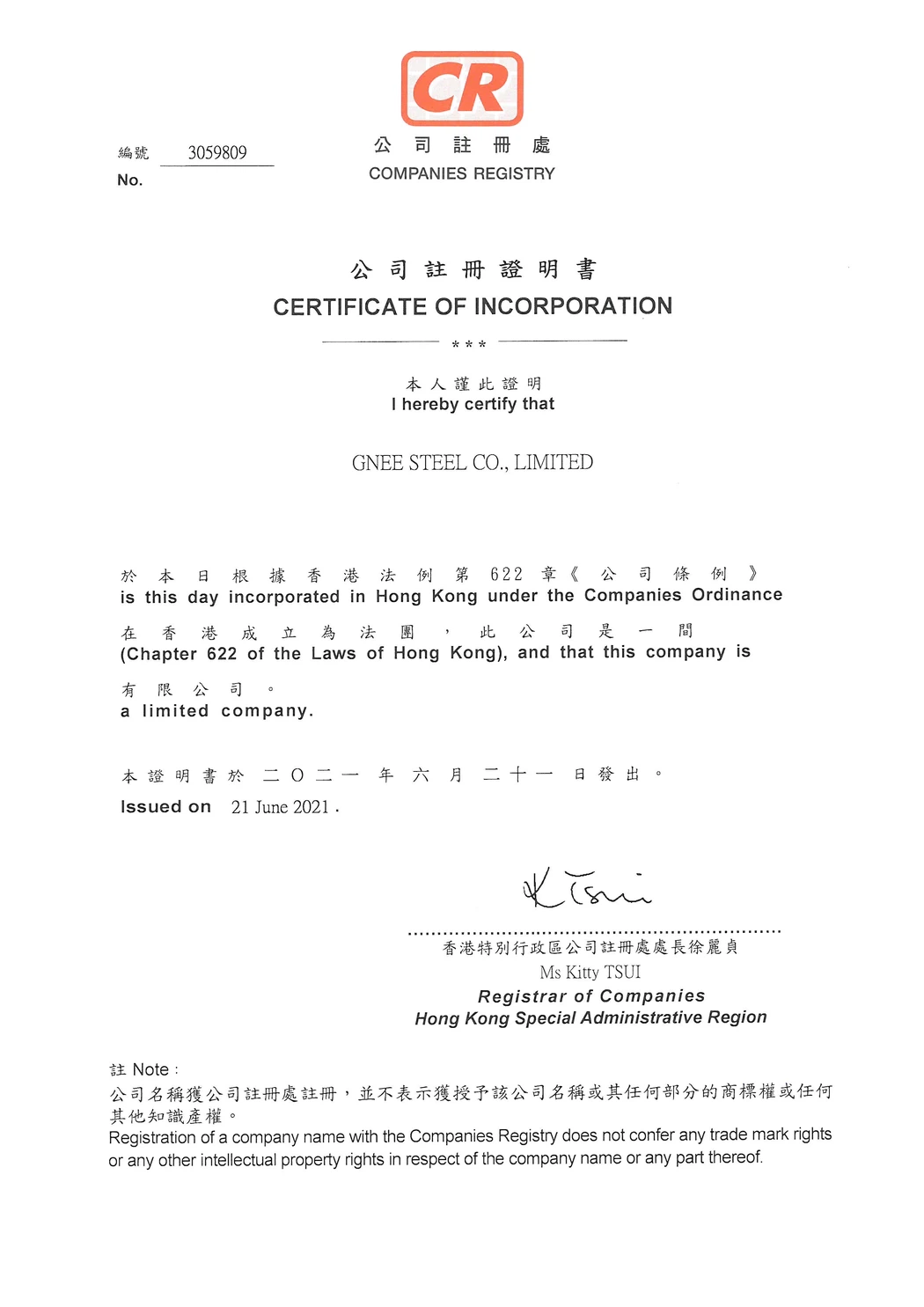
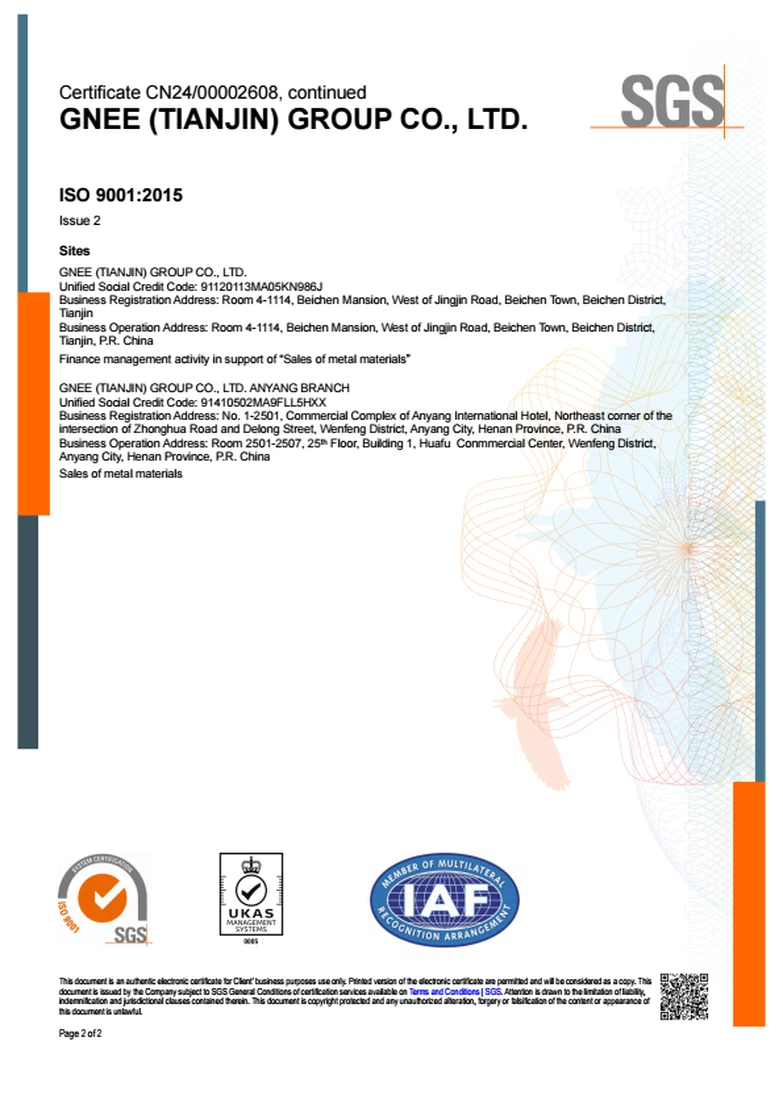
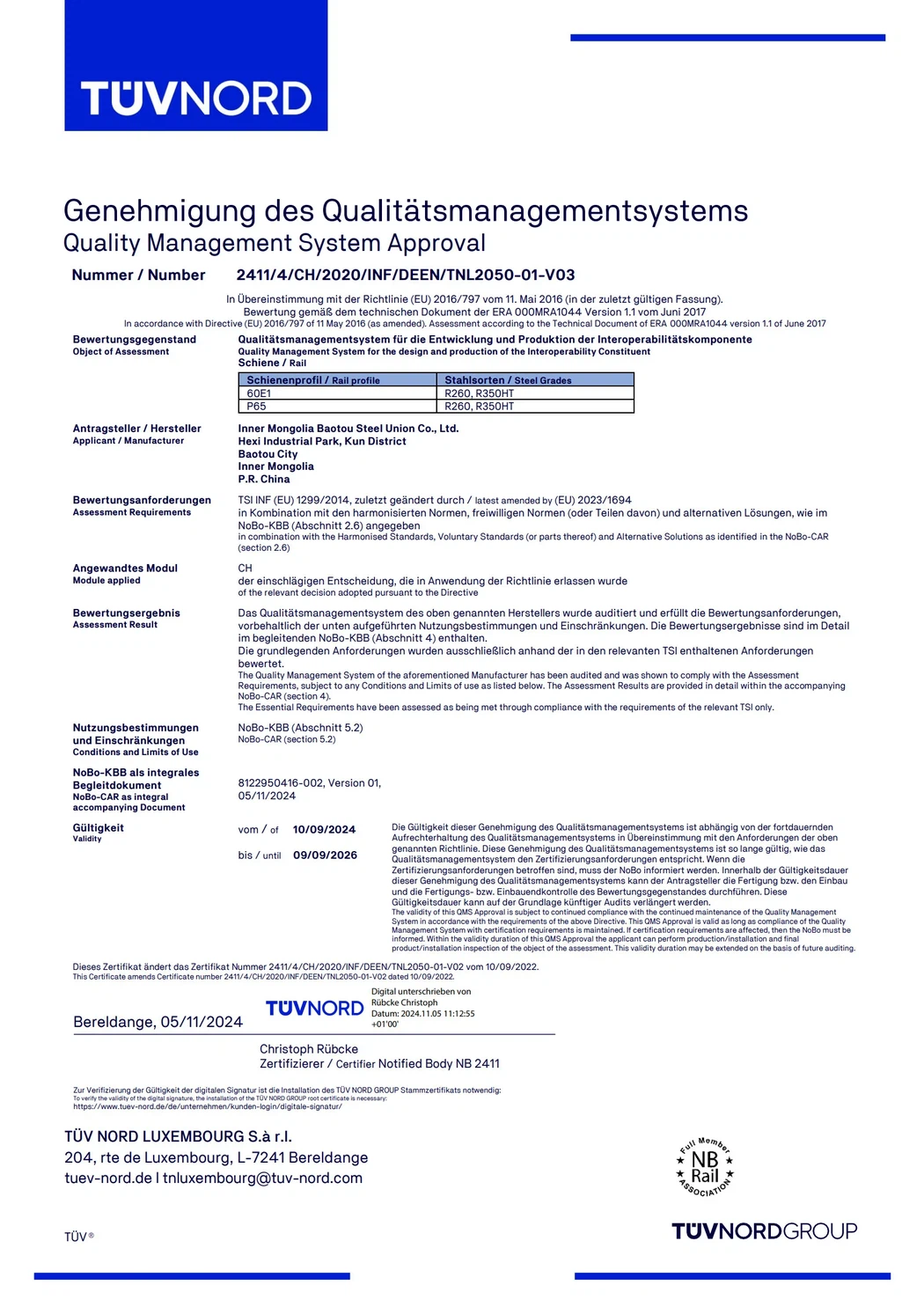
Our Certification
FAQ
HENAN GNEE RAIL CO.,LTD. is one of the most professional rail gauge rod manufacturers and suppliers in China, featured by quality products and low price. Please rest assured to buy cheap rail gauge rod in stock here from our factory. Contact us for customized service.
Single Ended Gauge Control Rods, Ordinary Rail Gauge Rod, Insulated Rail Gauge Rod