▲Rail Bolt Manufacturing Process▲
▲ Material selection
Rail bolts are typically made from high-quality steel or other alloys chosen for their strength, durability, and resistance to corrosion. The material is sourced from reputable suppliers and undergoes quality testing to ensure it meets the required specifications.
▲ Forming the bolt blanks
The manufacturing process begins by forming the steel into bolt blanks. This can be done through hot forging or cold heading processes, where the steel is shaped into the desired cylindrical form with a head at one end and a threaded portion at the other.
▲ Thread rolling
The threaded portion of the bolt blank is created using a thread rolling process. This involves pressing the bolt blank between two dies with thread profiles that form the threads into the surface of the blank through pressure and displacement, creating precise and uniform threads.
▲ Heat treatment
Once the bolt blanks are formed and threaded, they undergo heat treatment processes to improve their mechanical properties such as strength, hardness, and toughness. This typically involves heating the bolts to high temperatures and then quenching them rapidly to achieve the desired metallurgical structure, followed by tempering to relieve internal stresses and increase toughness.
▲ Surface finishing
After heat treatment, the rail bolts may undergo surface finishing processes to remove any surface imperfections, burrs, or sharp edges. This can include grinding, polishing, or shot blasting to achieve a smooth and uniform surface finish.
▲ Coating or plating
To enhance corrosion resistance and provide additional protection against environmental factors, rail bolts may be coated or plated with a layer of zinc, cadmium, or other corrosion-resistant materials. This coating helps extend the lifespan of the bolts and maintain their performance in harsh conditions.
▲ Quality control
Throughout the manufacturing process, quality control checks are performed to ensure that the rail bolts meet the required specifications for dimensions, mechanical properties, surface finish, and coating thickness. This may involve dimensional inspections, mechanical testing, and corrosion resistance testing.
▲Types Of Rail Bolt▲
▲ Button Head Oval Neck Track Bolt
These bolts have a button head with an oval neck, which allows for easy insertion and removal. They are commonly used in North America.
▲ Diamond Neck Track Bolt
These bolts have a diamond-shaped neck, which provides better resistance to loosening due to vibration. They are commonly used in Europe.
▲ Fishtail Bolt
Fishtail bolts have a unique head shape resembling a fishtail. They are commonly used in areas with heavy traffic or high-speed rail lines.
▲ Hook Bolt
Hook bolts have a hooked end that provides extra grip when fastening the rail to the base plate. They are commonly used in areas with high lateral forces.
▲ Anchor Bolt
Anchor bolts are used to secure rail to concrete surfaces. They have an embedded end that is fixed into the concrete, providing stability.
▲ Rail Joint Bolt
These bolts are specifically designed for joining rails together at rail joints. They are often larger and stronger than regular rail bolts to withstand the forces at the joint.
▲ Square Head Bolt
Square head bolts have a square-shaped head, which allows for easy tightening with a wrench. They are commonly used in older railway systems.
▲ Tension Control Bolt
These bolts have a unique design that ensures proper tensioning during installation, reducing the risk of over or under tightening.
▲ Clipped Head Bolt
Clipped head bolts have a flat, clipped head that prevents them from rotating during installation, making them easier to install.

▲Rail Bolt Maintenance▲
▲ Regular Inspection
Inspect rail bolts regularly to check for signs of wear, corrosion, or damage. Visual inspections should be conducted routinely along the rail track to identify any issues.
▲ Tightening
Ensure that rail bolts are tightened to the appropriate torque specifications. Loose bolts can lead to rail movement and misalignment, which can compromise safety and operational efficiency.
▲ Replacement
Replace worn, damaged, or corroded rail bolts promptly. This prevents further deterioration and ensures the integrity of the rail fastening system.
▲ Corrosion Protection
Apply appropriate corrosion protection measures to rail bolts, especially in areas exposed to harsh environmental conditions such as saltwater or industrial pollution. This may include using corrosion-resistant coatings or materials.
▲ Alignment
Check the alignment of rail bolts to ensure that they are properly seated and aligned with the rail and other fastening components. Misaligned bolts can cause stress concentrations and premature wear.
▲ Lubrication
Apply lubricants to rail bolts and fastening components to reduce friction and wear. Lubrication also helps prevent corrosion and facilitates easier bolt tightening during maintenance activities.

▲Rail Bolt Application▲
▲ Rail Joint Connection
Rail bolts are utilized to connect rail segments together, typically in conjunction with rail joints (fishplates or splice bars), forming a continuous railway track. These bolts ensure proper alignment and fixation of rails at rail joints, preventing loosening and shifting.
▲ Rail Fixation
Rail bolts are employed to fasten rails to rail baseplates, sleepers, or concrete ties. They secure the rails in place, resisting vibrations and impacts generated by passing trains.
▲ Turnout Connection
Rail bolts are utilized in railway turnouts to connect turnout components, such as rails and switch blades, ensuring the reliability and normal operation of the turnout.
▲ Maintenance and Upkeep
Rail bolts are frequently used in railway maintenance and upkeep tasks. Inspecting, tightening, and replacing rail bolts are critical steps in ensuring the safety and durability of railway track systems.
▲ High-Speed and Heavy-Duty Railways
In high-speed and heavy-duty railway systems, rail bolts face stricter requirements as they need to withstand higher dynamic loads and vibrations. The application of rail bolts in these systems demands higher durability and reliability.


▲Our Factory▲
GNEE RAILWAY is a professional manufacturer and global supplier of rail bolts, providing critical fastening solutions for railway track systems, turnouts, and rail joints. With extensive experience in railway fasteners production, GNEE RAILWAY supplies a wide range of rail bolts designed to ensure secure rail connections and long-term track stability under heavy axle loads and dynamic operating conditions.
GNEE RAILWAY rail bolts are manufactured from high-quality carbon steel or alloy steel using controlled forging, machining, and thread rolling processes. Heat treatment is applied to achieve required mechanical properties such as tensile strength, yield strength, and fatigue resistance. Surface treatments including plain finish, black oxide, zinc plating, or hot-dip galvanizing are available to enhance corrosion resistance in different environments. All products are manufactured under an ISO 9001 certified quality management system, with strict inspection of raw materials, dimensional accuracy, and mechanical performance.
The product range covers various types of rail bolts, including fish bolts, track bolts, joint bolts, and customized bolts compatible with different rail sections and fastening systems. GNEE RAILWAY rail bolts are produced in accordance with international standards such as AREMA, BS, DIN, UIC, and GB, supporting railway construction, maintenance, and rehabilitation projects worldwide.
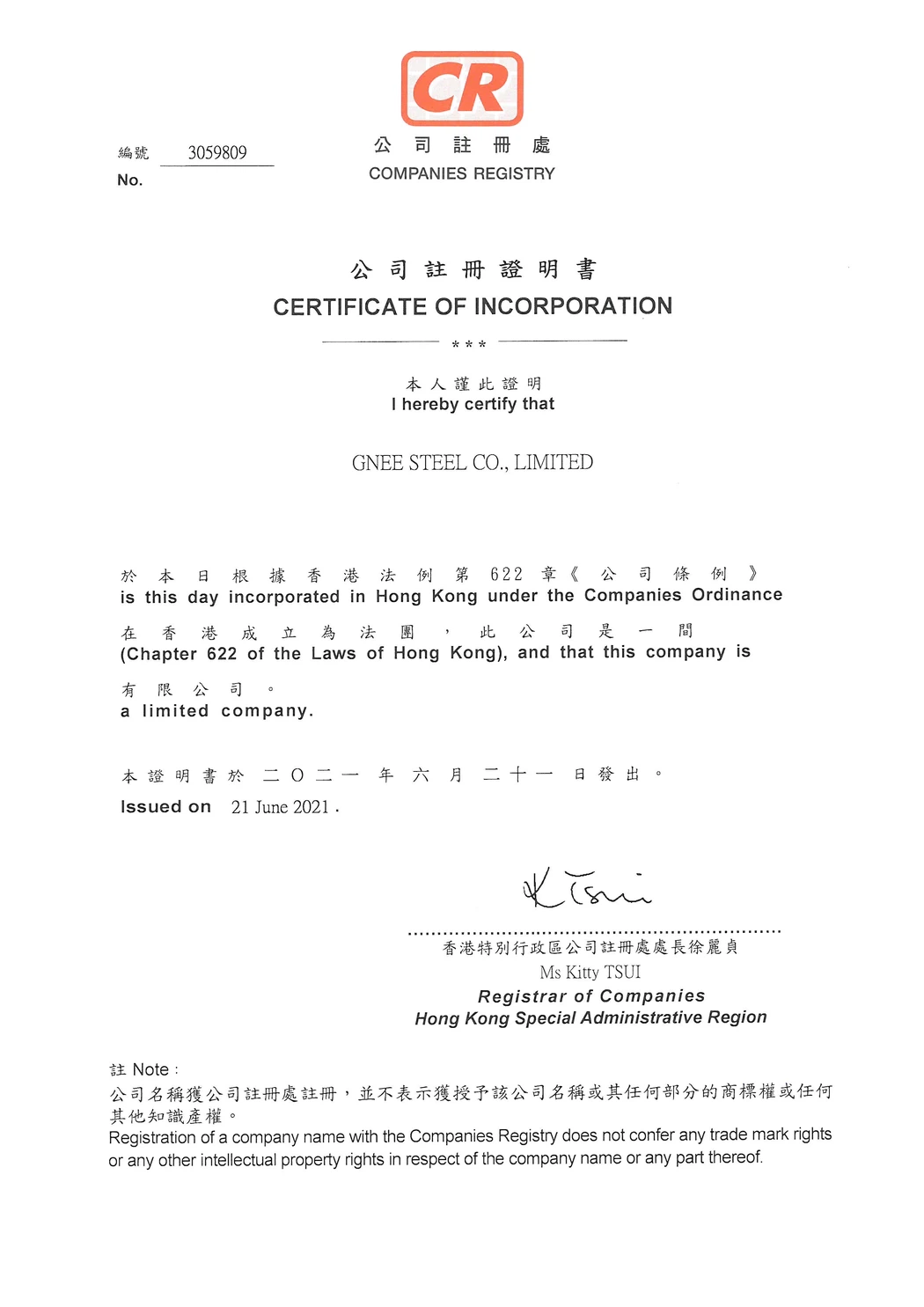
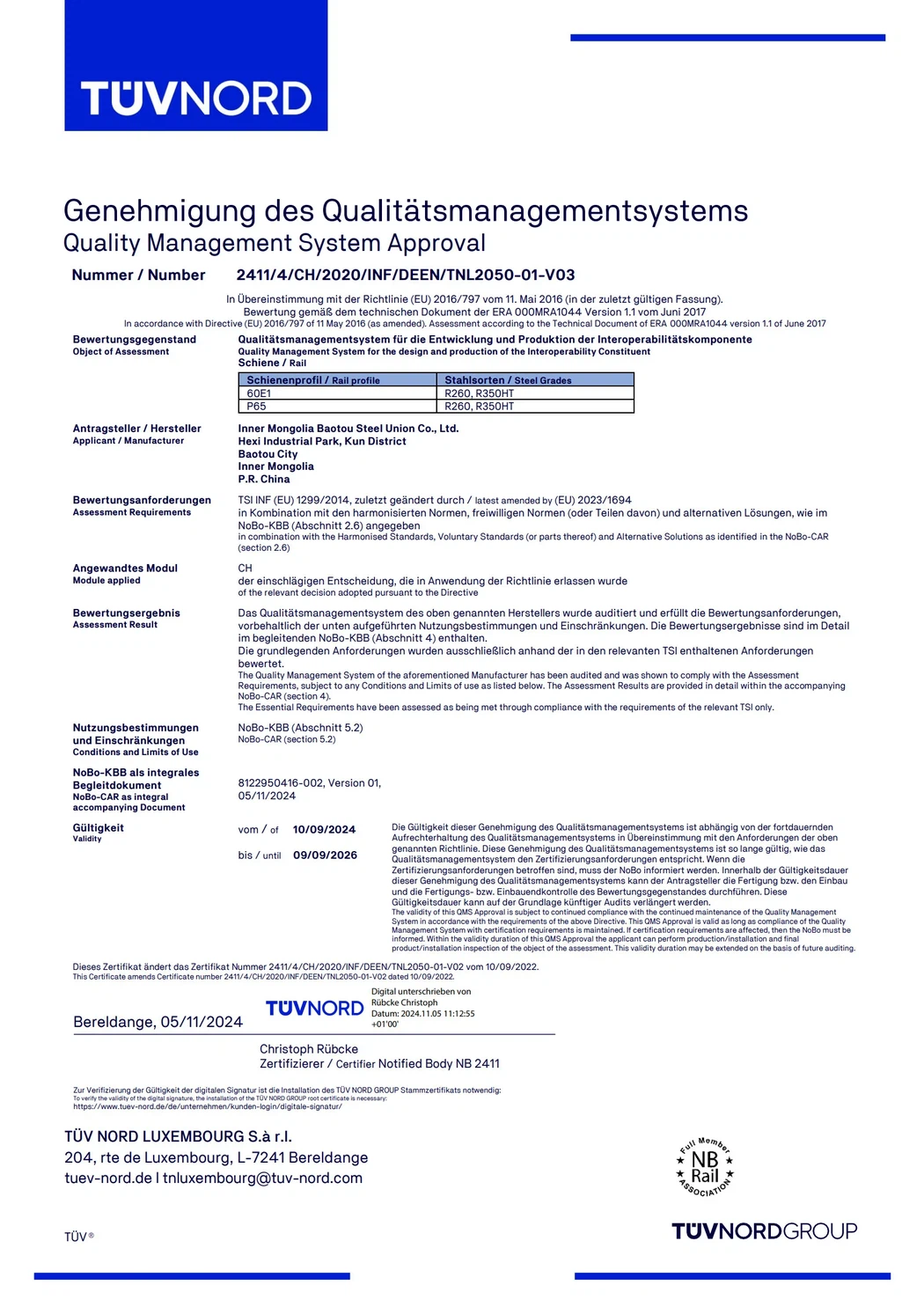
▲Our Certification ▲
▲FAQ▲
1.Q: Delivery time?
A: We always keep hot-selling goods in stocks. When you place the order, we could send you within 3days.
If no ready goods, we could finish within 15-20days depending items.
2.Q: Are you trading company or manufacturer ?
A: We are factory.
3.Q: Do you accept special order (custom order) ?
A: Yes, but details like measurement,quatity, material are request.
4.Q: How long is your delivery time?
A: 2-3 days for in stock products . contact the sales for out of stock products.
5.Q: Do you provide samples ? is it free or extra ?
A: Yes, we could offer some sample for free but do not pay the cost of freight.We will charge extra if taking a lot samples.
6.Q: What is your terms of payment ?
A: 30% as deposit ,70% before shipment
7. Can I get a sample?
Yes, we can provide free samples for stock items. You just need to pay shipping charge. If it is a custom item, there may be mould charge occured.
8. How long for production?
For customized items, usually it takes 30-45 days. For stock goods, we can deliver within 7 days after receiving payment.
9. What is your payment term?
Payment term is usually 30% by TT in advance, 70% balance before shipment.
10. Do you have QC ?
Yes, we have QC team who will inspect raw material, every process during production, goods measurement and mechanical property, testing result will be filled in computer.
11. Are you manufacturer or Trader?
We are a manufacturer.
12. Do you support customization?
Yes, we can produce the products according to your drawing or the samples.





