


Rail Pad
▲what is a rail pad▲
A rail pad is a kind of rail fastener used in rail tracks to provide cushioning and support between the rail and the underlying surface, typically the railroad tie or sleeper. GNEE Rail manufactures rail pads that effectively absorb vibrations and impacts from passing trains, reducing noise and wear on the track components, and contributing to the overall stability and longevity of the rail infrastructure.
Benefits of GNEE's Rail pads
- Vibration Reduction
GNEE Rail's rail pads effectively absorb vibrations generated by passing trains, thereby minimizing ground-borne noise and ensuring a smoother ride experience for passengers.
- Impact Absorption
By cushioning the contact between the rail and the underlying surface, our rail pads help dissipate impact forces, reducing wear and tear on track components and extending their lifespan.
- Noise Reduction
The use of our rail pads significantly reduces noise levels emitted by train operations, contributing to a quieter environment for nearby communities and improving overall quality of life.
- Enhanced Stability
Our rail pads provide consistent support and stability to the rail, maintaining proper alignment and preventing issues such as rail creep or lateral movement, which can compromise safety and efficiency.
- Longevity
Constructed from durable materials and engineered for resilience, GNEE Rail's rail pads are designed to withstand harsh environmental conditions and heavy traffic loads, ensuring long-lasting performance and minimizing the need for frequent replacements.
- Customization
We offer a variety of rail pad designs and materials to accommodate different track specifications and requirements, allowing for tailored solutions to suit specific project needs.
-
![Rail Fasteners - Rail Pad]() Rail Fasteners - Rail PadRail pads are elastic pads installed between rails and sleepers in railway tracks. Their main function is to buffer the vibration and impact generated by vehicles passing through, protect the...read more
Rail Fasteners - Rail PadRail pads are elastic pads installed between rails and sleepers in railway tracks. Their main function is to buffer the vibration and impact generated by vehicles passing through, protect the...read more -
![Rail Elastic Pad]() Rail Elastic PadRail pads are elastic cushions installed between rails and sleepers in railway tracks, commonly known as rail pads. They are usually made of rubber or plastic to cushion the vibration and impact...read more
Rail Elastic PadRail pads are elastic cushions installed between rails and sleepers in railway tracks, commonly known as rail pads. They are usually made of rubber or plastic to cushion the vibration and impact...read more -
![Railway Rubber Rail Pad]() Railway Rubber Rail PadRail pads are elastic cushions installed between rails and sleepers in railway tracks, commonly known as rail pads. They are usually made of rubber or plastic to cushion the vibration and impact...read more
Railway Rubber Rail PadRail pads are elastic cushions installed between rails and sleepers in railway tracks, commonly known as rail pads. They are usually made of rubber or plastic to cushion the vibration and impact...read more -
![Polyurethane Under Sleeper Pad]() Polyurethane Under Sleeper PadRailway sleeper pads, also known as rail elastic pads or rail rubber pads, are elastic pads installed between the rails and concrete sleepers in the railway track structure. Its main function is...read more
Polyurethane Under Sleeper PadRailway sleeper pads, also known as rail elastic pads or rail rubber pads, are elastic pads installed between the rails and concrete sleepers in the railway track structure. Its main function is...read more -
![Rubber Sleeper Pad]() Rubber Sleeper PadRailway sleeper pads, also known as rail elastic pads or rail rubber pads, are elastic pads installed between the rails and concrete sleepers in the railway track structure. Its main function is...read more
Rubber Sleeper PadRailway sleeper pads, also known as rail elastic pads or rail rubber pads, are elastic pads installed between the rails and concrete sleepers in the railway track structure. Its main function is...read more -
![UNDER SLEEPER PAD]() UNDER SLEEPER PADRailway sleeper pads, also known as rail elastic pads or rail rubber pads, are elastic pads installed between the rails and concrete sleepers in the railway track structure. Its main function is...read more
UNDER SLEEPER PADRailway sleeper pads, also known as rail elastic pads or rail rubber pads, are elastic pads installed between the rails and concrete sleepers in the railway track structure. Its main function is...read more -
![Railway Sleeper Pads]() Railway Sleeper PadsRailway sleeper pads, also known as rail elastic pads or rail rubber pads, are elastic pads installed between the rails and concrete sleepers in the railway track structure. Its main function is...read more
Railway Sleeper PadsRailway sleeper pads, also known as rail elastic pads or rail rubber pads, are elastic pads installed between the rails and concrete sleepers in the railway track structure. Its main function is...read more -
![Railway Sleepers Elastic Pad]() Railway Sleepers Elastic PadRailway sleeper pads, also known as rail elastic pads or rail rubber pads, are elastic pads installed between the rails and concrete sleepers in the railway track structure. Its main function is...read more
Railway Sleepers Elastic PadRailway sleeper pads, also known as rail elastic pads or rail rubber pads, are elastic pads installed between the rails and concrete sleepers in the railway track structure. Its main function is...read more -
![Resilient Under Sleeper Pads]() Resilient Under Sleeper PadsSleeper pad (or under-sleeper pad) is an elastic cushion layer installed between the sleeper base and ballast bed, typically manufactured from rubber or polyurethane. Its primary functions include...read more
Resilient Under Sleeper PadsSleeper pad (or under-sleeper pad) is an elastic cushion layer installed between the sleeper base and ballast bed, typically manufactured from rubber or polyurethane. Its primary functions include...read more -
![Rail Under Sleeper Pads]() Rail Under Sleeper PadsUnder sleeper pads provide vibration protection, preserve the ballast under the tracks and improve track stability. They can be installed both in high-speed rail lines and in lines with high axle...read more
Rail Under Sleeper PadsUnder sleeper pads provide vibration protection, preserve the ballast under the tracks and improve track stability. They can be installed both in high-speed rail lines and in lines with high axle...read more -
![Sub Rail Ballast Mat]() Sub Rail Ballast MatRailway ballast mats are elastic components laid between the ballast layer and the roadbed of the ballasted track. They are mostly made of polymer materials such as rubber and polyurethane, and...read more
Sub Rail Ballast MatRailway ballast mats are elastic components laid between the ballast layer and the roadbed of the ballasted track. They are mostly made of polymer materials such as rubber and polyurethane, and...read more -
![Railway Under Ballast Mat]() Railway Under Ballast MatProduct Introduction Ballast Mat is an elastic sheet component installed between the ballast layer of railway ballasted track and the subgrade, typically made of rubber, polyurethane, or other...read more
Railway Under Ballast MatProduct Introduction Ballast Mat is an elastic sheet component installed between the ballast layer of railway ballasted track and the subgrade, typically made of rubber, polyurethane, or other...read more


▲production process of GNEE's rail pads▲
By following these steps, GNEE ensures that its rail pads meet the highest standards of quality and performance for railway applications.
- Material Selection
High-quality materials, such as rubber or thermoplastic elastomers, are chosen based on their properties and specifications required for rail pads.
- Mixing and Compounding
The selected materials are mixed and compounded to achieve the desired characteristics, including elasticity, durability, and resistance to wear.
- Injection molding
The dried rubber is injected into molds using an injection machine, then undergoes heat treatment, molding, pressurization, and cooling.
- Curing
After molding, the rail pads may undergo a curing process where they are exposed to heat and pressure to enhance their physical properties and ensure proper bonding of the materials.
- Vulcanization
The molded rail pads undergo a vulcanization process, where they are heated to high temperatures to strengthen the material and improve its resilience and longevity.
- Verification testing
Throughout the production process, rigorous quality control measures are implemented to ensure that the rail pads meet GNEE's standards for performance, durability, and safety.

▲Types Of GNEE rail pads▲
GNEE offers various types of rail pads to suit different railway track requirements and applications. Some common types include:
- Rubber Rail Pads
These are traditional rail pads made of rubber material, offering excellent elasticity and vibration absorption properties.
- Polyurethane Rail Pads
Rail pads made of polyurethane material, known for their durability, resistance to wear, and ability to withstand harsh environmental
conditions.
- Composite Rail Pads
These rail pads are made of a combination of materials such as rubber and plastic, offering a balance of elasticity, durability, and cost-effectiveness.
- HDPE (High-Density Polyethylene) Rail Pads
Rail pads made of HDPE material, providing excellent resistance to impact and abrasion, as well as high load-bearing capacity.
- EVA (Ethylene Vinyl Acetate) Rail Pads
Rail pads made of EVA material, offering lightweight and flexible cushioning, ideal for reducing noise and vibration in railway tracks.

GNEE rail pads application
- Freight Rail Lines
GNEE rail pads are commonly used in passenger and freight rail lines to provide cushioning and support between the rails and the underlying infrastructure, such as concrete ties or wooden sleepers.
- High-Speed Rail
In high-speed rail systems, GNEE rail pads help to reduce noise and vibration, ensuring a smoother and more comfortable ride experience for passengers.
- Urban Transit Systems
Rail pads from GNEE are utilized in urban transit systems, including subways, light rail, and tram systems, to minimize noise pollution and enhance the overall quality of life for residents living near rail lines.
- Heavy and Industrial Railways
GNEE rail pads are employed in heavy haul and industrial railway applications to protect the track infrastructure from the heavy loads and frequent traffic associated with industrial operations.
- Track Maintenance
Rail pads from GNEE are often used during track maintenance and upgrades to improve track stability, reduce wear and tear on components, and extend the lifespan of the railway infrastructure.


▲Our Factory▲
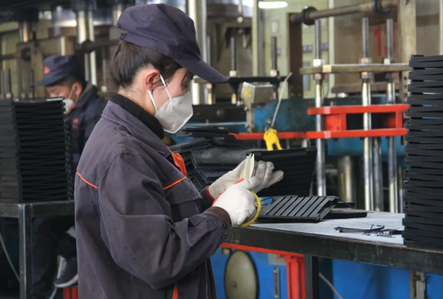
GNEE Rail has more than 130 production lines, equipped to handle processing, injection molding, compounding, vulcanization, shaping, and inspection for rail pads. And we have our own team of rail pad development engineers responsible for design, production, and testing, with an annual production capacity of 3 million pieces.
GNEE Rail supplies rail pads in various sizes tailored to match the load and rail base dimensions. As a leading railway material supplier, GNEE Rail prioritizes product quality, each individual piece of rail pads undergoes strict inspection. In addition to our strict adherence to ISO9001-2008 quality control standards and internal management protocols, we use a comprehensive range of inspection tools to guarantee that each product meets our customers' requirements.

▲FAQ▲
What are GNEE Rail Pads?
GNEE Rail Pads are specially designed components used in railway tracks to provide cushioning and support between the rail and the underlying surface, such as concrete sleepers or wooden ties.
What materials are GNEE Rail Pads made of?
GNEE Rail Pads can be made of various materials, including rubber, polyurethane, composite materials, and others, depending on the specific requirements of the railway track and its environment.
What is the purpose of GNEE Rail Pads?
GNEE Rail Pads serve multiple purposes, including reducing vibration and noise generated by passing trains, protecting the rail and underlying infrastructure from wear and tear, and improving track stability and longevity.
How do GNEE Rail Pads reduce noise and vibration?
GNEE Rail Pads absorb and dissipate the energy generated by passing trains, effectively reducing noise and vibration transmitted to the surrounding environment and nearby structures.
What are the different types of GNEE Rail Pads available?
GNEE Rail offers various types of rail pads, including rubber rail pads, polyurethane rail pads, composite rail pads, and others, each offering different properties and benefits.
Can GNEE Rail Pads be customized for specific applications?
Yes, GNEE Rail Pads can be customized in terms of size, shape, and material composition to meet the specific requirements of different railway tracks and applications.
How are GNEE Rail Pads installed?
GNEE Rail Pads are typically installed between the rail and the sleeper or tie during track construction or maintenance. They are placed directly underneath the rail and secured in position using fasteners or adhesives.
How long do GNEE Rail Pads last?
The lifespan of GNEE Rail Pads varies depending on factors such as material quality, track conditions, and traffic volume. Generally, well-maintained rail pads can last for several years before requiring replacement.
HENAN GNEE RAIL CO.,LTD. is one of the most professional rail pad manufacturers and suppliers in China, featured by quality products and low price. Please rest assured to buy cheap rail pad in stock here from our factory. Contact us for customized service.
Rubber Pads for Railway Tracks, Railroad Rubber Pad, Rubber Rail Pads