


50KG heavy rails strictly follow the national standard GB/T 2585-2021 "Hot-rolled rails for railways", which is an important basis for ensuring that the quality and performance of heavy rails meet the requirements of railway engineering. There are detailed and strict regulations on the chemical composition, mechanical properties, dimensional tolerances, surface quality, etc. of the rails, which control the quality from the source of production to ensure its safety and reliability in practical applications.
Dimensional parameters
Height: The rail height is 152 mm. This height has been precisely designed so that the rails can evenly disperse the pressure when bearing the train load, while maintaining good stability and anti-deformation ability to ensure smooth operation of the train.
Bottom width: The bottom width is 132 mm. The wider bottom design can increase the contact area between the rails and the sleepers, so that the rails are firmly fixed on the sleepers, preventing lateral displacement during train operation and enhancing the overall stability of the track structure.
Head width: 70 mm. As the part that directly contacts the wheel, this width ensures a reasonable contact area between the wheel and the rail, which can effectively disperse the pressure transmitted by the wheel, reduce wear, and provide precise guidance for train driving.
Waist thickness: 15.5 mm. The waist thickness design takes into account both strength and weight. While ensuring that the rail has sufficient load-bearing capacity, the overall weight is controlled to achieve a balance between strength and cost.
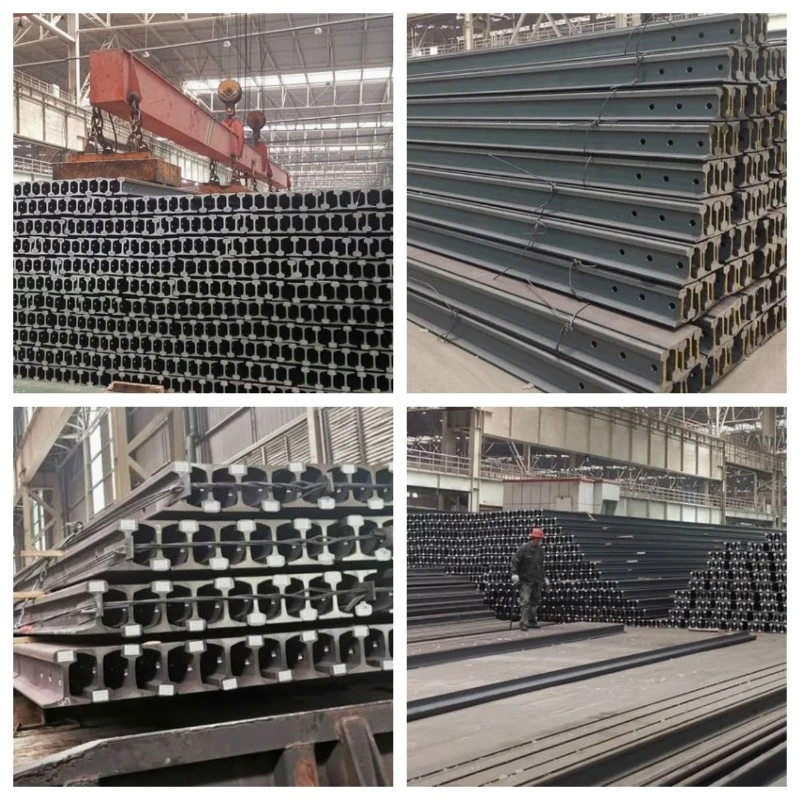
Dimensional tolerance
Height tolerance: The allowable deviation range of rail height is usually within ±0.6 mm, ensuring the high consistency of the rail surface after laying different rails, providing smooth driving conditions for trains, and avoiding train bumps and vibrations caused by excessive height deviation.
Width tolerance: The tolerance of the bottom width and head width is generally controlled at ±0.5 mm. The precise width tolerance ensures the close fit between the rails and between the rails and other rail components, preventing problems such as looseness and excessive gaps, which affect the stability of the rail structure.
Thickness tolerance: The tolerance range of waist thickness is about ±0.6 mm. Reasonable thickness tolerance ensures the strength consistency of the waist of the rail, avoids stress concentration caused by uneven thickness, and reduces the service life of the rail.

Weight tolerance
Although the nominal weight of 50KG heavy rails is 50 kg per meter, there is a certain weight tolerance in actual production, which is usually controlled within ±0.3 kg/m. Strict control of weight tolerance ensures the uniformity of the weight of the entire batch of rails, avoiding the influence of the balance of track laying and the stability of train operation due to the large difference in the weight of a single rail.
Shape tolerance
Straightness: The straightness requirements of the rails are extremely high. The curvature of the rails shall not exceed 0.5 mm per meter, and the curvature shall not exceed 6 mm in the entire length. Good straightness ensures the smooth running of the train, reduces the friction and wear between the wheels and the rails, and reduces the running resistance.
Twist: The twist of the rails is also strictly limited, and the twist within each meter length shall not exceed 0.3 mm. Strict control of twist can prevent the risk of rollover of the train during driving and ensure driving safety.

These specifications and details cooperate and influence each other, jointly determining the quality and performance of 50KG heavy rails, enabling them to play an important role in railway transportation and provide solid guarantee for the safe and smooth operation of trains.