


A65 vs A75 Crane Rail: Basic Specifications
A65 and A75 are different rail sections under the DIN 536-1 crane rail series. The numbers identify different profile sizes rather than the steel grades or lifting capacities of the cranes using them.
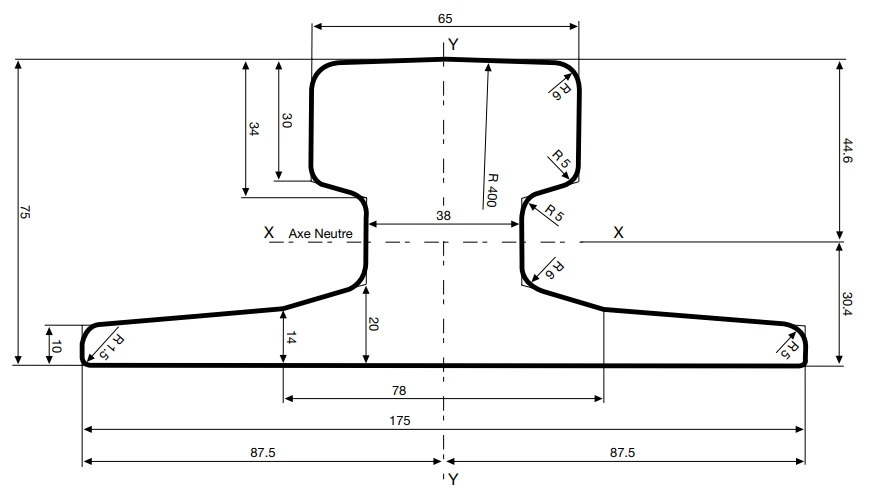
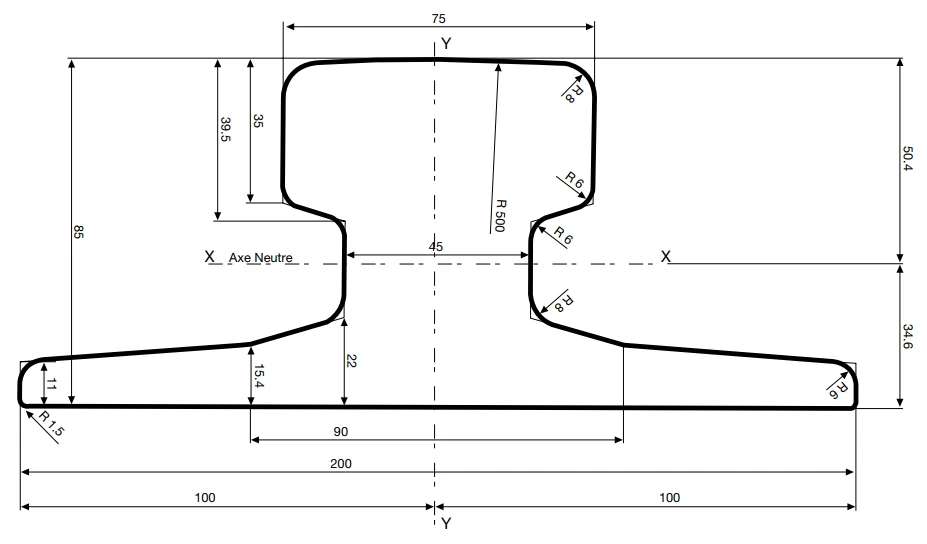
The main difference is that A75 has a larger cross-section and higher theoretical weight than A65. Its wider head, wider foot and greater overall height give it a different geometric profile.
A65 and A75 Crane Rail Specification Comparison
|
Specification |
A65 Crane Rail |
A75 Crane Rail |
|---|---|---|
|
Standard |
DIN 536-1 |
DIN 536-1 |
|
Rail height (H) |
75 mm |
85 mm |
|
Foot width (B) |
175 mm |
200 mm |
|
Head width (C) |
65 mm |
75 mm |
|
Web thickness (E) |
38 mm |
45 mm |
|
Cross-sectional area |
54.90 cm² |
71.60 cm² |
|
Theoretical weight |
43.10 kg/m |
56.20 kg/m |
Note: These are commonly referenced profile dimensions and theoretical weights. Before ordering, confirm the values against the applicable DIN 536-1 edition and the manufacturer's approved technical drawing or datasheet. Contractual acceptance should follow the agreed specification.
The main dimensional differences are:
Rail height: A75 is 10 mm higher than A65.
Head width: A75 has a 10 mm wider head.
Foot width: A75 has a 25 mm wider foot.
Web thickness: A75 has a 7 mm thicker web.
Theoretical weight: A75 is approximately 13.10 kg/m heavier than A65.
Based on the commonly referenced theoretical weights, A75 is approximately 30.4% heavier per metre than A65. This difference affects the total steel weight, transportation arrangements and material budget for a large project.
A65 Crane Rail
A75 Crane Rail
A65 and A75 Crane Rail Dimensions and Cross-Section Differences
When comparing crane rail profiles, buyers should pay attention to four main dimensions: rail height, head width, foot width and web thickness.
These dimensions affect the rail's fit with the runway structure, crane wheel arrangement and fastening components.
Rail Height
Rail height is the vertical distance from the top running surface to the bottom of the rail foot.
A65 crane rail: 75 mm
A75 crane rail: 85 mm
A75 is 10 mm higher than A65.
This difference should be considered when checking the runway beam design, installation level and rail support arrangement. If the project is replacing an existing rail, check the original rail height before selecting a replacement profile.
Head Width
Head width refers to the width of the rail head that provides the running surface for crane wheels.
A65 crane rail: 65 mm
A75 crane rail: 75 mm
A75 has a wider head than A65. However, buyers should not select a wider rail head based on width alone. The crane wheel dimensions, wheel alignment and specified rail profile must all be considered.
Foot Width
The rail foot is the bottom part of the profile that rests on the supporting structure and works with the rail fastening arrangement.
A65 crane rail: 175 mm
A75 crane rail: 200 mm
The 25 mm difference in foot width is important when checking the rail support and fastening system.
Buyers should confirm:
Whether the existing rail clips or clamps are suitable for the selected profile.
Whether the support plate or baseplate matches the rail foot.
Whether the fixing positions are consistent with the runway drawings.
Whether any changes to the supporting structure are required.
Web Thickness
The web connects the rail head and foot.
A65 crane rail: 38 mm
A75 crane rail: 45 mm
The web dimensions are part of the overall cross-sectional design. Buyers should use the complete profile drawing rather than selecting a rail based on a single dimension.
A65 vs A75 Crane Rail Weight Comparison
Weight is an important purchasing factor because it affects the total steel requirement, transportation cost, loading plan and unloading arrangements.
Based on the commonly referenced theoretical weights:
A65 crane rail: 43.10 kg/m
A75 crane rail: 56.20 kg/m
A75 is approximately 13.10 kg heavier per metre than A65.
Weight of Different Rail Lengths
The theoretical weight of one rail can be calculated using:
Rail Weight = Theoretical Weight per Metre × Rail Length
| Rail Profile | Theoretical Weight | 6 m Rail | 12 m Rail |
|---|---|---|---|
| A65 | 43.10 kg/m | 258.60 kg | 517.20 kg |
| A75 | 56.20 kg/m | 337.20 kg | 674.40 kg |
For example, one 12 m A65 crane rail has a theoretical weight of approximately 517.20 kg, while one 12 m A75 crane rail has a theoretical weight of approximately 674.40 kg.
These figures are useful for estimating the order weight and planning transportation. Actual shipment weight should be confirmed using the manufacturer's production and packing records.
How Many Rails Are Required for a 1,000 Metre Project?
When a project requires at least 1,000 metres, the number of pieces depends on the selected rail length. The quantity must be rounded up to the next whole piece.
Calculation method:
Number of Rails = Required Total Length ÷ Individual Rail Length
| Rail Length | Calculation | Required Quantity | Actual Supply Length |
|---|---|---|---|
| 6 m | 1,000 ÷ 6 | 167 pcs | 1,002 m |
| 12 m | 1,000 ÷ 12 | 84 pcs | 1,008 m |
The actual supply length is slightly greater than 1,000 metres because whole rail pieces are required.
Estimated Total Weight for 1,000 Metres
Using the rounded-up quantities above, the estimated theoretical order weights are:
| Rail Profile | Rail Length | Quantity | Actual Length | Estimated Total Weight |
|---|---|---|---|---|
| A65 | 6 m | 167 pcs | 1,002 m | 43,186.20 kg |
| A65 | 12 m | 84 pcs | 1,008 m | 43,444.80 kg |
| A75 | 6 m | 167 pcs | 1,002 m | 56,312.40 kg |
| A75 | 12 m | 84 pcs | 1,008 m | 56,649.60 kg |
Calculate Your Crane Rail Order Quantity
Typical Applications of A65 and A75 Crane Rails
A65 and A75 crane rails may be specified for different crane runway designs. The correct choice depends on the engineering calculations and project documents, not simply on the size of the crane or its lifting capacity.
A65 Crane Rail Applications
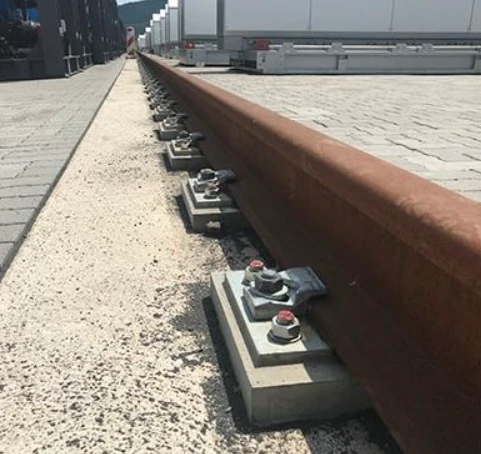
A65 may be specified for industrial crane runway systems where the design calls for this profile.
Typical project contexts can include:
Overhead crane runway systems in industrial buildings.
Gantry crane installations in workshops and material handling areas.
Industrial production facilities with rail-guided lifting equipment.
These are application examples, not a universal load rating. Confirm the required profile using the crane manufacturer's design, wheel loads and runway calculations.
A65 Crane Rail in an Industrial Crane Runway
A75 Crane Rail Applications
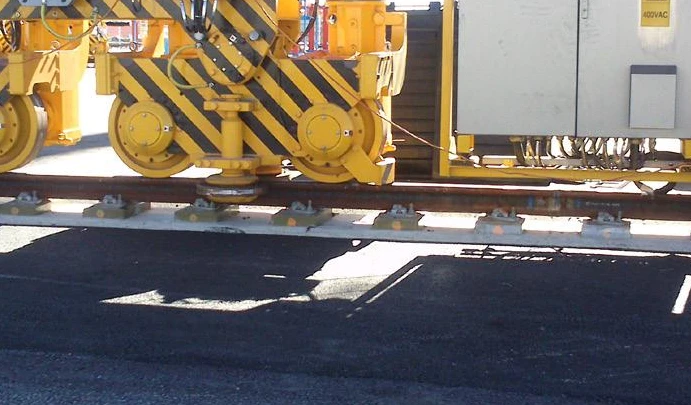
A75 may be selected for crane runway projects where the design specifies its larger profile.
Possible project contexts include:
Heavy-duty overhead crane runway systems.
Gantry crane systems in industrial yards or workshops.
Material handling installations requiring the A75 profile specified by the engineering design.
A75 should not be treated as an automatic upgrade for every A65 application. A change of profile may require checks to the wheel interface, support structure, fastening system and installation dimensions.
A75 Crane Rail in an Industrial Installation
A65 vs A75: Application Comparison
| Comparison Item | A65 Crane Rail | A75 Crane Rail |
|---|---|---|
| Profile size | Smaller cross-section | Larger cross-section |
| Theoretical weight | 43.10 kg/m | 56.20 kg/m |
| Head width | 65 mm | 75 mm |
| Foot width | 175 mm | 200 mm |
| Selection basis | Use when specified by the project design | Use when specified by the project design |
| Fastening compatibility | Check against A65 profile and drawings | Check against A75 profile and drawings |
How to Choose Between A65 and A75 Crane Rails
For a crane rail purchasing project, selecting A65 or A75 should involve more than comparing dimensions and price per metre. Buyers should check the following technical and commercial points.
Confirm the Crane Wheel Loads
The maximum wheel load and wheel arrangement are important inputs in crane runway design.
Buyers should provide the relevant design information or confirm that the rail profile has already been selected by the project engineer. A supplier should not recommend a profile based only on the crane's nominal lifting capacity.
Check the Rail Profile Dimensions
Compare the required rail height, head width, foot width and web thickness with the supplier's technical drawing.
If replacing existing rails, measure the installed profile and check the original drawings where available. This is particularly important when the existing fastening components will be reused.
Confirm the Fastening System
Crane rail fastening components must match the selected rail profile and supporting structure.
Depending on the design, the supply may include:
Rail clips or clamps.
Bolts and nuts.
Baseplates or support plates.
Rail pads or other specified interface materials.
Confirm the required fastening arrangement before ordering the rails. Do not assume that the fastening components used for A65 will automatically fit A75.
Consider Operating and Installation Conditions
The operating environment, crane duty, alignment requirements and runway construction may affect the project specification.
These factors should be reviewed by the responsible engineering team rather than inferred from the rail designation alone.
Provide Drawings and Technical Specifications
The most reliable way to avoid profile and interface mismatches is to share the project drawings or technical specification before quotation.
Send Your Crane Rail Drawings for Review
A65 and A75 Crane Rail Supply Specifications
| Item | Details to Be Confirmed |
|---|---|
| Rail profile | A65 or A75 |
| Applicable standard | DIN 536-1 and the specified edition/requirements |
| Rail length | 6 m, 12 m or another agreed length |
| Quantity | Pieces or total metres, including rounding requirements |
| Steel grade | As specified in the purchase order and agreed technical documents |
| Inspection documents | EN 10204 3.1 inspection certificate when required and agreed |
| Packing | Bundled or otherwise packed according to shipment and handling requirements |
| Delivery terms | FOB, CFR, CIF or another agreed Incoterm and named place/port |
The rail profile and steel grade are separate specifications. A65 or A75 identifies the cross-sectional profile; it does not by itself define the chemical composition or mechanical properties of the steel.
Buyers should state the required grade and certificate requirements in the inquiry or purchase order.
Steel Grade and Material Documentation
The steel grade should be confirmed according to the project specification and the supplier's available production route. Buyers requiring an EN 10204 3.1 inspection certificate should confirm this before order placement.
For traceability, the material documentation should be checked against the delivered rails and the agreed order requirements. Depending on the contract, the documentation may include:
Steel grade and chemical composition.
Relevant mechanical test results where specified.
Heat or batch identification.
Product description, dimensions and quantity.
Manufacturer identification and inspection certification.
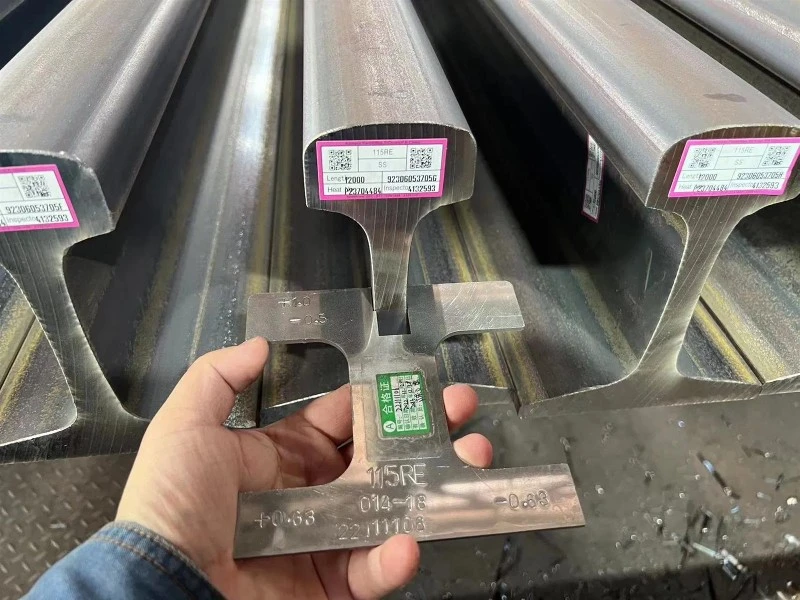
Dimensional and Surface Inspection
Inspection should be carried out against the applicable standard, approved drawings and purchase order.
| Inspection Item | What to Check |
|---|---|
| Profile dimensions | Rail height, head width, foot width and other specified dimensions |
| Length | Individual rail length and agreed length tolerance |
| Straightness | Straightness requirements stated in the applicable specification |
| Surface condition | Visible surface defects and condition of the running surface |
| Marking | Product identification and traceability marks, where required |
| Documentation | Consistency between inspection records, material certificates and supplied products |
The inspection tolerances should be taken from the applicable standard and agreed technical documents. Avoid applying a generic tolerance where the project specification defines a different requirement.
Crane Rail Dimensional Inspection
Export Packing and Shipment
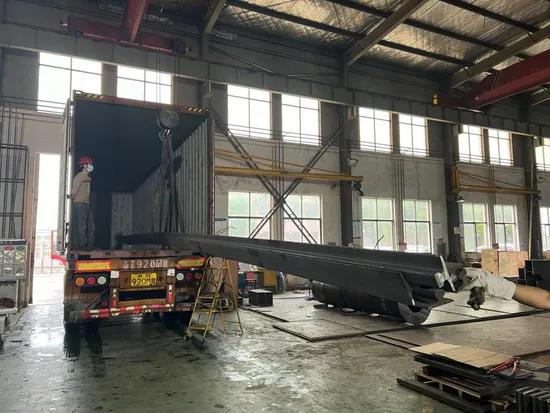
Crane rails are long and heavy products. Packing and loading arrangements should be agreed according to rail length, shipment method, destination requirements and handling equipment.
Before shipment, buyers should confirm:
Whether rails will be bundled or packed using another agreed method.
The use of steel straps, separators or protective materials where required.
Bundle weight and dimensions for handling and loading.
Product identification and package marks.
Loading port, shipping arrangement and delivery term.
Whether the buyer requires loading photographs or shipping documents.
Crane Rails Bundled and Prepared for Export
Request a Complete Crane Rail Supply Quotation
FAQ
Q: What is the main difference between A65 and A75 crane rails?
A: A75 has a larger cross-section than A65. Commonly referenced dimensions are 85 mm rail height and 200 mm foot width for A75, compared with 75 mm height and 175 mm foot width for A65. Their theoretical weights are also different. Confirm the exact profile values against the applicable standard and manufacturer drawing.
Q: What is the weight of A65 crane rail per metre?
A: The commonly referenced theoretical weight is 43.10 kg/m. Actual delivered weight should be confirmed from the manufacturer's production or weighing records.
Q: What is the weight of A75 crane rail per metre?
A: The commonly referenced theoretical weight is 56.20 kg/m. Confirm the value against the approved product datasheet and purchase specification.
Q: Can A65 be replaced with A75?
A: Not automatically. A75 has different profile dimensions and a wider foot. Before replacement, check the crane wheel interface, runway structure, fastening components, installation level and engineering approval.
Q: Are A65 and A75 both DIN 536-1 crane rails?
A: They are commonly specified within the DIN 536-1 crane rail range. Buyers should identify the applicable edition and confirm the exact profile requirements in the purchase documents.
Q: Can A65 and A75 crane rails be supplied in 6 m and 12 m lengths?
A: These are common requested lengths, but availability and production arrangements must be confirmed with the supplier. Other lengths may be considered subject to production capability and order requirements.
Q: Can the supplier provide an EN 10204 3.1 certificate?
A: An EN 10204 3.1 inspection certificate can be requested where available and agreed for the order. Buyers should specify the required certificate before placing the purchase order.
Q: What information should be included in an A65 or A75 crane rail inquiry?
A: Include the rail profile, applicable standard, steel grade, total quantity, individual rail length, required certificate, fastening accessories if needed, destination port and preferred delivery term. Drawings or a bill of quantities are useful for checking the requirements.