


Fretting Fatigue and Wear Coupling Mechanism of Elastic Rail Clips under High-Frequency Dynamic Loads on Trains
Q1: What is fretting between the clip and rail contact surface, and under what conditions does it occur most easily?
A1: Fretting refers to the reciprocating relative movement with extremely small amplitude (usually micron to millimeter level) between two firmly connected components under external vibration. For elastic clips, high-frequency vertical and lateral vibration generated by high-speed trains causes slight slip at the contact point between the rail and the clip. When the clip cannot provide complete rigid constraint, fretting occurs continuously. It is especially significant in sections with insufficient clamping force, high pad elasticity, and strong lateral vibration in curved sections, leading to continuous friction and extrusion between contact surfaces and persistent fretting damage.
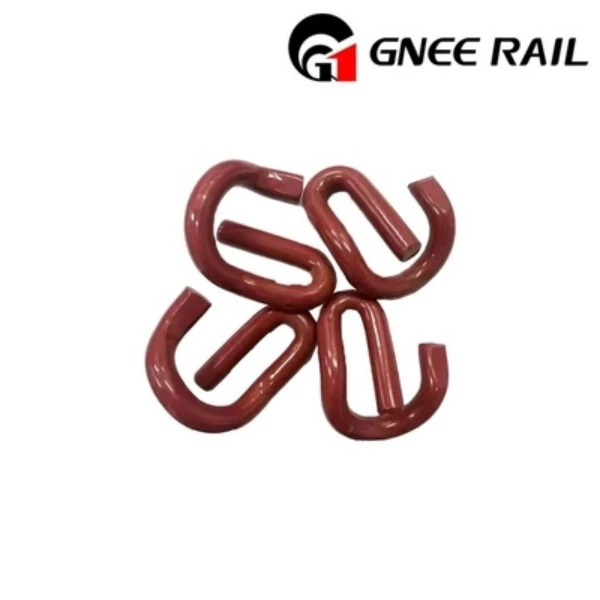
Q2: How does fretting wear gradually damage the working surface of the clip?
A2: During fretting, repeated plastic deformation, adhesion and shearing occur on the metal surface of the contact area, resulting in work hardening and spalling, forming fine wear debris. Most of these debris are iron oxide with high hardness, which forms three-body abrasive wear inside the contact surface and further cuts the clip and rail base surfaces. In the long run, obvious wear grooves, surface crushing and material loss appear on the working surface of the clip, destroying the fitting state and shifting the stress point continuously, leading to a continuous decline in effective clamping force.
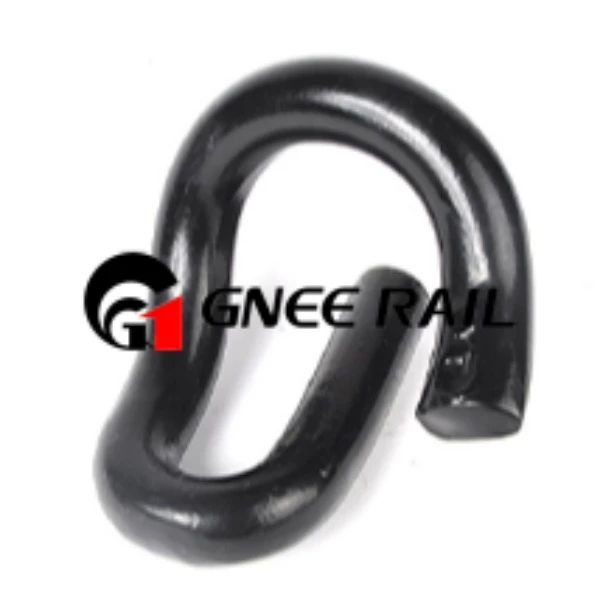
Q3: What is the difference between fretting fatigue and ordinary fatigue, and why is it more harmful?
A3: Ordinary fatigue is mainly caused by external alternating bending stress, with cracks initiating from internal or stress concentration areas; fretting fatigue results from the combination of fretting wear and alternating stress. Fretting forms a large number of micro-scratches, pits and work-hardened layers on the surface, which are natural crack sources. At the same stress level, fretting fatigue cracks initiate several times faster than ordinary fatigue, with more complex propagation paths, often showing simultaneous development of multiple cracks. Therefore, fretting fatigue can cause sudden cracking or fracture of clips before reaching the design life, with strong concealment and danger.
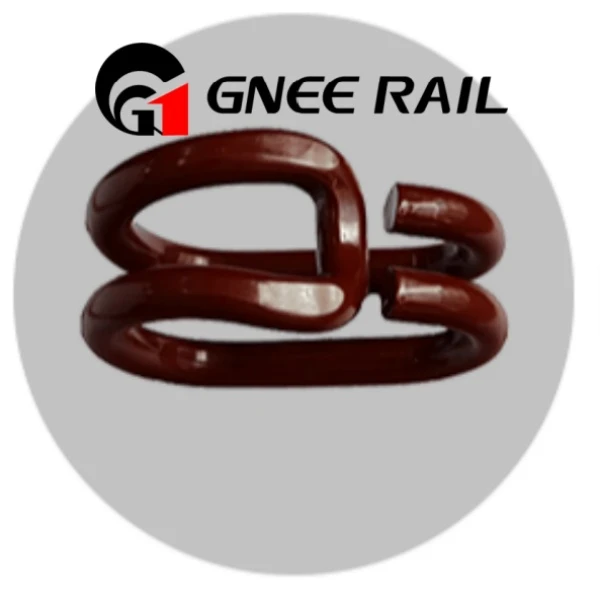
Q4: What track conditions significantly aggravate fretting fatigue damage of clips?
A4: Firstly, high-speed and intercity railways with high speed and vibration frequency intensify fretting. Secondly, small-radius curves and transition curves with complex lateral forces increase slip amplitude. Thirdly, sections with rail corrugation and joint irregularities enhance impact vibration and sharply increase fretting cycles. Fourthly, sections with long-term low clamping force and untimely retightening provide larger fretting space. In addition, wind-sand and dust environments introduce external abrasives, accelerating both fretting wear and fatigue damage.
Q5: How to suppress fretting fatigue from design, material and operation & maintenance aspects?
A5: In design, optimize the clip profile and contact arc to improve fitness and reduce fretting space; properly increase design clamping force to enhance interface constraint. In material, select spring steel with better fretting resistance, combined with shot peening, carburizing and other surface strengthening processes to improve surface hardness and compressive stress, delaying micro-crack initiation. In operation, strictly implement torque retightening to avoid clamping force attenuation; timely grind rail irregularities to reduce vibration impact; regularly inspect clip surface wear and replace worn clips in advance to prevent crack propagation to dangerous levels.