


The Influence of Micro-deformation of Ballastless Track Base Plate on the Stress Uniformity of Fasteners
Q1: How is the micro-deformation of the base plate transmitted to the fastener system?
A1: Uneven deformation of the base plate causes local inclination or warping of the track slab, changes the relative position of the rail and fasteners, resulting in uneven clip stress, local gaps and sudden changes in support stiffness.
Q2: What effect does temperature change have on base deformation and fastener stress?
A2: Temperature rise and fall cause expansion, contraction and warping of the base plate, inconsistent deformation between the rail and the track slab, increased additional stress on fasteners, and continuous fluctuation of the stress state of clips and pads.

Q3: Can micro-deformation cause early fatigue of fasteners?
A3: Yes. Long-term repeated stress fluctuations keep clips and bolts in alternating overload state, accelerate the accumulation of fatigue damage, and easily cause early cracks and loosening.
Q4: Why are such problems more obvious in ballastless track on bridge sections?
A4: The bridge structure itself has greater deformation, and the interaction between beam expansion, contraction, deflection and the base has a significant superposition effect of deformation. The complexity of fastener stress is much higher than that of subgrade sections.
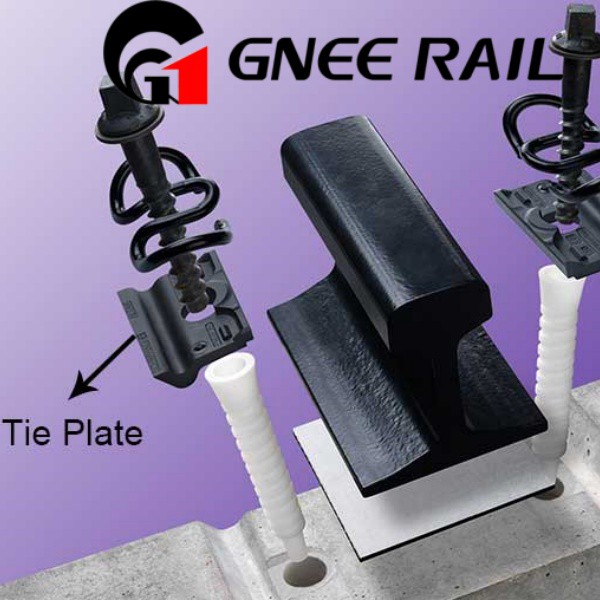
Q5: How to adapt to base micro-deformation through fastener design?
A5: Adopt fastener structure with certain leveling ability; select elastically adjustable pads; optimize clip toughness and adaptability; improve the overall deformation coordination performance of the system.