


Heavy rails occupy a pivotal position in the railway system and are a key element to ensure safe and efficient operation of railway transportation.
First, heavy rails are the load-bearing basis of railway transportation. In railway transportation, the huge weight of locomotives and vehicles is transmitted to the track through the wheels, and heavy rails need to withstand this strong pressure. Whether it is a high-speed EMU that shuttles between cities every day, or a heavy-loaded train loaded with goods, heavy rails rely on their solid structure and excellent load-bearing capacity to evenly distribute the pressure to the roadbed to ensure the smooth operation of the train. For example, on a heavy-load railway such as the Daqin Railway, each train can carry tens of thousands of tons. The heavy rails are under tremendous pressure, but they always stick to their posts to ensure the efficient transportation of important materials such as coal.
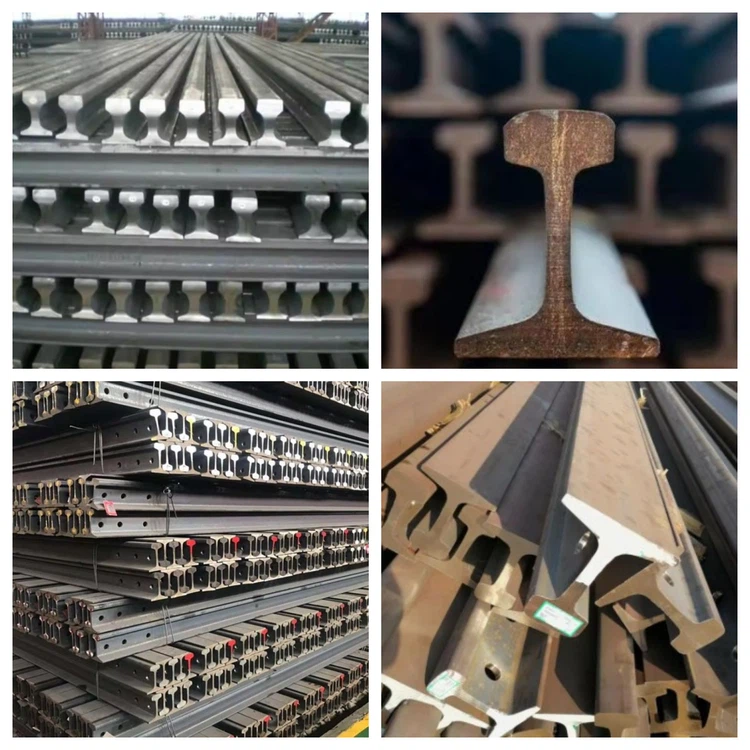
Second, heavy rails are related to the safety of railway transportation. Heavy rails not only have to bear the static weight of the vehicle, but also have to deal with the impact load and friction generated when the train is running. When the train starts, accelerates, brakes, and passes through a curve, the heavy rails have to withstand complex dynamic forces. If the quality of heavy rails is not up to standard, they are prone to wear, deformation and even breakage under the long-term action of these forces, which seriously threatens the safety of train operation. High-quality heavy rails can effectively resist these external forces, reduce the occurrence of track diseases, and provide reliable safety guarantees for railway transportation.
Furthermore, heavy rails affect the efficiency of railway transportation. On busy railway trunk lines, the train operation density is high, and the performance of heavy rails is directly related to the running speed and interval time of trains. Heavy rails with good performance can reduce the resistance of train operation, allowing trains to travel at higher speeds, while also ensuring the stability of trains under frequent starts and stops and high-speed operation, thereby improving the overall efficiency of railway transportation. For example, on the Beijing-Shanghai high-speed railway, high-quality heavy rails ensure that high-speed trains can run safely at a speed of more than 300 kilometers per hour, greatly shortening the time and space distance between cities and improving the transportation efficiency of personnel and materials.
The importance of heavy rails in the railway system is self-evident. It is the load-bearing backbone, safety guard and efficiency guarantee of railway transportation. The quality and performance of heavy rails directly determine the operation level of the railway transportation system.