


How to properly install a rail tie plate?
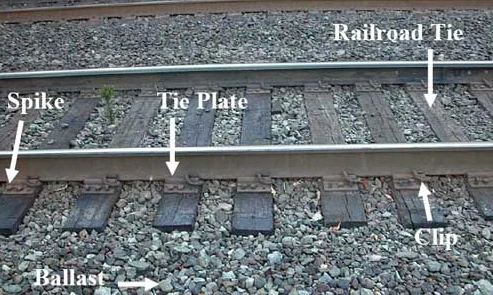
To properly install a rail tie plate, place it on a clean tie, centered with the shoulders (raised lips) firmly against the rail base, and ensure the plate's slope is downward toward the gauge side of the rail. Secure the plate to the tie using spikes or bolts, ensuring the plate provides a flat surface for the rail, and check that all components are tight and properly aligned after installation.
Preparation
- Clean the tie and rail surfaces, removing any debris.
- For existing ties with old spike holes, plug the holes and, if necessary, adze the surface to create a full, flat bearing for the new plate.
- Treat the adzed surface with a preservative.
Placement
- Center the tie plate on the tie.
- Orient the plate so the raised shoulders (or heels) bear firmly against the base of the rail. Never allow the shoulders to be under any part of the rail.
- Ensure the slope of the tie plate is downward toward the gauge (inner) side of the rail.
- For replacement plates on new ties, place the plate on a clean, flat tie before laying the rail.

Securing the plate
- Use spikes or bolts to fasten the plate to the tie through the pre-drilled holes.When using spikes, drive them vertically and square to the rail.
- Ensure a small gap (about 1/8 inch) remains between the underside of the spike head and the top of the rail's base.
- The plate will be further secured by the rail itself, held in position by the spikes and rail anchors.

Inspection
- After installation, check that the tie plate and all other components are securely fastened.
- Verify that the rail is properly aligned and at the correct gauge.
- The plate should provide a stable, flat surface for the rail to rest on.
rail tie plate from GNEE RAILWAY RAILWAY
GNEE RAILWAY RAILWAY is capable of producing rail tie plates by either casting(welded or fabricated type) or forging or rolling, applicable of different rail sections,Cast iron can be the welded or fabricated type, depending upon the customers requirements. Our rail tie plate can be made to suit various rail section, i.e. UIC 60, UIC 54, RN 45, 90 A, etc. for wooden, steel or concrete sleepers, depending on the load and rail standard, i.e. UIC 60, UIC 54, RN 45, 90 A, etc. Anyway,we can produce any other types of rail sole plates or tie plates according to customers' drawings with full sizes and other technical specifications including the processing technology.
Single Shoulder Tie Plate

Single shoulder tie plate has only one raised edge, which is used to fit against one end of the rail. Single shoulder tie plate is usually in the rails which weight ranges from 56lb to100 lb.
Double Shoulder Tie Plate

Double shoulder tie plate has two raised edges and the sunken bed in the middle is used to match the rail. The rail must fit the plate properly between the two shoulders. This kind of tie plate is mainly applied for the rails larger than 100lb. There are different types of double shoulder tie plate, such as 2-hole, 4-hole, 5-hole, 6-holes or 8-hole all are available.
Hook Twin Tie Plate
Hook twin tie plate is used in the turnout position behind the switch bottom. They are usually used in pairs to fasten the single tie, and it can also ensure the tie spacing. Among the varieties of hook twin tie plate, the 3/4'' and 1'' thick varieties are very popular in Northern America.

| Commodity | Mark | Length | Height | Weight (lbs/pcs) | Weight (kgs/pcs) |
|---|---|---|---|---|---|
| Hook Twin Tie Plates | L23 | 23'' | 9/16'' | 18.8 | 8.535 |
| L27 | 27'' | 9/16'' | 22.2 | 10.079 | |
| L31 | 31'' | 9/16'' | 25.6 | 11.622 | |
| H23 | 23'' | 15/16'' | 19.1 | 8.671 | |
| H27 | 27'' | 15/16'' | 22.5 | 10.215 | |
| H31 | 31'' | 15/16'' | 25.9 | 11.759 | |
| LR23 | 23'' | 9/16'' | 18.8 | 8.535 | |
| LR27 | 27'' | 9/16'' | 22.2 | 10.078 | |
| LR31 | 31'' | 9/16'' | 25.6 | 11.622 |
GNEE RAILWAY RAILWAY offers different kinds of railway fasteners to meet client's requirements, such as Elastic Rail Clip and Clamp, Rail Screw Spike, Plastic Dowel, High Tensile Track Bolt with Nut, Rail Base(Tie) Plate, Rail Fish Plate, Railway Shoulder(Insert), Fish Bolt, Railroad Rubber and EVA Pad, etc. Samples and drawings provided by customer, we will manufacture qualified products accordingly.
Click here to obtain the detailed product catalog of GNEE RAILWAY RAILWAY.