


Fastening systems are critical components of railway track structures, with installation quality directly impacting operational safety and smoothness. Proper installation requires strict adherence to standardized procedures.
Pre-Installation Preparations
Component Inspection:
Thoroughly check all fasteners (elastic clips, spiral spikes, gauge retainers, rubber pads) to ensure:Compliance with design specifications (model/size),No defects like deformation or cracks.Example: SKL and Type II system clips, despite design differences, must be undamaged to maintain clamping force.
Verify sound condition of sleepers and rails:
Embedded parts (sleeves, iron seats) on sleepers must be correctly positioned and undamaged.
Rail surfaces should be clean and debris-free.
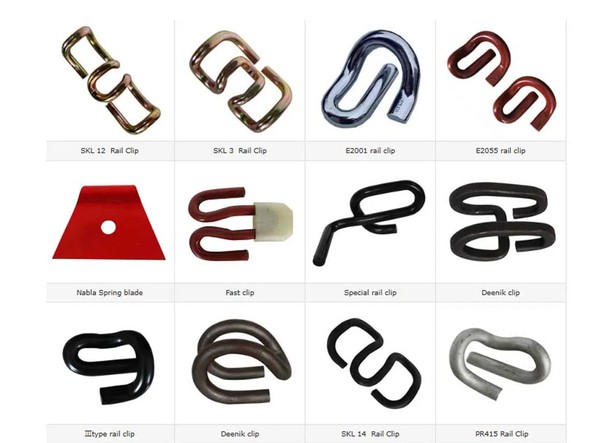
Installation Procedures
While steps vary by system type, common processes for spiral-spike systems include:
Place Rubber Padding Plate:
Position the pad accurately in the sleeper's rail seat to buffer vibrations and insulate.
Install Gauge Retainer:
Select the appropriate retainer per design gauge, ensuring tight fit against rails and sleepers to fix gauge.
Mount Elastic Clip:
Secure the clip onto the retainer and rail, relying on elastic deformation to generate clamping force.
Tighten Spiral Spike:
Use a torque wrench to achieve specified values (e.g., Type II system requires 100–140N·m) to:Prevent loosening without over-tightening damage.

Installation Methods
Manual Installation:
Suited for small-scale/spot repairs, using basic tools.
Demands high technical skill but offers lower efficiency.
Mechanical Installation:
Employs electric/hydraulic tools (e.g., torque wrenches, hydraulic tensioners) for:
Precise torque control
Higher efficiency in large projects
Application: High-speed rail projects often use automated machinery for rapid, accurate installation.


Post-Installation Quality Checks
Torque Verification: Ensure spikes meet specified torque standards.
Visual Inspection: Check correct component placement and damage.
Gauge Measurement: Confirm track gauge aligns with design specs.
Corrective Actions: Adjust or replace faulty parts promptly to guarantee installation quality for safe rail operation.

GNEE RAILWAY RAILWAY is a professional company specializing in the international trade of railway fasteners, mainly supplying various track fasteners, connecting bolts, elastic washers and other products. We have stable production bases and a professional quality inspection team to ensure that each batch of products meets international railway industry standards.