


Rail Defect Classification and Standards
To ensure effective rail inspection, monitoring, replacement, and daily maintenance, rail damage is classified into three categories: minor defects, severe defects, and broken rails.
- Minor defects: A rail with minor defects has sustained some damage but still retains sufficient strength for normal operation.
- Severe defects: A rail with severe defects has significantly reduced strength due to damage and must be taken out of service.
1. Rail Head Wear
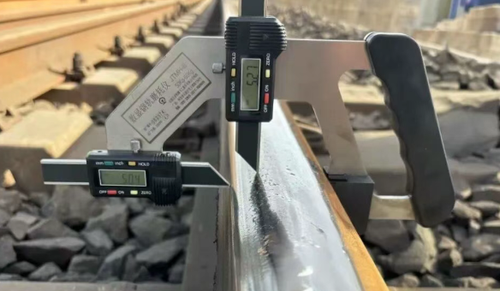
As the rail head wears down, its cross-sectional area decreases. This reduces both its strength and bending resistance.The safety standard for minor defects allows only a small amount of wear. This conservative limit ensures that the rail can still be reused or transposed (turned).
In contrast, the standard for severe defects focuses on safety under heavy wear. If wear exceeds this limit, the rail can no longer guarantee the required strength and bending resistance. Additionally, there is a risk that passing wheels will strike the joint bars (fishplates).
2. Spalling and Chipping at Rail Ends or Running Surfaces
This type of damage is caused by wheel-rail contact fatigue and dynamic impact loads.Severe spalling and chipping create surface irregularities. This worsens the stress conditions on both the rail and the track structure. As a result, track defects-such as component damage, sleeper failure, and mud pumping-can emerge and develop rapidly.

Furthermore, microcracks in the spalls can propagate inward, potentially leading to rail breakage. Therefore, once this damage reaches a certain threshold, the rail is classified as severely defective.
3. Wheel Burns on the Rail Running Surface
Wheel burns are caused by improper locomotive operation. When locomotive wheels slip, intense friction generates localized high temperatures on the rail surface. This is followed by rapid cooling at ambient temperature, which forms a brittle martensitic structure on the rail head.
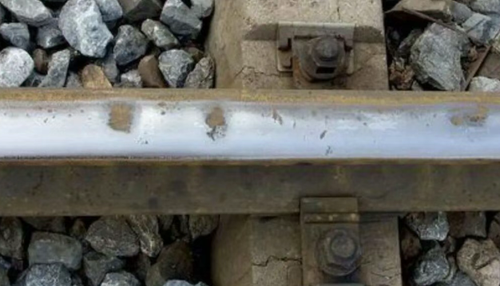
This metallurgical structure is highly susceptible to brittle cracking, leading to severe spalling and chipping. Furthermore, these surface cracks can propagate downward to develop into transverse defects (internal nuclear defects).
4. Dipped Rails

Dipped rails are caused by rail head wear and rail end deformation. This type of damage is more common in lighter rail profiles.
5. Rail Corrugation
Rail corrugation refers to periodic irregularities on the rail running surface caused by wear. Corrugation with a wavelength of 30–80 mm is classified as short-pitch corrugation (rippling). Wavelengths above 80 mm are classified as long-pitch corrugation.
The causes of corrugation are complex. They are closely linked to track elasticity and the yield strength of the rail steel. When corrugation becomes severe, it intensifies the wheel-rail interaction force and track vibration. This leads to greater damage to the track structure. It increases the maintenance workload and makes upkeep highly difficult.
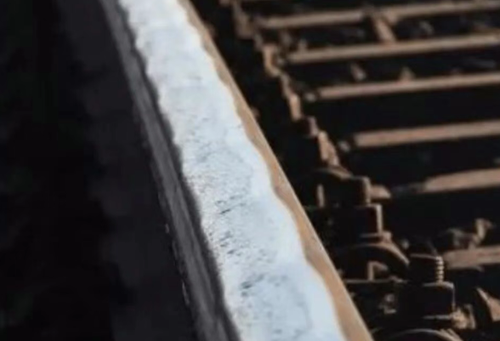
Since there is currently no precise, experience-based threshold for rail replacement due to corrugation, grinding trains are typically used for timely rail grinding, or the rails are replaced.
Higher train speeds significantly increase sensitivity to rail surface irregularities. Even minor irregularities can cause massive wheel impacts on the rail, leading to cracking or sudden breakage.
6. Rail Surface Cracks
Rail surface cracks are categorized into two types:Non-contact surface cracks: These include bolt-hole cracks, horizontal cracks under the rail head (where rust bleeding under the head is a sign of horizontal cracking due to oxidation), horizontal web cracks, vertical or horizontal split heads, and base cracks. These cracks are typically initiated by non-metallic inclusions during rail manufacturing or defects introduced during processing (such as burrs, sharp notches, and nicks). Under bending and dynamic impact loads, these cracks propagate. Such cracks often lead to rail breakage or rail head breakout (head shedding). Consequently, rails with these cracks are classified as severely defective and must be addressed immediately.
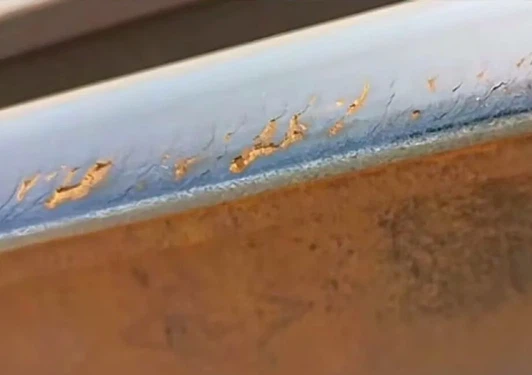
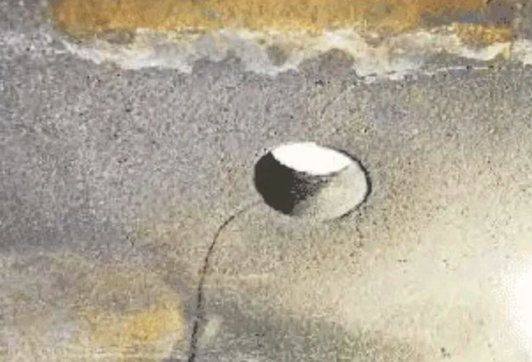
Rolling contact fatigue (RCF) cracks: These develop on the running surface, such as head checking (fish-scale cracks) and oblique cracks at the gauge corner. Typically, these cracks propagate at an angle of 10° to 15° relative to the direction of train travel. They usually range from 2 to 5 mm in depth, but severe cases can reach 8 to 10 mm. These cracks easily lead to rail shelling or chipping, and in extreme cases, they can cause a complete rail break.
7. Internal Rail Cracks

Internal rail cracks are sub-surface defects that initiate and propagate under service loads.These include cracks that originate from non-metallic inclusions as fatigue sources (such as shiny "white nuclei" or hydrogen flakes, and internal longitudinal cracks). They also include cracks that propagate inward from surface fatigue defects, such as head checking or oblique cracks acting as fatigue sources (often referred to as oxidized "black nuclei" or detail fractures).
8. Rail Deformation
Rail deformation occurs when non-metallic inclusions, elongated along the rolling direction during manufacturing, initiate cracks during track service. These cracks then expand, causing twisting, swelling, or localized distortion of the rail. This condition indicates that the rail's structural strength has been severely compromised, requiring immediate replacement.
9. Rail Corrosion
Rail corrosion reduces the cross-sectional area of the rail metal, thereby lowering its overall strength. Additionally, microcracks within the corrosion pits often serve as initiation sites for fatigue crack propagation. Rail corrosion predominantly occurs in tunnels and regions prone to saline-alkali attack.
Understanding rail defects and adhering to strict inspection standards are vital steps in ensuring the safety, stability, and longevity of railway networks. Preventing track failures starts with selecting the right materials and maintaining strict quality control from the very beginning.
At GNEE RAILWAY RAILWAY, we support railway operators and contractors worldwide by providing a comprehensive selection of steel rails. We supply rails in various international standards and specifications to match the precise engineering requirements of your projects.
To minimize the risk of premature defects-such as surface cracking, head wear, or internal fatigue-we enforce strict quality management throughout our manufacturing processes. Our goal is to deliver durable, dependable rail products that withstand demanding operational conditions.
Whether you require specific technical standards or need help choosing the right rail profile for your track, our team is here to help. Contact our rail specialists today to discuss your project requirements, request a quote, or receive a technical consultation. We look forward to working with you to build safer, more reliable tracks.