


Corrosion Fatigue and Long-Term Protection Technology for Fishplate Bolts
Q1: What is the formation mechanism of corrosion fatigue of fish plate bolts?
A1: Fish plate bolts bear alternating shear force and tensile pressure caused by train load at the same time, and are acted by corrosive media such as rain, salt spray and stray current. Corrosion will form micro-cracks on the bolt surface, and alternating load will promote the rapid expansion of micro-cracks, eventually leading to bolt fracture. The coupling effect of corrosion and fatigue is the core mechanism of corrosion fatigue failure.
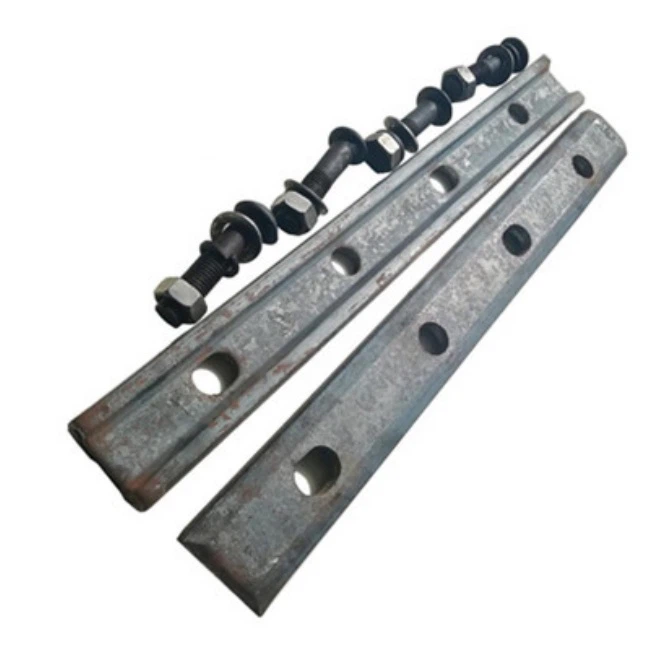
Q2: Why is the corrosion fatigue of fish plate bolts more serious in coastal areas?
A2: The high salt fog and high humidity environment in coastal areas will accelerate the electrochemical corrosion of the bolt surface, forming a large number of corrosion pits as crack sources; at the same time, the alternating stress caused by high-frequency train vibration will rapidly expand these cracks. Compared with inland areas, the corrosion rate and fatigue expansion rate of bolts are greatly improved, and the corrosion fatigue problem is more prominent.

Q3: What is the difference in protection aging between hot-dip galvanizing and dacromet coating for bolt protection?
A3: The protection aging of hot-dip galvanizing coating is about 5-8 years, suitable for fish plate bolts in ordinary environments; dacromet coating has no hydrogen embrittlement risk, its salt spray corrosion resistance is 3-5 times that of hot-dip galvanizing, the protection aging can reach more than 10 years, which is more suitable for bolts in corrosive environments and can effectively delay the occurrence of corrosion fatigue.

Q4: What impact does bolt installation process have on corrosion fatigue protection?
A4: Applying special thread anti-corrosion grease during bolt installation can fill thread gaps and isolate corrosive media; reaching the standard torque can ensure the close fit between bolts and fish plates and reduce electrochemical corrosion of contact surfaces; installing elastic gaskets can buffer vibration and reduce alternating stress amplitude, improving the corrosion fatigue resistance of bolts from the installation link.
Q5: How to detect and treat corrosion-fatigued fish plate bolts in operation and maintenance?
A5: Regularly use ultrasonic testing to detect internal cracks of bolts and visual inspection to judge the surface corrosion degree; replace bolts with corrosion pits and micro-cracks in time; clean the surface of slightly corroded bolts and reapply anti-corrosion grease; increase the detection frequency in coastal and humid sections to predict the risk of corrosion fatigue failure in advance.