


More About Rail Spike
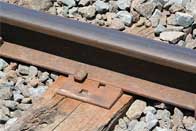
Rail spikes are large nails with an offset head utilized for securing rails and base plates to railroad ties in rail tracks. They typically range in size from 9 to 10/16 inches square and approximately 5.5 to 6 inches in length.
In general, rail spikes are driven with their edges perpendicular to the grain, providing greater resistance to loosening. Their primary function is to maintain the rail in gauge. When fastening tie plates, the attachment is made as robust as possible. However, when attaching a rail to a tie or tie plate, the spike typically doesn't need to exert a strong vertical force, allowing the rail some degree of movement.
Traditionally, spikes were manually driven into wooden sleepers by hammering them with a heavy hammer. Today, this manual labor has been replaced by machines known as "spike drivers." To minimize wood splitting, spike holes may be pre-bored or steel bands may be added around the wood.
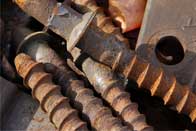
Types of rail spikes include dog spikes, screw spikes, rail drive spikes, and spring spikes, among others.
 |
 |
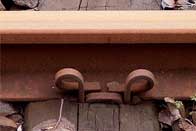 |
| rail dog spike | rail screw spike | rail spring spike |