


The standardized use of railway fasteners is the key to ensuring the safe and smooth operation of trains. From pre-use preparation, installation operation to later maintenance, every link is crucial.
I. Pre-use preparation
1. Accurate selection and adaptation
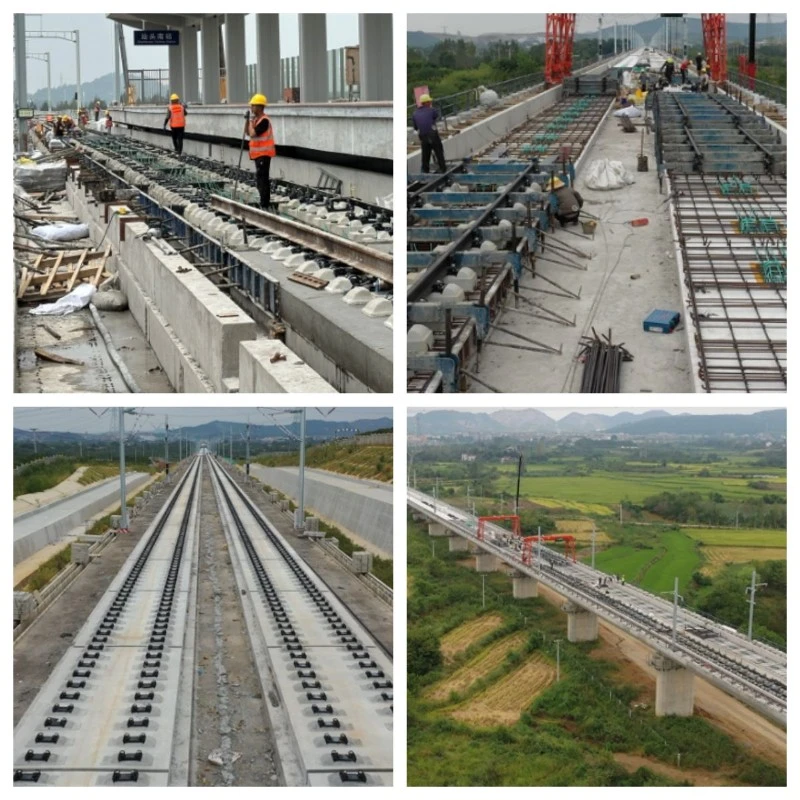
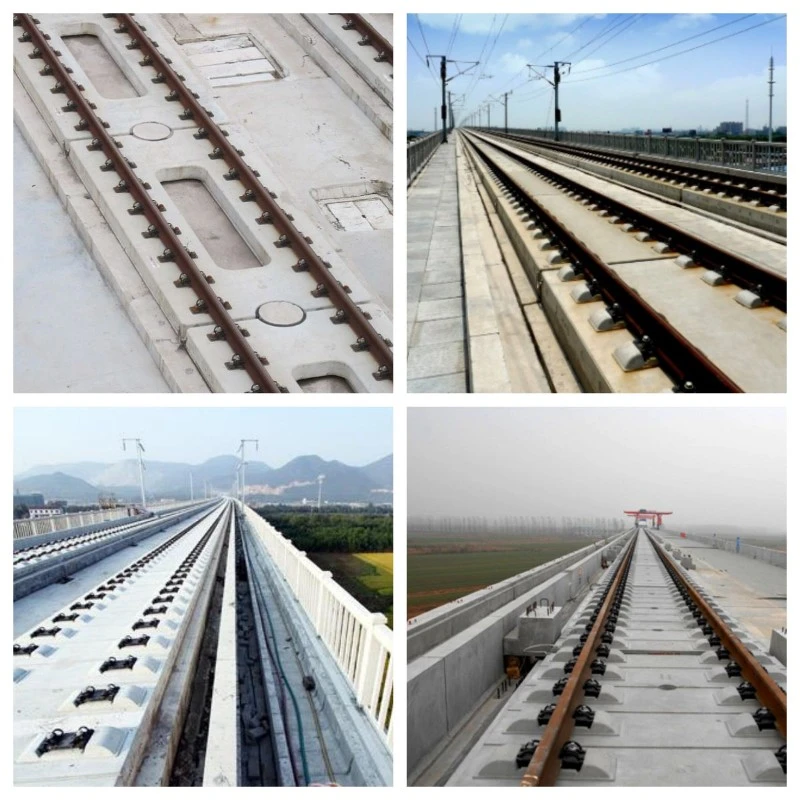
Select the appropriate fastener type and specification according to the railway line type (such as high-speed railway, heavy-load railway, ordinary railway) and rail type (such as 60kg/m, 75kg/m rail). High-speed railways mostly use type III spring clip fasteners with high buckling force and good elasticity; heavy-load railways are suitable for SKL series fasteners with strong fatigue resistance; ordinary railways can choose type I or type II spring clip fasteners. At the same time, ensure that the various components of the fasteners (such as spring clips, rail pads, and insulating gauge blocks) match the size of the rails and sleepers.
2. Strict quality inspection
Carefully check the appearance of each component of the fastener. The spring clip must not have cracks, deformation or rust; the rail pad must not be damaged or aged; the bolts must not have thread slippage or damage to the threads; the insulation performance of the insulating components must meet the standards. Any fasteners with quality defects are strictly prohibited from use to avoid hidden dangers in operation.
3. Professional tool preparation
Prepare special installation tools such as spring clip wrenches, torque wrenches, and spike hammers. Spring clip wrenches are used for the installation and removal of spring clips; torque wrenches ensure that the bolt tightening torque meets the design standards (such as the bolt torque of type III spring clip fasteners is generally 100-150N・m) to ensure stable buckle pressure.
II. Installation and operation specifications
1. Installation of non-separable fasteners
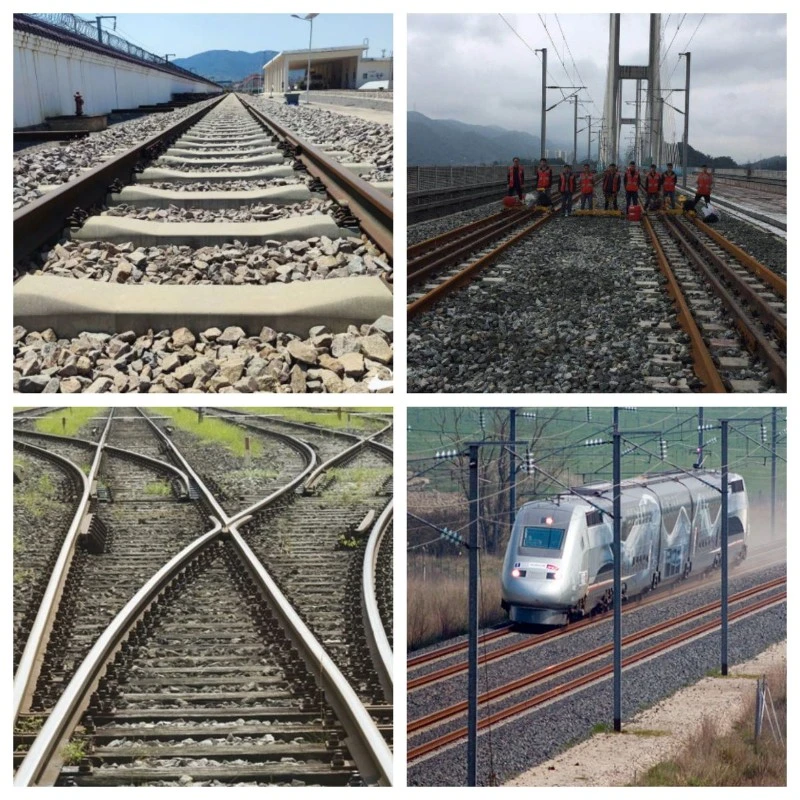
Take spring clip type IV fasteners as an example. First, lay a rubber pad in the rail groove of the sleeper to ensure that the pad is flat and wrinkle-free; lift the rail above the sleeper and align it with the designed position; use a spring clip wrench to clamp the spring clip into the buckling position between the rail and the sleeper, so that the spring clip fits tightly with the rail and the sleeper; finally, use a torque wrench to tighten the bolts according to the specified torque. After installation, check whether the spring clip buckle pressure meets the standard and whether the rail is stable.
2. Separate fastener installation
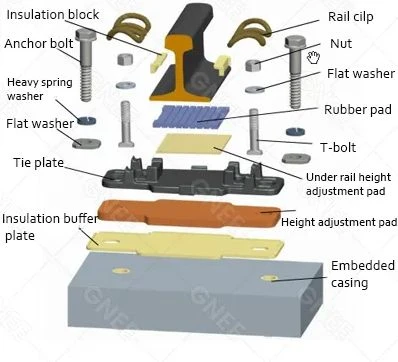
Take WJ-7 fastener as an example. First, fix the iron plate to the sleeper with anchor bolts to ensure that the iron plate is accurately positioned and firmly installed; install the insulating gauge block and adjust the gauge to the design requirements; place the rail on the iron plate and fix the rail on the iron plate with T-bolts and spring bars. Tighten the T-bolts in stages to ensure that all components are installed in place and not loose. Check the gauge and fastener installation status again.
III. Key points for use and maintenance
1. Monitoring during use
During the operation of the railway, regular inspections of the fastener status are carried out to observe whether the spring bar is displaced, loose or fatigued; check whether the bolts are loose or rusted; and check whether the pad under the rail is damaged or bulging. Record any problems found in a timely manner and arrange for professionals to handle them.
2. Regular maintenance
Clean debris, rust, oil stains, etc. on the rail surface and fastener surface regularly to prevent them from affecting the performance of the fastener; replace severely worn spring bars, bolts, pads and other parts in time; conduct a comprehensive inspection and maintenance of the fastener system every year, and re-tighten the bolts to ensure that the fastening pressure always meets the requirements.
3. Response to extreme conditions
Intensify the frequency of fastener inspections after extreme weather such as high temperature, low temperature, heavy rain, and strong wind. When the temperature is high, check whether the rails are bulging and whether the fasteners are deformed due to thermal expansion of the rails; when the temperature is low, check whether the spring bars are cracked due to cold brittleness; after heavy rain and strong wind weather, check whether the fastener connection is loose due to external force, and eliminate safety hazards in time.
Following the above-mentioned use and maintenance methods can effectively ensure the performance of railway fasteners and fasteners, and lay a solid foundation for the safe and efficient operation of railway transportation.