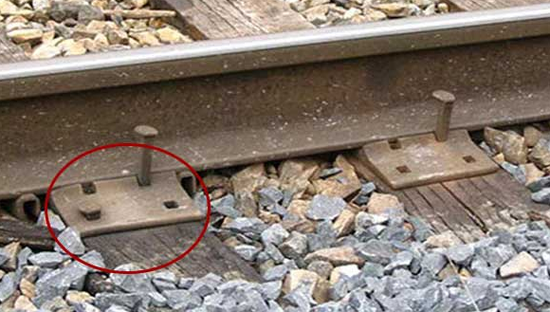
A tie plate, also known as base plate or sole plate, which is a steel plate that used between the steel rail and railway sleeper. Tie plate basically has some holes and shoulder(s). But there is no shoulder in some types of tie plate. As for the production process, tie plate can be made by three processing ways: hot-rolled, casted and forged.
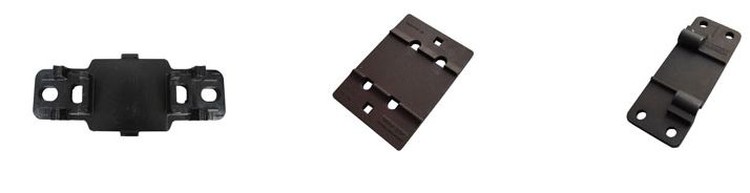
According to the different applications and design, tie plate can be divided into many types. Single shoulder tie plate, double shoulder tie plate and hook twin tie plate are three typical kinds of tie plate.
Types of Railroad Tie Plate

| Product Name | Type | Process | Material |
| Tie plate | Single Shoulder | Rolled,Forging,Casting | QT450-10,20#,35#,etc |
| Double Shoulder | |||
| Hook Twin Tie Plates | |||
| Direct Fixation Tie Plates | |||
| Other kinds of baseplate are also available according to your drawings or samples! | |||
Rail Tie Plate Specifications
| Appications | Apply for rail UIC54, UIC60, 50kg rail, 60kg rail, S49 and size as ordered | |||
| Raw Material | QT500-7 (Casting iron) | QT450-10 (Casting iron) | Low Carbon Steel | High Carbon Steel |
| Chemical Compostition (%) | C:3.60-3.80, Mn:≤0.6, | C:3.40-3.90, Mn:0.2-0.5, | ||
| Si:2.50-2.90, P:≤0.08, S:≤0.025 | Si:2.70-3.00, P:≤0.07, S:≤0.03 | |||
| Production Engineering | Forging ,Casting ,Rolling | |||
| Surface Treatment | Plain ,Sandblasting | |||
| Standard Reference | AREMA ,GB,JIS E1110, UIC864-6, | |||
Technical Parameter for popular rail tie plates
| Type | Dimension | Holes | Incline | Rail | Weight(Kg) |
| Rph 1/160 | 345/285/127/160x15/13 | Ø 26 (4x) | 1:40 | S 49/S 54 | 7,86 |
| Rp 01/01/160 | 345/285/127/160x15/13 | Ø 26 (4x) | 1:40 | S 49/S 54 | 7,70 |
| Rph 1/210 | 345/285/127x210x15/13 | Ø 26 (4x) | 1:40 | S 49/S 54 | 10,55 |
| Rph 1/210 | 345/285/127x210x15/13 | Ø 36,3 (2x) | 1:40 | S 49/S 54 | 10,55 |
| Rph 1/210 FVZ | 345/285/127x210x15/13 | Ø 26 (4x) | 1:40 | S 49/S 54 | 10,69 |
| Sph 1(a) | 345/350/127x410x15/13 | Ø 26 (8x) | 1:40 | UIC 60 | 20,60 |
| Rph 6/160 | 370/310/152x160x15/13 | Ø 26 (4x) | 1:40 | UIC 60 | 8,44 |
| Rph 6/210 | 370/310/152x210x15/13 | Ø 26 (4x) | 1:40 | UIC 60 | 11,32 |
| SZ 60 | 370/350/152x420x15/13 | Ø 26 (8x) | 1:40 | UIC 60 | 22,73 |
| Rph 11 Ü | 664/554x160 | Ø 26 (4x) | 1:40 | S 54 | 15,37 |
| Rph 13 Ü | 690/570x160 | Ø 26 (4x) | 1:40 | UIC 60 | 15,27 |
| Rpo 5 | 345/285/127x160x15/13 | Ø 26 (4x) | 1:20 | S 49/S54 | 8 |
How to Install Railway Sleeper Tie Plates
Preparation & Inspection
- Clean the sleeper surface to remove dirt, debris, or old fasteners.
- Check the rail tie plate for defects (cracks, warping, or corrosion).

Positioning the Plate
- Place the sleeper plate on the sleeper (wood, concrete, or steel).
- Align the plate with the rail seat, ensuring proper gauge width (use a rail gauge tool).
Rail Placement & Fastening
- Set the rail onto the plate's rail seat.
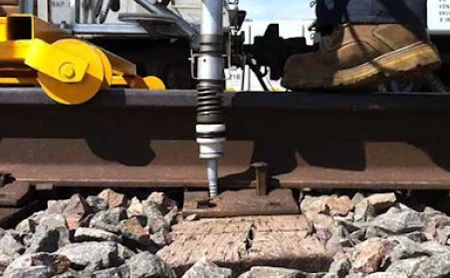
- Secure the rail using clips, spikes, or bolts (torque to 200–250 Nm for bolted plates).
Final Checks
- Ensure the plate is flush with the sleeper (no rocking movement).
- Verify rail cant (1:20 or 1:40 inclination, depending on design).