


Functional Characteristics of Screws and Bolts
Screws and bolts serve distinct purposes in railway fastening systems, each with unique characteristics and applications.
Screws:
Larger in volume and length.
Typically feature a sharp point at the bottom.
Directly tightened into the fixed body.
Paired with washers and plastic dowels.
Used to fasten tie plates and the overall fastening system.
Screws are designed to penetrate directly into the fixed body, making use of their sharp point and long length. They are commonly employed to secure tie plates and the fastening system to concrete or wooden sleepers. The addition of washers and plastic dowels enhances the fastening mechanism and ensures a secure connection.
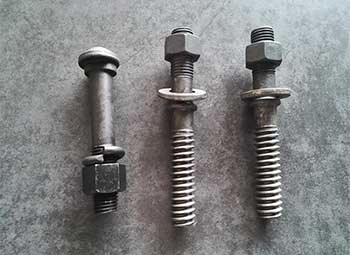
Bolts:
Smaller in volume and length.
Often have a flat or plane shape at the bottom.
Secured by clamping with nuts.
Matched with washers and nuts.
Used for fastening rail clips and rail joints.
Bolts, in contrast, are smaller in size and typically have a flatter bottom surface. They are secured by clamping with nuts at both ends of the connection parts. Bolts are commonly employed to fasten rail clips and rail joints together. Washers are utilized in conjunction with nuts to enhance the clamping force and provide a stable connection between railway fasteners and fishplates.