


Torque control and maintenance of fastening systems
- How are the torque standards for different components (bolts, nuts, etc.) in the fastening system determined?
The torque standards for bolts and nuts are mainly determined based on their material, size specifications, and the requirements of the connected components. For high-strength bolts, which can withstand large tensile and shear forces, the torque standards are relatively high to ensure a firm connection under external forces such as train loads. For example, for commonly used 8.8-grade high-strength bolts, the corresponding torque value needs to be determined according to their diameter. It is generally calculated by the product of the torque coefficient and the bolt pre-tightening force. The torque coefficient is determined by the manufacturing process and surface state of the bolt, and the pre-tightening force is determined based on the stress analysis of the connection part to ensure that the bolt does not loosen or break during operation. The torque standard for nuts must match the supporting bolts, and factors such as the thread type and thread angle of the nut should also be considered. Fine-thread nuts may have slightly lower torque values under the same conditions because fine threads have better self-locking performance. When connecting components of different materials, such as connecting rails and concrete sleepers with bolts, the difference in elastic modulus between the two materials should be considered to prevent damage to the sleeper due to excessive torque or loosening due to insufficient torque. The appropriate torque standard must be comprehensively determined through mechanical calculations and test verification. In addition, reference should be made to relevant railway industry standards and specifications, such as the TB/T series standards, which clearly stipulate and guide the torque values of fastening systems for different types of railway tracks to ensure that component connections meet safety and quality requirements.

- What important effects does torque control have on the performance of the fastening system?
Appropriate torque ensures that bolts reach the specified pre-tightening force, making connected components fit closely, effectively resisting vibration, impact, and lateral forces generated during train operation, preventing relative displacement between rails, sleepers, fasteners, and other components, maintaining the stability of track geometry, and ensuring the smoothness and safety of train operation. Excessive torque may cause bolts to stretch, deform, or even break, damaging connected components such as stripping nuts or crushing concrete around sleeper bolt holes, reducing the reliability of the fastening system, and increasing track maintenance costs and safety risks. Insufficient torque fails to generate sufficient pre-tightening force in bolts, leading to loose connections. Under long-term train vibration, component wear intensifies, fastener clamping force decreases, gauge becomes difficult to maintain, and in severe cases, track diseases may occur, affecting normal railway operation. Precise torque control helps evenly distribute stress at connection points, avoid local stress concentration, extend the service life of the fastening system and related components, ensure the entire track structure operates stably within the design service life, and reduce maintenance and replacement work due to fastening system failure. Meanwhile, good torque control is a key link in ensuring track construction quality. Fastening connections that meet torque standards enable the overall performance of the track structure to meet design requirements, improving the quality and reliability of railway construction.
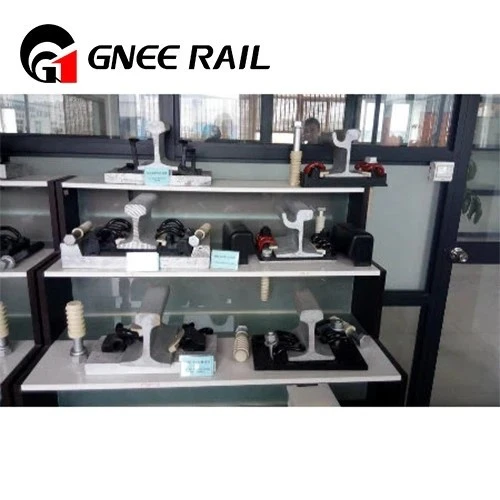
- In practical operations, how to accurately control the torque of the fastening system?
Using high-precision, calibrated torque wrenches is crucial. Select a torque wrench with an appropriate range based on bolt specifications and torque standards. Before operation, check its accuracy and functionality, and calibrate it regularly to ensure accurate and reliable torque values. Operators should receive professional training, be familiar with the use methods and operating specifications of torque wrenches, and strictly tighten according to the specified torque values, avoiding arbitrary torque application based on experience. During tightening, follow the correct sequence. For parts connected by multiple bolts, such as rail fasteners, a symmetrical, cross-tightening method is generally used to ensure even force on each bolt, gradually reaching the specified torque, preventing component deformation or uneven force due to improper tightening sequence. Use torque control equipment for auxiliary operations, such as electric torque wrenches and torque control systems. These devices can automatically control torque values and stop when the set torque is reached, improving operation efficiency and torque control accuracy, especially suitable for large-scale track construction or maintenance operations. During operation, pay attention to the impact of environmental factors such as temperature and humidity on torque. In high-temperature or humid environments, friction between bolts and nuts may change, requiring appropriate torque adjustments based on actual conditions to ensure fastening effectiveness. Meanwhile, keep operation records, including bolt specifications, torque values, operators, and operation time, for subsequent tracing and inspection.

- What changes in torque occur in the fastening system during use?
Long-term train operation vibration loosens bolts gradually, reducing torque, especially in high-vibration areas such as curves and turnouts, where torque decays faster. Temperature changes cause thermal expansion and contraction of rails and fastening components, altering bolt stress and thus torque. High temperatures may increase torque due to material expansion, while low temperatures may decrease it due to contraction. Material fatigue of bolts and nuts reduces their elastic deformation capacity, failing to maintain initial pre-tightening force, leading to gradual torque reduction, more evident in older fastening systems. External corrosive media rust bolt threads, increasing friction, possibly causing abnormal torque increase, or reducing torque under the same pre-tightening force due to reduced bolt cross-section from rust. Multiple bolt disassembly during maintenance wears threads, affecting fit accuracy, reducing torque control precision, and causing mismatches between torque and actual pre-tightening force.
- How to develop a regular maintenance plan for fastening system torque?
Determine maintenance cycles based on line operation intensity. High-speed and heavy-haul railways, with large loads and intense vibration, are recommended to check torque every 3 months; ordinary main-line railways can check every 6 months to timely detect torque abnormalities. Adjust maintenance frequency according to seasonal changes. In spring and autumn with large temperature differences, torque changes more frequently, so increase inspection times, focusing on torque-sensitive areas. For key parts such as turnouts, curves, and bridge ends, shorten maintenance cycles. These areas have complex forces and volatile torque, requiring monthly special inspections. The maintenance plan should include torque detection, retightening, and recording. Retighten bolts with torque deviations exceeding ±10%, and record detection data in detail to provide reference for subsequent maintenance. Regularly train maintenance personnel to ensure they can correctly use detection tools, accurately judge torque status, and improve maintenance quality and efficiency.