


The Influence of Temperature Stress on the Decrease of Fastener Pressure
Q1: Why does high temperature cause a decrease in clip clamping force?
A1: At high temperatures, the rail elongates and tends to warp upward, subjecting clips to additional uplift force that offsets the actual effective clamping force. At the same time, the under-rail pad softens and creeps under heat, moving the clip working point downward and further reducing clamping force, resulting in insufficient restraint.
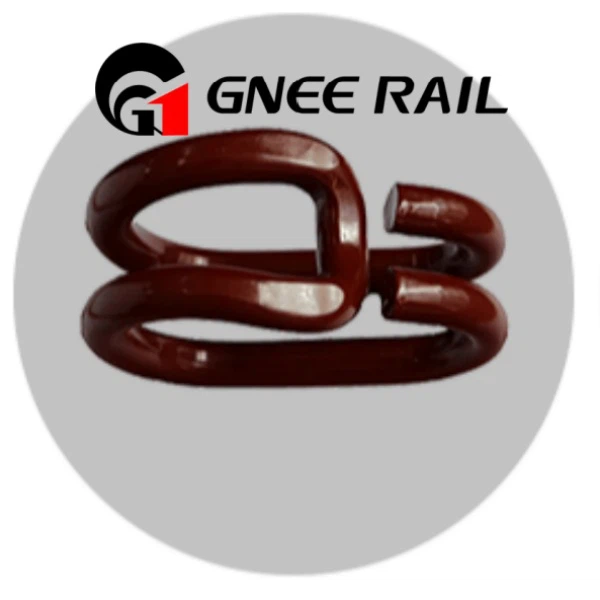
Q2: What adverse effects do low-temperature environments have on clip stress?
A2: Low temperature causes rail contraction and generates longitudinal tension, and clips bear additional combined lateral and longitudinal stress. The material toughness decreases slightly, impact resistance weakens, and stress concentration and fatigue cracking are more likely to occur under train vibration.

Q3: Why is fastener loosening more frequent in areas with large diurnal temperature differences?
A3: Repeated temperature expansion and contraction cause continuous relative slip between rails and fasteners, resulting in fretting wear on threads and contact surfaces. Temperature cycles lead to repeated fluctuations in clip stress, gradual torque attenuation, and a significant increase in the probability of fastener loosening.

Q4: Does thermal stress aggravate permanent deformation of clips?
A4: Yes. The superposition of thermal stress and train load keeps clips in a long-term high-stress state, resulting in plastic deformation after exceeding the material yield limit. After deformation, the clips cannot restore their original elasticity, and the clamping force continues to lose, forming irreversible attenuation.
Q5: How to reduce the impact of thermal stress on fasteners through operation and maintenance?
A5: Reasonably arrange the rail locking temperature to reduce the amplitude of thermal force. Regularly retighten the clip torque to compensate for the attenuation caused by temperature. Select pads with excellent creep resistance and temperature change resistance. Intensify inspection in extreme temperature seasons and handle loosening in a timely manner.