


A rail fish plate is a steel coupling element that restores cross-sectional stiffness at rail discontinuities by clamping the rail webs together, reducing local deformation and preventing rapid degradation of rail ends under repeated axle impacts. GNEE RAIL manufactures fish plates for international rail systems including GB, UIC, DIN536, QU, JIS, AS1085, BS11, and AREMA/ASCE standards, and provides technical confirmation of rail profile compatibility before production.
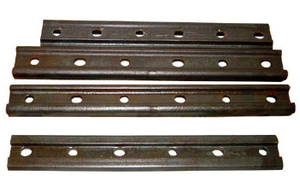
Why are rail joints used in railways?
Rail joints, also known as fishplates or joint bars, are essential for connecting individual steel rail sections into a continuous track, ensuring structural integrity, safety, and alignment. They allow for the expansion and contraction of rails due to temperature changes and facilitate easier installation and maintenance, although they are considered a weaker point in track structure compared to continuous welded rails.
Key purposes and functions of rail joints include:
- Structural Continuity: They connect two rail ends together, providing a continuous, smooth surface for wheels to pass over safely.
- Temperature Expansion: Rail joints provide a necessary gap (expansion joint) between rail ends, allowing for thermal expansion and contraction, which prevents the tracks from buckling in heat or snapping in cold weather.
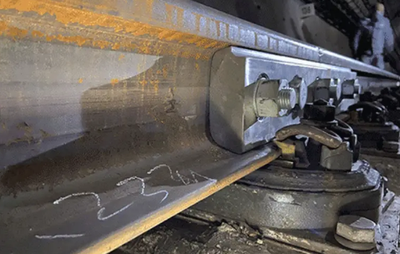
- Support and Stability: They hold the rail ends securely in both vertical and horizontal positions, preventing misalignment.
- Load Distribution: Rail joints help distribute the vertical pressure from train wheels across the sleepers (railroad ties).
- Electrical Insulation: In many systems, specially designed insulated rail joints are used to separate electric circuits for signaling purposes, ensuring accurate train detection.
What are the common problems with fish plates?
Common problems with fish plates, which are essential for joining railway tracks, include bolt loosening from vibrations, accelerated corrosion, structural failure, and wear at the rail contact point. These issues can cause track misalignment, increased maintenance, and reduced stability.
Key Issues with Fish Plates
- Bolt Slackening: Frequent, heavy traffic causes bolts and nuts to loosen, leading to weak connections and increased noise.
- Corrosion and Rusting: Exposure to moisture, especially in coastal or humid areas, leads to oxidation and structural weakness.
- Wear and Tear: Constant impacts from trains create metal fatigue, reducing the thickness and strength of the plate.
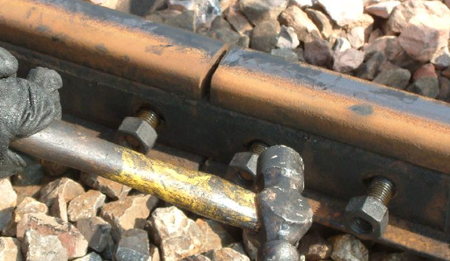
- Cracks and Breakage: Overloading or using inferior, brittle materials leads to fracturing.
- Mismatched or Improper Installation: Using the wrong fish plate for the rail profile causes gaps, increasing stress and speeding up wear.
- Inadequate Maintenance: Neglecting to tighten or replace damaged plates leads to, in severe cases, track deformation.
How to extend the service life of a rail joint?
Extending the service life of a rail joint involves regular, proactive maintenance, including cleaning debris quarterly, applying lubricant to minimize wear, and using shims to address "dipped" joints. Key strategies also involve tightening or replacing fasteners, periodic welding repairs, and utilizing preventative grinding to remove surface defects.
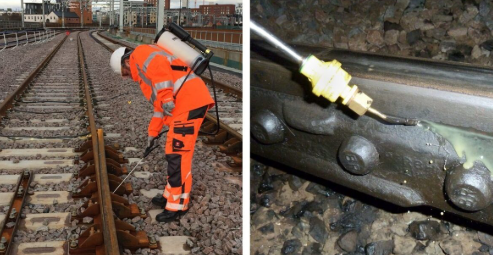
- Regular Inspections: Use ultrasonic or manual testing to detect hidden cracks, loose bolts, and surface damage.
- Lubrication: Apply suitable lubricant to the joint, which can increase its life by 3–5 times.
- Preventive Grinding: Perform grinding to eliminate surface irregularities, such as corrugated wear, which reduces joint fatigue.
- Installing Shims: Bance Shims are effective at fixing "dipped" joints, which are common in older rail segments, by supporting the joint.
- Cleaning: Regularly remove debris from joint areas to prevent corrosion and damage.
- Welding Repairs: Utilize Thermit welding to repair cracked or worn joints.
- Ballast Management: Ensure proper tamping and, if necessary, use undersleeper pads (USPs) to reduce stress on joints and prevent uneven settling.
Founded in 2008, GNEE RAIL is a leading global manufacturer and supplier of railway components, specializing in high-quality rail fish plates (joint bars/splice bars) with strong production capacity and global service capabilities.
Our rail fish plate portfolio is comprehensive and compliant with international standards including UIC, AREMA, BS, DIN, and GB, covering light rail (8kg-30kg), heavy rail (38kg-75kg), and crane rail (QU70-QU120) systems. We offer diverse types such as insulated joint bars, bulged fish plates, and compromise rail joints,with precise specifications (4-hole/6-hole, 24-inch/36-inch), ensuring excellent mechanical performance.We uphold strict quality control supported by ISO 9001:2015 certification, an in-house inspection center, and third-party audits by SGS and BV. Our one-stop service includes customization, production, packaging, and after-sales support, tailored to clients' project needs.