


In railway track structures, maintaining a specific gap between rails is a critical design feature to ensure safe and stable operation. These gaps are typically connected and secured using rail fishplates. The primary purpose of rail gaps is to accommodate thermal expansion and contraction caused by temperature variations. During summer, rails expand when heated, while in winter, they contract when cooled. If rails were seamlessly connected without gaps, the stress from temperature changes could lead to track deformation or even fractures, significantly compromising train safety.

Fishplate-connected rail gaps not only absorb and release length variations from thermal expansion but also prevent rail misalignment and gap widening through high-strength mechanical fastening. This maintains track smoothness and geometric stability. When trains pass at high speeds, fishplates work in conjunction with other railway fasteners such as track bolts, rail nuts, flat washers, and spring washers to withstand longitudinal tension and lateral impact forces, ensuring overall track structural integrity.

Additionally, rail gaps facilitate easier maintenance and replacement, improving repair efficiency. To suit different railway grades and operating conditions, various fishplate types are available, including insulated rail joints for electrified railways and non-standard rail joints for specialized tracks.
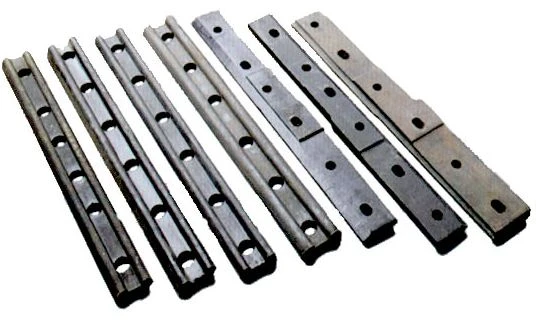
With extensive manufacturing experience and strict quality control, GNEE RAILWAY RAILWAY supplies multiple types of fishplates and complementary railway fasteners, including elastic fastening clips (SKL, Fast Clip), spike types (screw spikes, square-head spikes), bolts & nuts, rail pads, gauge rods, and more. Our products meet the diverse requirements of high-speed railways, heavy-haul railways, and special track projects. Contact GNEE RAILWAY RAILWAY for professional and reliable railway fastening solutions to ensure the safety and efficiency of your rail projects.
