


Railway Tie plate
A railway tie plate, also known as a base plate or sole plate, is a crucial component in railway track systems. Its main function is to secure rails to wooden or concrete sleepers (ties) while evenly distributing the load from the rails to the sleepers. They feature holes or slots for the insertion of rail spikes or bolts, which fasten the rail to the tie plate and secure it to the sleeper. Beyond securing the rail, railway tie plates help maintain proper gauge (the distance between the rails) and prevent lateral movement of the rails, ensuring safe train passage.
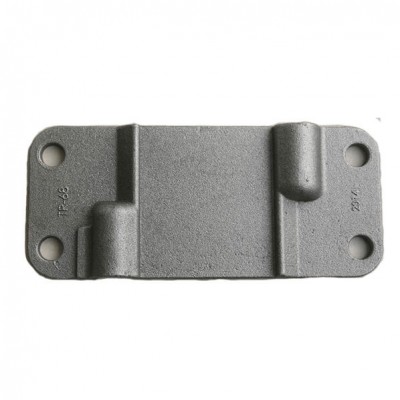
Types of tie plates
Tie plates can be made of either cast iron or cast steel, chosen based on load requirements and rail type. Cast iron tie plates may be welded or fabricated according to customer preferences.
The prevailing type is the double-shoulder design. Formerly used single-shoulder tie plates were adaptable to various rail widths, with the single shoulder positioned on the outer side of the rails.
Primary Functions
Tie plates are employed in rail construction to offer support to the rails and distribute the load from the rail to the sleepers.
They serve to expand the bearing area and maintain the correct gauge of the rail.
Tie plates prevent damage to sleepers from rubbing and firmly secure spikes in place.