


SKL spring bar fastener system is the key guarantee for the stable operation of railway tracks. Its core, SKL spring bar, plays an irreplaceable role in railway construction and maintenance with its unique design and excellent performance.
In terms of material and performance, SKL spring bars are mostly made of high-grade spring steels such as 60Si2MnA and 60Si2CrA. After special heat treatment, the hardness of such steels can reach HRC 42-47. Such high hardness gives SKL spring bars excellent fatigue resistance. Its fatigue life can reach 3-5 million cycles, and it can always maintain a stable state under the long-term high-frequency rolling and vibration of trains. Common SKL1, SKL3 and other models of spring bars adopt a clever arc structure design, using their own elastic deformation to generate stable buckling pressure, tightly clamping both sides of the rails, and providing strong lateral constraints for the rails. When the train passes by, the SKL spring bar can effectively resist the lateral impact force and prevent the displacement of the rails. At the same time, it can also buffer the vertical load caused by the train operation and reduce the wear of the track structure.
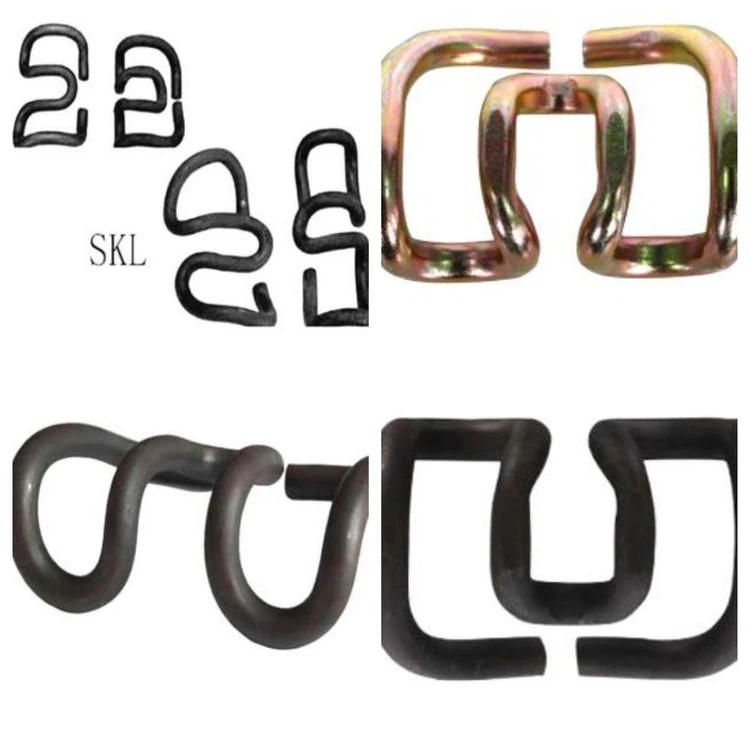
In terms of system composition, SKL spring bars do not "fight" alone, but work together with spiral spikes, flat washers, plastic sleeves and other components. Spiral spikes are generally made of 45# steel. Through precise anchoring technology, the entire SKL spring bar fastener system is firmly fixed to the sleeper to ensure the vertical stability of the system. Flat washers are mostly made of Q235 steel, which can evenly disperse the pressure transmitted by the spiral spikes and effectively protect the sleeper surface from being crushed. Plastic sleeves are usually made of HDPE or reinforced nylon 66 materials, which have good insulation and corrosion resistance. They can not only isolate the electrochemical corrosion between metal parts, but also absorb the vibration energy generated by the train operation to a certain extent and reduce noise. The various components work closely together to form a complete and efficient fastening system.

During the installation process, the installation quality of SKL spring bars directly affects the system performance. Before installation, the appearance of the spring clip must be strictly checked to ensure that there are no defects such as cracks and deformation. During installation, special tools should be used to accurately embed the spring clip between the rail and the gauge plate to ensure that the slot of the spring clip fits perfectly with the raised part of the gauge plate, and the spiral spike is tightened with a torque wrench according to the specified torque to make the spring clip reach the standard buckle pressure. Different types of SKL spring clips have different installation torque requirements. For example, the installation torque of SKL15 spring clips usually needs to be controlled at 30-50 Nm to ensure that it can provide a stable buckle pressure.

In terms of maintenance, regular inspection of SKL spring clips is crucial. During daily inspections, it is necessary to check whether the spring clip has fatigue cracks, rust, etc. If the buckle pressure of the spring clip is insufficient or the deformation is serious, it must be replaced in time. In addition, the tightening torque of the spiral spikes needs to be checked regularly to prevent the bolts from loosening due to train vibration, which affects the performance of the spring clip.

Whether it is ordinary railway, heavy-load railway, or medium- and high-speed line, the SKL spring clip fastener system can ensure the stable connection between rails and sleepers with stable buckle pressure and excellent durability, and escort the safe operation of railways. With the continuous development of railway technology, SKL spring clips will also continue to be optimized and upgraded to better meet the higher requirements of track stability and reliability in future railway transportation.