


As a key component to ensure the smooth operation of the railway, the production process of Rail Pad is rigorous and meticulous.
Taking common rubber, EVA and HDPE materials as examples, production starts with raw material screening. Rubber materials need to select natural or synthetic rubber, and add vulcanizers, accelerators and other auxiliary materials in proportion; EVA and HDPE materials must strictly control the purity and proportion of raw materials to ensure the stability of pad performance.
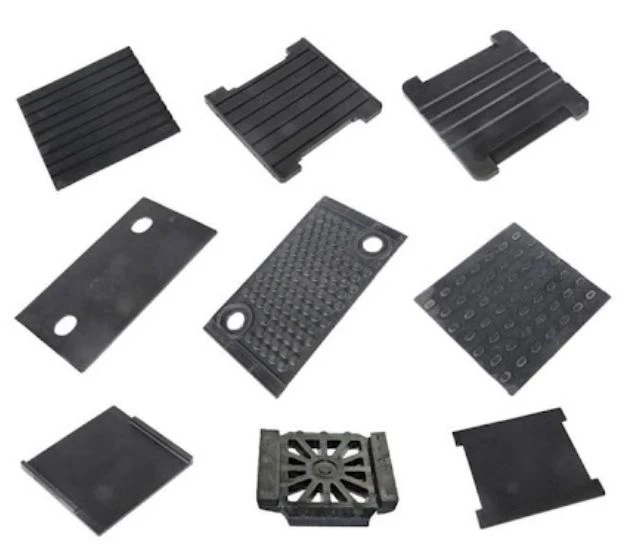
After the raw materials are prepared, they enter the mixing stage. Through equipment such as internal mixers and open mixers, the rubber or plastic raw materials are fully mixed with various additives to evenly disperse the components and improve the comprehensive performance of the materials. The mixed materials need to be parked for a period of time to eliminate internal stress and ensure the quality of subsequent processing.

The next step is the molding process. Common molding methods include compression molding, injection molding and extrusion molding. Compression molding is suitable for pads with regular shapes and large sizes. The mixed material is placed in the mold and solidified under a certain temperature and pressure. Injection molding is efficient and can produce pads with complex shapes. The material is heated and melted and then injected into the mold cavity. Extrusion molding is mostly used to produce continuous pads. The material is extruded through the extruder head and then cooled and shaped.
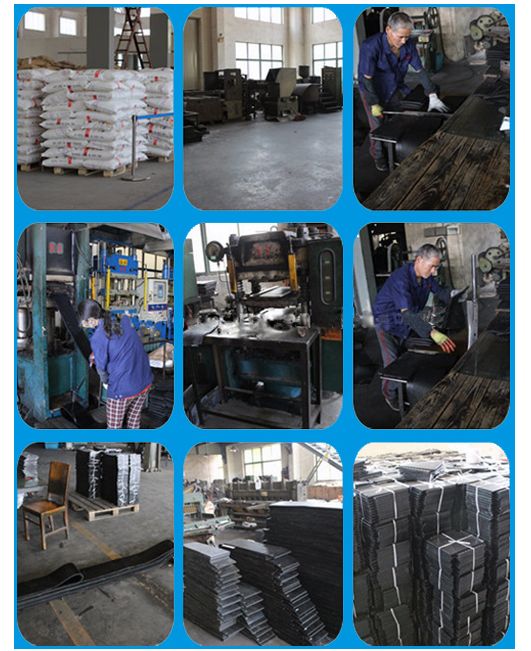
The molded Rail Pad also needs to be vulcanized (rubber material) or post-processed (EVA, HDPE material) to further optimize the material properties. Vulcanization cross-links the rubber molecules to enhance elasticity and wear resistance; EVA and HDPE pads need to be annealed to eliminate internal stress and improve dimensional stability. Finally, through multiple quality inspection processes such as appearance inspection, hardness test, compression permanent deformation test, etc., it is ensured that each Rail Pad meets strict quality standards before it can be put into use in the railway track system.