


How to Protect the Sleeper from Wear and Tear
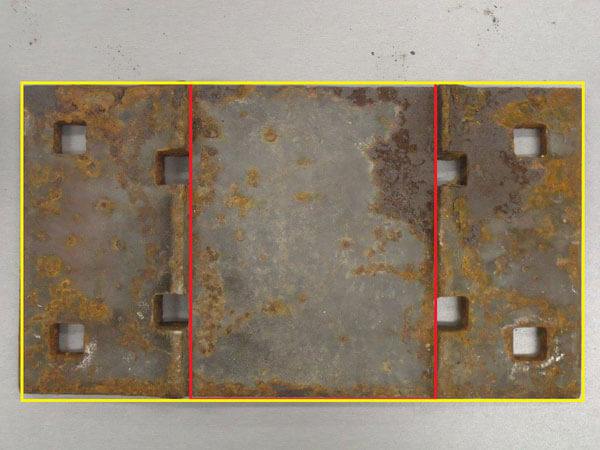
To address the significant pressure exerted by steel rails on rail sleepers, different strategies are employed for wooden and concrete sleepers:
For wooden sleepers:
Increase contact area: Wooden sleepers have a limited ability to withstand pressure, so it's crucial to enhance the contact area between the rail and the sleeper to disperse the pressure more effectively.
Utilize rail plates: Rail plates are installed on wooden sleepers to provide a larger contact area between the rail and the sleeper. By spreading the load over a larger surface area, rail plates help reduce the pressure exerted on the wooden sleeper.
In the picture provided, the yellow area represents the projection of the rail plate, which is larger than the red area representing the projection of the rail bed. This illustrates the principle that a larger contact area results in reduced pressure on the sleeper.
For concrete sleepers:
Lower pressure dispersion demand: Concrete sleepers have a higher capacity to bear pressure compared to wooden sleepers. Therefore, the demand for pressure dispersion is relatively lower.
Address dynamic impact: Despite their strength, concrete sleepers can still be susceptible to damage from dynamic impacts caused by non-round rail and wheel profiles. To mitigate this risk, composite railroad tie plates are often used with concrete sleepers. These tie plates, being softer, help absorb and reduce the impact of dynamic forces to some extent, thereby enhancing the durability of the concrete sleeper.