Advantages Of GNEE Rail Rubber Pads
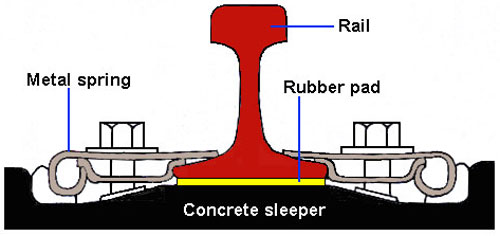
Rail pads, originally referred to as "sole" plates or pads, are employed when securing rail to concrete ties or sleepers instead of timber ones. Their primary purpose is to mitigate fatigue cracking in concrete ties, caused by the impact and vibration generated by passing trains.
Rubber rail pads are typically engineered to possess specific load-deflection characteristics. Initially, the pad's stiffness is set to be low, allowing for substantial deformation under the toe loads of the springs. This ensures continuous contact between the pad and the rail, even during vertical movements of the rail. Conversely, when a wheel passes over the pad, its stiffness must be high to prevent excessive movements that could potentially loosen the metal spring. Achieving such load-deflection characteristics often involves incorporating grooves into the rubber pads.
The combination of a studded design and specially formulated rubber compound ensures that rail pads exhibit exceptional resilience and resistance to abrasion. GNEE rail rubber pads offer several key advantages:
Significantly Improved Impact Absorption
Effective Noise Reduction
Enhanced Passenger Comfort
Prolonged Track and Ballast Lifespan