


Advancements and Challenges in Insulated Rail Joints
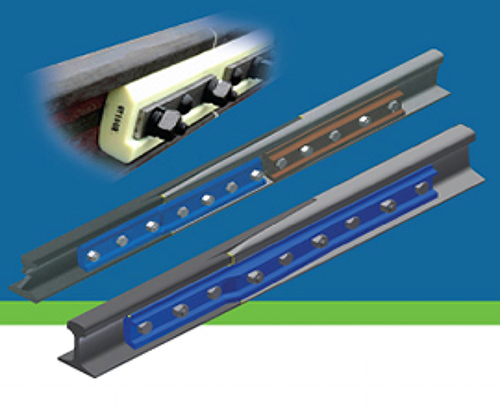
Insulated rail joints play a crucial role in signaling track circuits, compensating for the limitations of standard joints. Glued joints, filled with epoxy resin to enhance mechanical strength under stress, are particularly significant in this regard.
Glued insulated joints comprise specially designed fishplates, an insulating liner bonded with adhesive resin, insulated rods and bolts, and other insulating components. They find extensive application on long welded rails, offering resilience against temperature variations and rail loading forces. By bonding the insulating material to the steel rail components, these joints minimize gap expansion, benefiting continuous rails. They also withstand tightening forces to ensure proper clamping of clips onto the rail, tolerating traction and compression forces up to 1000 KN.
Insulating components positioned between bolts and fishplates further enhance the functionality of glued insulated joints, providing heightened safety, reliability, and durability across diverse environments. However, challenges persist, as insulated joints exhibit relatively shorter lifespans compared to other railway components under heavy loading conditions. Detecting problems with current inspection techniques and tools remains challenging, necessitating the exploration of better surveillance methods and potential improvements.
All insulated joints offered are constructed from steel or polymer composites, ensuring quality and performance standards are met.