


The Catalytic Effect of Dust and Impurities During Fastener Installation on Early Wear
Q1: Why do dust and impurities significantly accelerate fastener wear?
A1: Hard particles are sandwiched between the clip and the rail, and between the block and the rail base, forming three-body abrasive wear under vibration, continuously cutting the contact surface, rapidly changing the component size, and quickly reducing the clamping force and support accuracy.
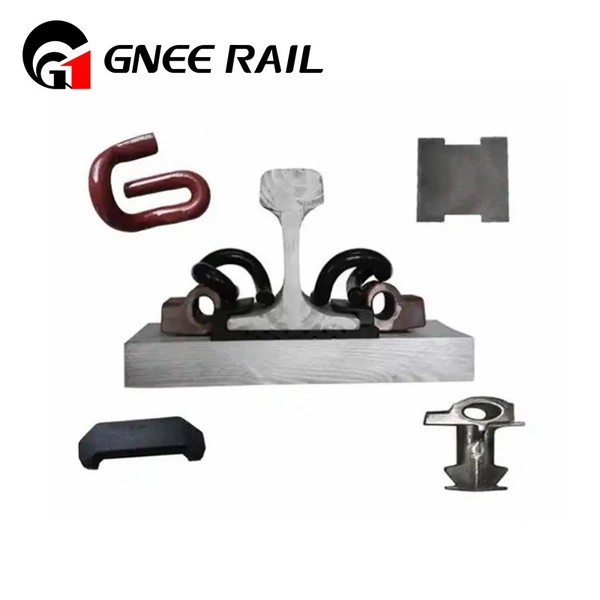
Q2: Which fastener components are most vulnerable to impurity wear?
A2: Gauge block working surface, clip-rail contact arc surface, under-rail pad upper surface, bolt thread, etc. These parts have small gaps and obvious relative movement, and impurities are easy to stay and cause continuous wear.
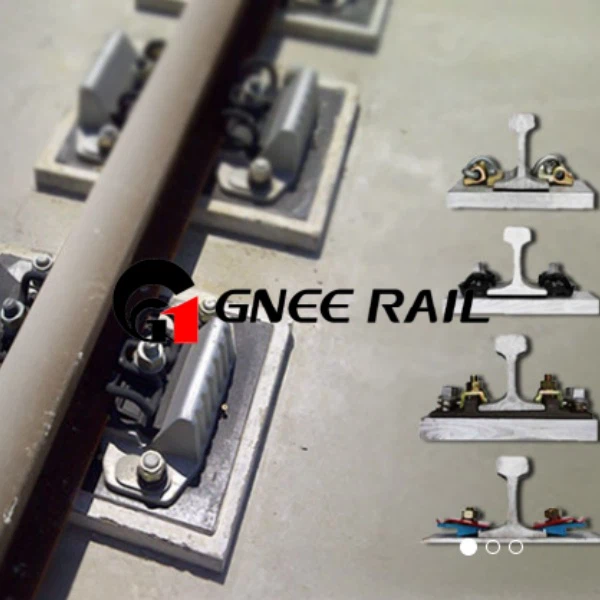
Q3: Why is impurity wear more serious in curves and joint sections?
A3: Curves have large lateral sliding and strong joint impact, the rolling and cutting effect of impurities between contact surfaces is more intense, and the line environment has more dust, so the wear rate is much higher than that in straight smooth sections.
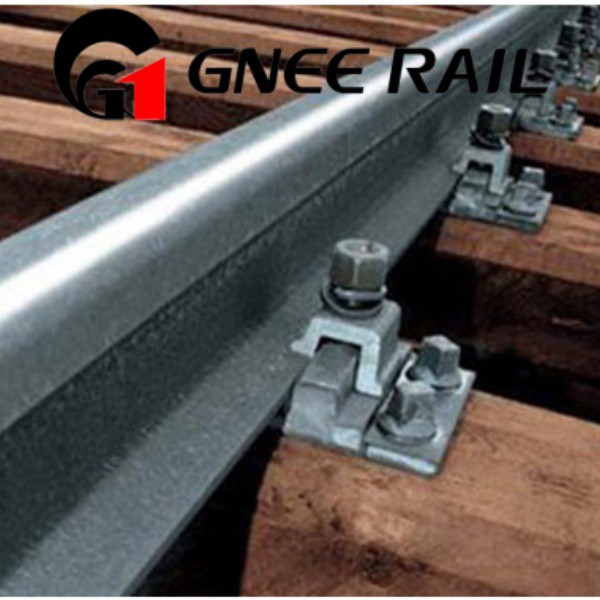
Q4: Does impurity wear induce clip stress concentration?
A4: Yes. Impurities cause local indentations and scratches, forming stress concentration points, which are easy to become fatigue crack sources under alternating loads, causing clips to crack or even fracture in a short time.
Q5: How to effectively avoid impurity introduction during installation?
A5: Clean dust and rust on the rail base, block groove and pad surface before installation; wipe clips and bolts clean; avoid construction in windy and dusty environments; check whether the contact surface is clean after installation to ensure no hard particles are trapped.