


Stress Relaxation Characteristics of Elastic Clips and Adaptation Strategies for Low-Temperature Service in Extremely Cold Regions
Why does extreme cold in alpine regions exacerbate stress relaxation in elastic clips?
Low temperatures reduce atomic thermal motion and increase dislocation slip resistance; crystal lattices in elastic deformation gradually transition to more stable states, causing slow stress release. Additionally, reduced thermal expansion coefficients create inconsistent contraction between clips, rails, and sleepers, generating additional initial stress in clips and accelerating relaxation. At -40℃, the stress relaxation rate of clips can be over 50% higher than at room temperature, significantly elevating preload loss risk.

What is the evaluation index for clip stress relaxation, and how do Chinese and international standards differ?
The core index is the stress relaxation rate (ratio of residual stress to initial stress after testing). Chinese standards require a relaxation rate ≤10% at room temperature and ≤15% at -40℃ after 1000 hours. International standards like UIC 864 impose stricter limits: ≤8% at room temperature and ≤12% at low temperatures, with the test duration extended to 2000 hours to better simulate long-term service.
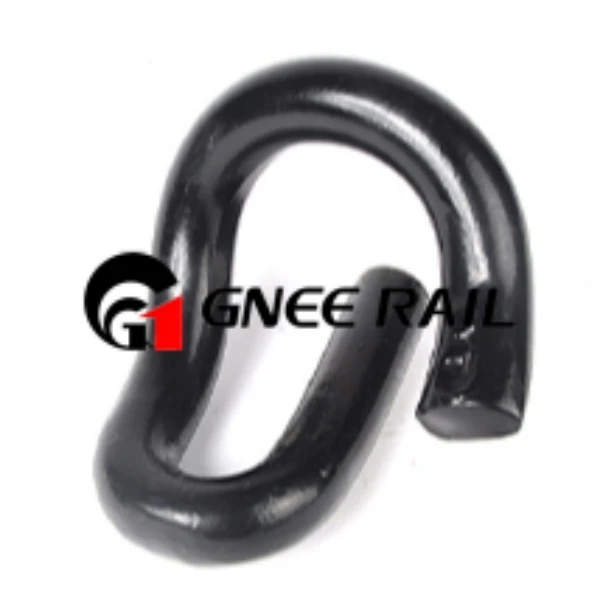
How to optimize clip materials for improved low-temperature relaxation resistance?
Low-alloy high-strength steels (e.g., Si-Mn-Cr alloy steel) replace conventional 60Si2Mn steel. Adding chromium, vanadium, and other alloys refines grain structure and forms stable carbides, hindering dislocation movement and inhibiting relaxation. Strict control of sulfur and phosphorus content reduces grain boundary embrittlement, ensuring the material has both high strength and sufficient toughness at low temperatures, avoiding brittle fracture from improper relaxation control.

How does "low-temperature tempering" in heat treatment improve clip relaxation resistance?
Clip heat treatment uses "quenching + tempering"; for alpine regions, tempering temperature is controlled at 350℃-400℃, lower than the conventional 450℃. Low-temperature tempering fully tempers martensite to form fine tempered sorbite, retaining high elastic limit while enhancing structural stability. This microstructure effectively resists low-temperature stress relaxation, maintaining stable preload during long-term service and avoiding strength loss from high-temperature tempering.
How to judge excessive stress relaxation in clips via on-site maintenance data?
The core method is periodic preload deviation testing. Specialized preload testers sample clips in alpine sections; a measured preload <85% of the initial design value indicates excessive relaxation. Visually, obvious "upward warping" of the clip's free end signals deformation changes from relaxation, guaranteeing insufficient preload. Excessively relaxed clips must be replaced immediately-retightening bolts cannot restore relaxation, as it is an intrinsic material characteristic.