


Crane rails are widely used in different types of cranes and related operating scenarios. Here are some specific applications:
Bridge crane rails: In large industrial plants, such as machinery manufacturing, automobile manufacturing, shipbuilding and other workshops, bridge cranes are usually installed. The rails are generally installed on the top steel beams of the plant along the length of the plant, providing a running track for the bridge crane, so that the crane can move forward and backward, left and right in the plant, and facilitate the lifting of various large parts, raw materials and finished products, so as to achieve efficient production operations. For example, in an automobile manufacturing workshop, a bridge crane can be used to lift large parts such as engines and car bodies to designated locations for assembly.
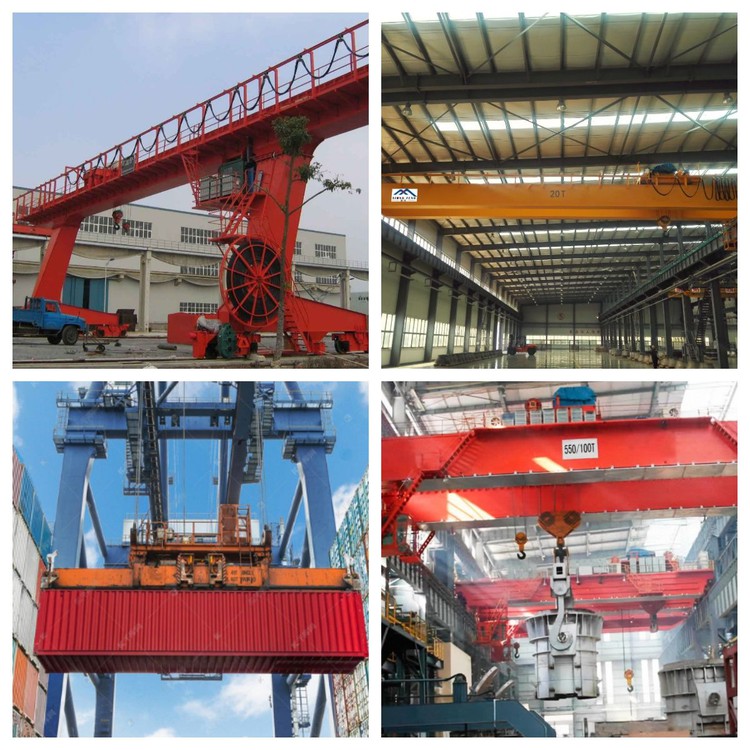
Shore container crane rails: At port terminals, shore container cranes are large equipment used for loading and unloading containers. The rails are usually installed on the concrete foundation at the front of the terminal and extend along the direction of the terminal shoreline. The crane moves on the rails through the walking mechanism, which can accurately align the containers on the ship, realize fast and efficient loading and unloading operations, and lift the containers from the ship to the terminal yard, or from the yard to the ship, thereby improving the cargo throughput capacity of the port.
Guide rails for gantry cranes: gantry cranes are also commonly used for cargo loading and unloading operations at ports, especially for the loading and unloading of some bulk cargo and piece goods. The guide rails are generally installed on the ground or trestle of the dock, and the gantry of the gantry crane runs on the guide rails through wheels. This type of crane can rotate and move within a certain range, and can flexibly adapt to the loading and unloading needs of different ships and cargoes.