


Railway Sleeper Types and Performance Compatibility
- What are the differences in material performance and application scenarios between wooden sleepers, concrete sleepers, and steel sleepers?
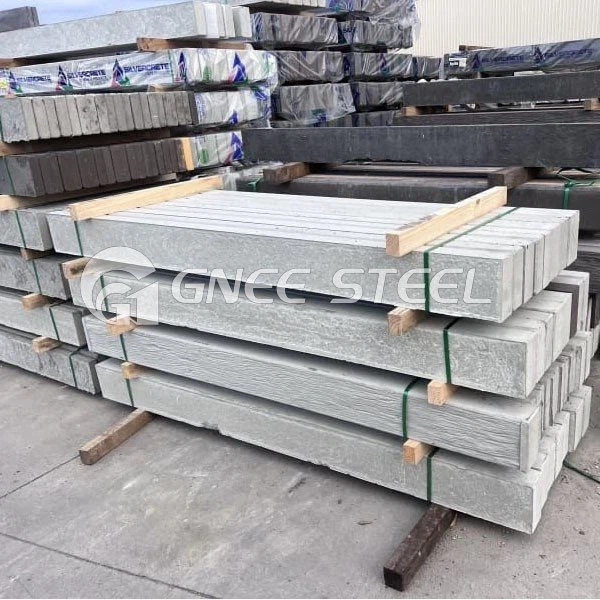
Wooden sleepers are made of pine, fir, etc., with good elasticity (elastic modulus about 10GPa), which can buffer train impact and are easy to install. However, they are prone to moth damage and corrosion, with a service life of only 10-15 years. They are suitable for mountain branch railways or temporary lines, with low cost and strong adaptability to ballast. Concrete sleepers (including prestressed concrete sleepers) use high-strength concrete (C50 and above), with a compressive strength ≥50MPa, a service life of 30-50 years, corrosion resistance and aging resistance. They are suitable for main-line railways and high-speed railways, and can withstand large axle loads and high-frequency vibrations. However, they are heavy (about 250kg/piece) and require special equipment for installation. Steel sleepers are welded from Q235 steel, with high strength (tensile strength ≥375MPa) and compact structure. They are suitable for space-constrained scenarios such as tunnels and bridges, which can reduce the thickness of ballast. However, they have high cost and are prone to rust, requiring regular anti-corrosion treatment, with a narrow application range.

- How to determine the structural dimensions (length, width, thickness) of concrete sleepers according to rail specifications?
The length of concrete sleepers must match the gauge. The length of concrete sleepers corresponding to China's standard gauge (1435mm) is mostly 2.5m, which can stably support two rails and avoid gauge deviation; the length needs to be adjusted for broad-gauge or narrow-gauge lines (such as 2.6m for broad-gauge sleepers). The width is determined according to the ballast type: the width of sleepers for ballasted tracks is 260-280mm, which can increase the contact area with ballast and improve stability; the width of sleepers for ballastless tracks is 300-320mm, which needs to fit closely with the track slab to enhance overall load-bearing. The thickness is adapted to the rail weight: 43kg/m rails are matched with sleepers of 200-220mm thickness, 50-60kg/m rails with 220-240mm thickness, and 75kg/m heavy-haul rails with 240-260mm thickness. Increasing the thickness can improve the vertical load-bearing capacity and prevent sleeper cracking.

- How to test the load-bearing capacity of sleepers, what are the test indicators, and what are the impacts of non-compliance?
The load-bearing capacity is tested through static load tests: a vertical load is applied to the middle of the sleeper (such as loading concrete sleepers to 100kN), and the maximum deflection of the sleeper (required ≤3mm) and crack width (≤0.2mm) are measured; at the same time, the lateral shear strength is tested (shear strength of concrete sleepers ≥2.5MPa). Key indicators include compressive strength, crack resistance, and elastic modulus. If the load-bearing capacity is not up to standard, the sleeper is prone to crack expansion under train load, leading to sleeper fracture, loss of stable support for the rail, and gauge deviation; long-term use will accelerate ballast settlement, increase track maintenance frequency, and may lead to train derailment in severe cases.
- What are the anti-corrosion treatment methods for wooden sleepers, and what are the effects and applicable environments of different methods?
Anti-corrosion treatment for wooden sleepers mainly includes oil immersion and pressure impregnation. The oil immersion method soaks wooden sleepers in coal tar and anti-corrosion oil, with a penetration depth of 3-5mm, suitable for dry inland areas. It has low cost but limited anti-corrosion effect, extending the service life to 15-20 years. The pressure impregnation method (vacuum pressure) presses anti-corrosion agents (such as copper chrome arsenic mixture) into the wooden sleepers, with a penetration depth ≥15mm, suitable for humid and rainy areas. It can effectively resist fungi and moth damage, extending the service life to 25-30 years, but the process is complex and the cost is high. Wooden sleepers in coastal areas need an additional asphalt protective layer to enhance salt spray corrosion resistance and prevent wood from accelerating decay due to seawater erosion.
- What are the differences in structural design between concrete sleepers for ballastless tracks and those for ballasted tracks?
Concrete sleepers for ballastless tracks (slab sleepers) have grooves or bosses at the bottom, which are connected to the track slab through a grouting layer to enhance integrity and prevent lateral displacement; the internal reinforcement of the sleeper is denser (such as 12 steel bars with a diameter of 12mm per sleeper) to improve crack resistance and adapt to the characteristics of large rigidity and concentrated vibration of ballastless tracks. Concrete sleepers for ballasted tracks have a flat bottom and sleeper nail holes (spacing 150-180mm) on the surface, facilitating the installation of spikes to fix the rails; the two sides of the sleeper are provided with shoulders, 30-40mm high, to prevent lateral extrusion of ballast and enhance ballast stability. In addition, sleepers for ballastless tracks are slightly longer (2.6m) and wider (320mm) to increase the contact area with the track slab and ensure uniform load transmission.