


In the railway system, rails are key infrastructure to ensure the safe and smooth operation of trains. As railway transportation continues to develop towards high speed and heavy load, more stringent requirements are placed on the performance of rails. As the part that directly contacts the wheel, the rail head is subjected to huge pressure, friction and impact, and is prone to wear, crushing and fatigue cracks. In order to effectively improve the comprehensive performance of the rail head, the rail head end quenching technology came into being and became an indispensable key link in modern rail production.
I. The importance of rail head end quenching
The rail head end quenching aims to significantly improve the organizational structure and performance of the rail head through a specific heat treatment process. After quenching, the hardness and strength of the rail head are greatly improved, and the wear resistance and fatigue resistance are significantly enhanced, thereby effectively extending the service life of the rail, reducing the railway maintenance cost, and improving the safety and reliability of railway transportation.

In heavy-duty railway transportation, due to the large axle weight of the train, the bearing capacity of the rail head is extremely high. The rail heads of unquenched rails are prone to severe wear and crushing in a short period of time, which not only affects driving safety, but also requires frequent replacement of rails, resulting in a significant increase in operating costs. After the use of rail head end quenching technology, the wear resistance and fatigue resistance of the rail head are greatly improved, and it can withstand long-term and frequent rolling by heavy-load trains, greatly extending the service life of the rails.
2. Process principle of rail head end quenching
Rail head end quenching is mainly based on the principle of metal heat treatment. By rapidly heating and cooling a specific area of the rail head, its organizational structure is transformed to obtain the required performance. At present, commonly used heating methods include induction heating and flame heating. Induction heating uses the principle of electromagnetic induction. When an alternating current passes through the inductor, an induced current is generated on the surface of the rail head. Due to the skin effect, the current is mainly concentrated in a thin layer on the surface of the rail, causing the surface of the rail head to quickly heat up to the austenitizing temperature (generally 850-950℃).
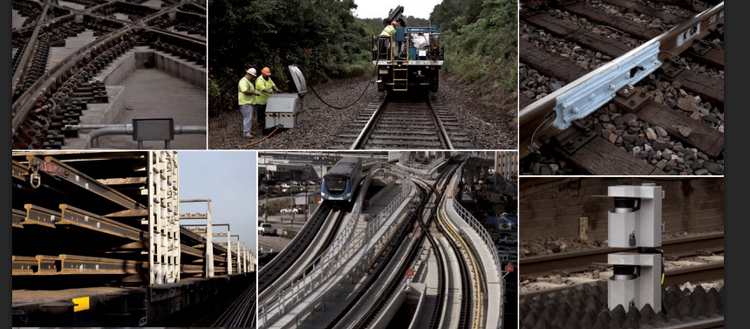
Flame heating is to directly heat the rail head by burning combustible gases (such as acetylene, propane, etc.) to generate high-temperature flames. The heated rail head needs to be cooled quickly to achieve the transformation of austenite to strengthening phases such as martensite or bainite. The cooling medium usually includes water, compressed air, water mist, etc. Different cooling media and cooling rates will have a significant impact on the quenching structure and performance. For example, water has a faster cooling rate, which can obtain a martensite structure with higher hardness, but it is easy to cause greater internal stress in the rail and even cracks; compressed air has a relatively slow cooling rate, which can obtain a bainite structure with better toughness, but the hardness improvement is relatively limited; water mist cooling has the advantages of both water and air cooling, and can balance hardness and toughness to a certain extent.
3. Process flow of quenching of rail head end
The process flow of quenching of rail head end generally includes the following main steps:
Rail pretreatment: Before quenching, the surface of the rail needs to be cleaned to remove impurities such as oil and rust to ensure heating uniformity and quenching quality. At the same time, the rails are straightened to ensure their stability during the quenching process.
Heating: According to the selected heating method, the rail head end is heated to the appropriate austenitizing temperature and maintained for a certain period of time to fully austenitize the structure. During the heating process, the heating temperature, heating time and heating area need to be accurately controlled to ensure that the rail obtains a uniform austenite structure.
Cooling: After the heating is completed, the rail head end is quickly immersed in the cooling medium for cooling. The cooling process also requires strict control of the cooling rate and cooling time to obtain the ideal quenching structure and performance.
Tempering (optional): For some rails with higher toughness requirements, tempering treatment is required after quenching. Tempering can eliminate quenching internal stress, adjust the balance between hardness and toughness, and further improve the comprehensive performance of the rail. The tempering temperature and time are reasonably selected according to the material and performance requirements of the rail.