


Rail Cross-Section Dimensions and Tolerance Standards
What are the design characteristics of the cross-sectional dimensions of national standard rails?
The cross-sectional dimension design of national standard rails balances versatility and structural stability, with core parameters meeting the diverse needs of domestic lines. The 60kg/m national standard rail has a cross-sectional height of 176mm, a rail base width of 150mm, and a rail head width of 73mm, adopting an I-shaped symmetrical structure to ensure uniform force transmission to sleepers. The rail head arc radius is designed to 300mm, which optimizes the wheel-rail contact area, reduces local wear, and extends service life. Cross-sectional dimensions are gradiently optimized according to rail models; key dimensions of 50kg/m, 60kg/m, and 75kg/m rails are proportionally adjusted to ensure compatibility with under-rail base plates, pressing plates, and other components. Tolerances are strictly controlled: cross-sectional height deviation ≤±1.5mm and rail head width deviation ≤±1mm, ensuring precise track geometric position and improving driving smoothness.

What are the differences in cross-sectional dimensions between foreign standard and national standard rails?
The cross-sectional dimensions of foreign standard rails are specially designed for regional operating characteristics, showing significant differences from national standards. The European UIC 60kg/m rail has a cross-sectional height of 172mm, 4mm lower than the national standard 60kg/m rail, with the same rail base width of 150mm but a thicker rail head (32mm) to enhance wear resistance. The American AAR 115RE rail (equivalent to 60kg/m) has a cross-sectional height of 178mm and a rail base width of 159mm, adapting to the sleeper spacing design of American heavy-haul lines. The rail head arc radius of foreign standard rails is mostly 250-300mm, and some high-speed rails adopt a compound arc design to optimize wheel-rail dynamic performance. Tolerance standards are stricter; for example, the cross-sectional height deviation of German DIN standard rails is ≤±1mm, and the rail head width deviation is ≤±0.8mm, which is higher than national standards, ensuring high-precision adaptation to foreign standard fastening systems.

What line problems can be caused by excessive tolerances in rail cross-sectional dimensions?
Excessive tolerances in rail cross-sectional dimensions will directly damage track adaptability and trigger a series of operational safety issues. Excessive cross-sectional height deviation (>±2mm) will cause uneven track elevation, resulting in jolting when trains pass, exacerbating wheel-rail impact and affecting riding comfort. Excessive rail head width deviation will change the wheel-rail contact position, leading to concentrated contact stress, accelerating rail wear and wheel tread damage, and shortening component service life. Non-compliant rail base width will cause poor fit with under-rail base plates, resulting in local suspension, uneven force leading to base plate deformation or fracture. Excessive tolerances will also affect the installation accuracy of fishplates, pressing plates and other components, leading to loose connections, easy rail displacement, and damaging gauge stability. Long-term use will cause "deviation accumulation", increasing line maintenance costs and even triggering safety accidents.
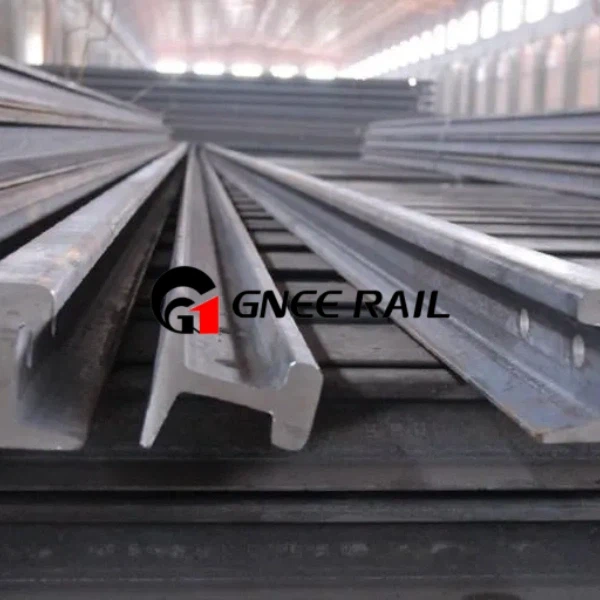
What are the key points of reinforced design for cross-sectional dimensions of rails in heavy-haul lines?
The cross-sectional dimensions of rails in heavy-haul lines (axle load ≥25t) need to be reinforced to improve load-bearing capacity and adapt to high-strength operational needs. The rail head thickness is increased by 2-3mm compared with ordinary line rails to enhance wear resistance and impact resistance, reducing wheel-rail contact fatigue damage. The rail web thickness is optimized to 16-18mm to improve cross-sectional bending stiffness and avoid excessive elastic deformation under heavy loads. The rail base width is appropriately widened (e.g., 75kg/m rail base width 180mm) to increase the contact area with under-rail base plates, reduce pressure per unit area, and protect the track foundation. The cross-sectional moment of inertia is increased by more than 15% compared with ordinary rails to ensure uniform load transmission and reduce local stress concentration. The rail head adopts a double-arc design to optimize the wheel-rail contact relationship, disperse contact pressure, and extend rail service life.
Why are the precision requirements for cross-sectional dimensions of high-speed rail rails more stringent?
The high smoothness requirements of high-speed railways (speed ≥250km/h) determine that rail cross-sectional dimensions must have extremely high precision. Wheel-rail interaction is intense when high-speed trains operate; cross-sectional dimension deviations will amplify vibrations, affecting driving smoothness and comfort. Therefore, the cross-sectional height deviation must be controlled within ≤±1mm, and the rail head width deviation ≤±0.8mm. High-precision dimensions can ensure perfect fit between rails and fastening systems, under-rail base plates and other components, uniform distribution of clamping force, and avoid component damage caused by excessive local stress. The precision of the rail head arc radius directly affects the stability of the wheel-rail contact point; a deviation of ≤±5mm can reduce wheel-rail lateral force and improve train operation safety. Dimensional accuracy can also ensure the smoothness of rail welded joints, reduce irregularity deviations at joints, and avoid strong impacts during high-speed operation. Strict precision requirements are the core foundation for achieving high speed, high smoothness, and high safety of high-speed railways.