


Material Modification and Corrosion Resistance Strengthening Technology for Different Corrosive Environments of Spring Clips
What is the direction of alloy element fine-tuning for the elastic strip base material 60Si2MnA?
The direction of alloy element fine-tuning for the elastic strip base material 60Si2MnA is to improve strength, toughness and fatigue resistance. The core is to accurately adjust the content of silicon, manganese, chromium, phosphorus, sulfur and other elements, and the fine-tuning range is strictly controlled within the national standard. Silicon is the core element to improve the elasticity and strength of spring steel. The silicon content of traditional 60Si2MnA is 1.50%-2.00%. After fine-tuning, the silicon content is controlled at 1.80%-2.00%, which further improves the hardenability of the steel while ensuring elasticity, making the overall performance of the elastic strip more uniform after quenching. Manganese can improve the strength and wear resistance of steel. The traditional content of 0.60%-0.90% is fine-tuned to 0.70%-0.90%, which enhances the anti-deformation capacity of the elastic strip and adapts to the large load effect of heavy-haul lines. A proper amount of chromium (0.10%-0.20%) is added. Chromium can form carbides with carbon in the steel, refine grains, improve the toughness and fatigue resistance of the elastic strip, and avoid microcracks in the elastic strip under vibration load. At the same time, the content of harmful elements such as phosphorus and sulfur is strictly reduced, the phosphorus content is controlled at ≤0.010%, and the sulfur content at ≤0.008%, far lower than the national standard requirement of ≤0.025%, which reduces grain boundary segregation caused by harmful elements and avoids brittle fracture of the elastic strip. The fine-tuning of these alloy elements is not a single adjustment, but a collaborative optimization of multiple elements, realizing the comprehensive improvement of strength, toughness and fatigue resistance on the premise of not changing the core performance of 60Si2MnA.
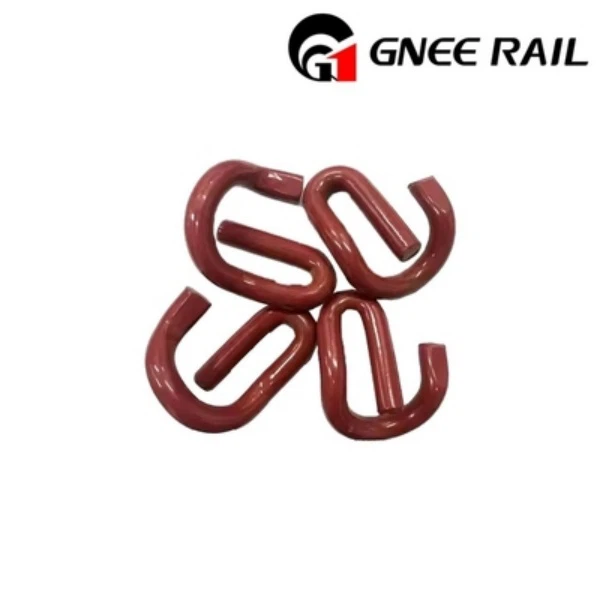
What processes are mainly used for the metallographic structure optimization of the elastic strip base material?
The metallographic structure optimization of the elastic strip base material mainly adopts three core processes: spheroidizing annealing, isothermal quenching and low-temperature tempering. The three processes cooperate in turn to optimize the metallographic structure of the base material into uniform tempered troostite and improve the comprehensive mechanical properties. Spheroidizing annealing is a pretreatment process for metallographic optimization. The 60Si2MnA round steel is heated to 780-800℃, kept warm for 3-4 hours and then cooled slowly, so that the pearlite structure in the steel is spheroidized to form uniform spherical pearlite, which reduces the hardness of the steel, improves plasticity and cold bending performance, provides good process performance for subsequent bending forming, and avoids cracks during forming. Isothermal quenching is the core strengthening process. After the blank after spheroidizing annealing is heated to 850-880℃ for austenitization, it is quickly put into a nitrate bath at 260-280℃ for isothermal cooling, so that austenite is transformed into lower bainite. The lower bainite structure has both high strength and high toughness, and can make the elastic strip bear repeated vibration load without fatigue fracture. Low-temperature tempering is a subsequent stabilization process. The elastic strip after isothermal quenching is heated to 200-220℃, kept warm for 2 hours and then air-cooled, transforming the lower bainite structure into tempered troostite, eliminating quenching internal stress, stabilizing the size and performance of the elastic strip, and avoiding deformation of the elastic strip due to internal stress release during service. The temperature and holding time of the three processes must be accurately controlled. Temperature deviation or insufficient holding time will lead to uneven metallographic structure and affect the final performance of the elastic strip.

What is the core process of corrosion resistance strengthening of elastic strips in coastal high-salt spray environment?
The core process of corrosion resistance strengthening of elastic strips in coastal high-salt spray environment is to adopt a double-layer surface treatment process of "dacromet coating + closed coating". This process can effectively isolate chloride ions in salt spray from contacting the elastic strip base material and improve the resistance to pitting and crevice corrosion. Dacromet coating is the first layer of protection. The elastic strip is immersed in dacromet coating liquid composed of zinc powder, aluminum powder, chromate, etc. After baking and curing, a silver-gray coating with a thickness of 8-10μm is formed on the surface of the elastic strip. The zinc powder in the coating is a sacrificial anode, which corrodes first to protect the base material. Aluminum powder can refine the coating structure and improve the compactness of the coating. Chromate can form a passivation film to further enhance the anti-corrosion effect. The closed coating is the second layer of protection. A layer of organic sealant with a thickness of 2-3μm is sprayed on the surface of the dacromet coating. The sealant can fill the tiny pores of the dacromet coating, form a seamless protective film, completely isolate the contact between chloride ions, water and the base material, and greatly improve the salt spray resistance of the coating. At the same time, the elastic strip is thoroughly degreased, derusted and phosphated before coating to ensure the surface of the base material is clean, improve the bonding strength between the coating and the base material, and avoid coating falling off. The elastic strip treated by this process can pass the neutral salt spray test for more than 1000h without red rust, can serve stably for more than 15 years in the coastal high-salt spray environment, and the corrosion resistance life is increased by 2 times compared with the traditional hot-dip galvanized elastic strip.

What is the difference in the corrosion resistance process of elastic strips between inland humid and mining dusty environments?
The difference in the corrosion resistance process of elastic strips between inland humid and mining dusty environments is reflected in three aspects: surface treatment method, coating hardness and protection focus. All are designed differently according to the corrosion characteristics of the environment and precisely adapt to the needs of different environments. The core of corrosion in inland humid environment is electrochemical corrosion caused by the contact of water and air, without obvious abrasion effect. The corrosion resistance process adopts the "electrogalvanizing + color passivation" process. Electrogalvanizing forms a zinc layer with a thickness of 10-12μm on the surface of the elastic strip to protect the base material through sacrificial anode. Color passivation forms a color passivation film on the surface of the zinc layer to close the pores of the zinc layer and improve the resistance to humid corrosion. This process has moderate cost, the anti-corrosion effect can meet the needs of inland humid environment, and the coating surface is smooth and not easy to absorb water. The corrosion in mining dusty environment includes not only electrochemical corrosion caused by humidity, but also abrasion caused by friction between dust particles and the surface of the elastic strip. The protection focus is "anti-corrosion + wear resistance". The corrosion resistance process adopts the "thermal spray zinc + ceramic coating" process. Thermal spray zinc forms a zinc layer with a thickness of 15-20μm on the surface of the elastic strip to achieve anti-corrosion protection. Ceramic coating forms an alumina ceramic coating with a thickness of 5-8μm on the surface of the zinc layer. The ceramic coating has a hardness of more than HV800, which can effectively resist the abrasion of dust particles and avoid the zinc layer losing its anti-corrosion effect due to wear and falling off. In addition, the coating bonding strength of mining elastic strips is required to be higher. The surface of the elastic strip needs to be sandblasted and roughened before coating to improve the bonding force between the coating and the base material, while inland elastic strips only need conventional phosphating treatment. The adaptation of the two processes enables the elastic strip to achieve a balance between anti-corrosion and performance in different environments, avoiding cost waste caused by excessive protection.
What are the synergistic effects of material modification and surface corrosion resistance strengthening of elastic strips?
Material modification and surface corrosion resistance strengthening of elastic strips do not exist independently, and the two show a high degree of synergistic effect. The core is "the improvement of base material performance as the foundation and surface protection as the guarantee", which jointly improve the comprehensive service performance of elastic strips. Material modification improves the strength, toughness and fatigue resistance of the elastic strip base material through alloy element fine-tuning and metallographic structure optimization, enabling the elastic strip to bear the repeated vibration load of the line and avoid fatigue fracture caused by insufficient base material performance, which provides a stable base material foundation for surface corrosion resistance strengthening. If the base material itself has poor toughness and produces microcracks under vibration, it will lead to coating cracking and loss of anti-corrosion effect. Surface corrosion resistance strengthening isolates the contact between corrosive media and the base material through differentiated surface treatment processes, protects the metallographic structure and alloy composition of the base material from corrosion, avoids the decrease of strength and toughness of the base material due to corrosion, and ensures that the effect of material modification can be maintained for a long time. Without surface protection, the modified base material will rust quickly in the corrosive environment, and its excellent mechanical properties cannot be exerted. At the same time, the surface hardness of the elastic strip is improved after material modification, which can enhance the bonding force with the coating and avoid the coating falling off due to the deformation of the base material under vibration load. The existence of the surface coating can also reduce the stress concentration on the surface of the elastic strip and further improve the fatigue resistance of the elastic strip. In addition, the synergistic effect of the two enables the elastic strip to meet the requirements of mechanical properties and corrosion resistance at the same time under different working conditions and corrosive environments, greatly prolongs the service life of the elastic strip, reduces the frequency of maintenance and replacement, and lowers the track operation cost.