


Matching Principle of the Dynamic-Static Stiffness Ratio of Rail Pads with the Stability of High-Speed Train Operation
Why does the running stability of high-speed trains impose strict requirements on the dynamic-static stiffness ratio of under-rail pads?
High-speed trains operate at high speeds, with high-frequency (10-50Hz) and small-amplitude dynamic loads between wheels and rails. If the dynamic-static stiffness ratio of the pad is excessively high (e.g., >1.5), it means the dynamic stiffness is much higher than the static stiffness-under high-frequency dynamic loads, it behaves as a "hard support," with a sharp decline in vibration reduction performance. Wheel-rail impact vibration is directly transmitted to the track bed, reducing train running stability and passenger comfort. If the ratio is excessively low (e.g., <1.1), the pad is prone to excessive deformation under dynamic loads, leading to unstable track geometry, which also affects train running stability and even endangers traffic safety.

What material and structural factors mainly affect the dynamic-static stiffness ratio of under-rail pads?
In terms of materials, rubber pads typically have a dynamic-static stiffness ratio of 1.3-1.5-due to the viscoelastic properties of their molecular chains, energy loss occurs under dynamic loads, and stiffness increases slightly; polyurethane pads have a ratio as low as 1.1-1.2, with a more stable molecular structure and small difference between dynamic and static stiffness. Structurally, the porosity of the pad is critical-porous structures can reduce the ratio, but excessively high porosity leads to insufficient static stiffness; the thickness and shape of the pad also affect the ratio-thickening the pad reduces the ratio, and special-shaped structures (e.g., grooves, bosses) optimize stress distribution under dynamic loads, making the dynamic-static stiffness ratio more uniform.

What chain negative impacts does an excessively high dynamic-static stiffness ratio have on high-speed tracks?
An excessively high ratio results in insufficient dynamic vibration reduction performance of the pad: first, it causes increased dynamic wheel-rail forces, exacerbating wear and fatigue of rails and wheels. Second, high-frequency vibration accelerates track bed hardening (ballastless tracks) or ballast pulverization (ballasted tracks), reducing the overall stability of the track. In the long term, vibration is transmitted to bridge or tunnel structures, triggering structural resonance and affecting the service life of infrastructure. These chain reactions not only reduce train running stability but also significantly increase track maintenance costs.
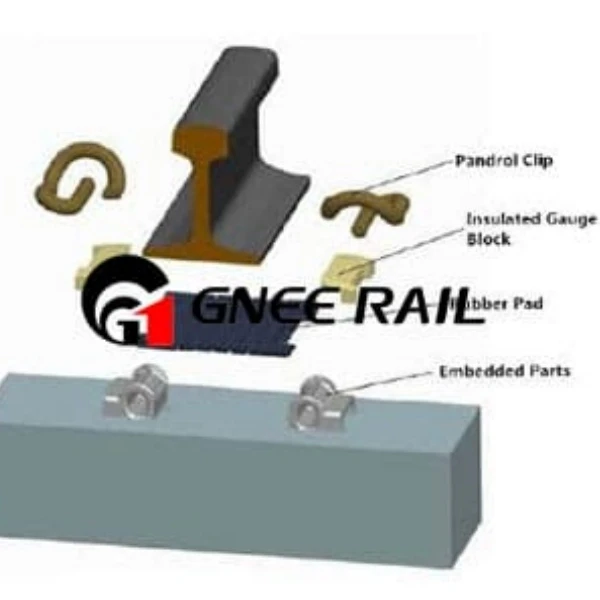
How are the design values of the dynamic-static stiffness ratio of under-rail pads graded to adapt to high-speed trains of different speeds?
According to the speed grades of high-speed trains, the dynamic-static stiffness ratio adopts a "graded design": for high-speed lines with a speed of 250km/h, the design value is 1.2-1.3, balancing stability and vibration reduction; for 300km/h lines, the design value is 1.15-1.25, focusing on improving dynamic vibration reduction performance; for lines with a speed of 350km/h and above, the design value is strictly controlled at 1.1-1.2, requiring minimal stiffness change of the pad under high-frequency dynamic loads to ensure wheel-rail contact stability and maximize train running stability. This graded design is precisely matched to the dynamic load characteristics of trains, a key technology in high-speed track design.
How to quickly detect whether the dynamic-static stiffness ratio of under-rail pads meets the standard through the "drop weight test" on-site?
A drop weight tester for dynamic-static stiffness of track pads is used, which can simulate the dynamic load of high-speed trains to separately measure the static and dynamic stiffness of the pad. Static stiffness measurement: apply a constant static load (e.g., 10kN), record the pad deformation, and calculate the static stiffness. Dynamic stiffness measurement: impact the pad with a drop weight at a set frequency (e.g., 30Hz) and impact energy, record the dynamic deformation, and calculate the dynamic stiffness. The ratio of the two is the dynamic-static stiffness ratio. If the measured value exceeds the design graded range, the pad performance is substandard, and it is necessary to replace it with an adaptive pad to ensure the stable operation of high-speed trains.