


Matching Calculation Method for Anchorage Depth of Rail Spikes and Sleeper Bearing Capacity
Why is insufficient anchoring depth of spikes a major cause of sleeper cracking under tension?
Insufficient anchoring depth of spikes will result in the anchoring force being far lower than the design value. The pulling force generated during train operation will be concentrated on the anchorage opening of the sleeper. The anchorage opening of the sleeper is a stress concentration area. When the anchoring depth is insufficient, the pulling force cannot be evenly transmitted to the inside of the sleeper through the spike, but is concentrated in a small area of the anchorage opening. The concrete or wood material in this area will produce radial cracks due to bearing excessive local stress. The cracks will continue to expand with train vibration, eventually leading to the cracking of the sleeper anchorage opening under tension and the complete loss of anchoring capacity. At the same time, the spike will also loosen and tilt due to insufficient anchoring force, further exacerbating the damage to the sleeper.
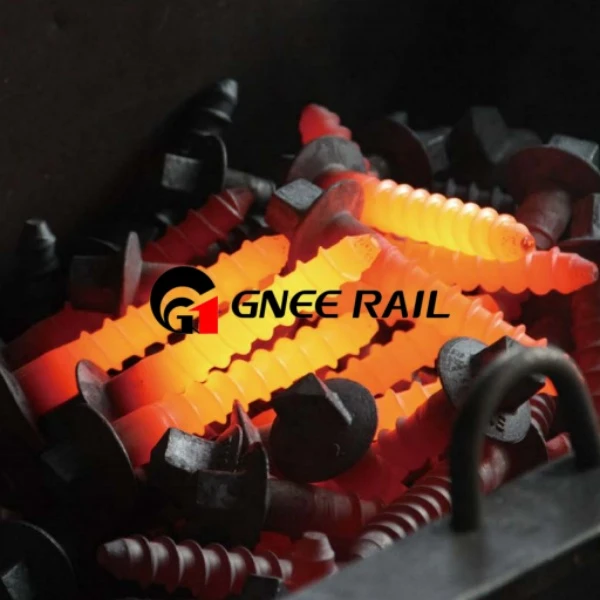
Why is there a significant difference in the anchoring depth of spikes between concrete sleepers and wooden sleepers, and what is the usual difference?
Concrete sleepers have high material hardness and compressive strength but high brittleness, and the anchoring depth of spikes is usually 150-180mm; wooden sleepers have good toughness and low compressive strength, and the anchoring depth of spikes is usually 100-120mm. The difference between the two is about 50mm. Concrete sleepers require a deeper anchoring depth to disperse the pulling force of the spike by increasing the contact area and avoid brittle fracture of the concrete at the anchorage opening. Wooden sleepers have good toughness. After the spike is embedded, it will form a tight mechanical interlock with the wood, and a relatively shallow anchoring depth can obtain sufficient anchoring force. If the anchoring depth of the wooden sleeper is too deep, it will cut too many wood fibers, which will instead reduce the integrity of the wooden sleeper and lead to the fracture of the wooden sleeper. Therefore, the difference in anchoring depth between the two types of sleepers is determined by their material properties.

Which bearing capacity index of the sleeper is the core basis for calculating the anchoring depth of spikes, and why?
The calculation of the anchoring depth of spikes must take the "ultimate pull-out bearing capacity" of the sleeper as the core basis. This index refers to the maximum load that the sleeper can resist the spike pull-out without being damaged. The design goal of the anchoring depth is to make the anchoring force of the spike less than the ultimate pull-out bearing capacity of the sleeper, with a safety factor of more than 2 times reserved. If the compressive bearing capacity of the sleeper is taken as the basis, it cannot reflect the performance of the sleeper under pull-out load, which may lead to insufficient design of the anchoring depth. The ultimate pull-out bearing capacity comprehensively considers the material strength of the sleeper, the cross-sectional size of the anchorage opening and the anchoring method, and can truly reflect the constraint capacity of the sleeper on the spike. Therefore, calculating the anchoring depth based on this index can ensure the safety of the anchoring system.
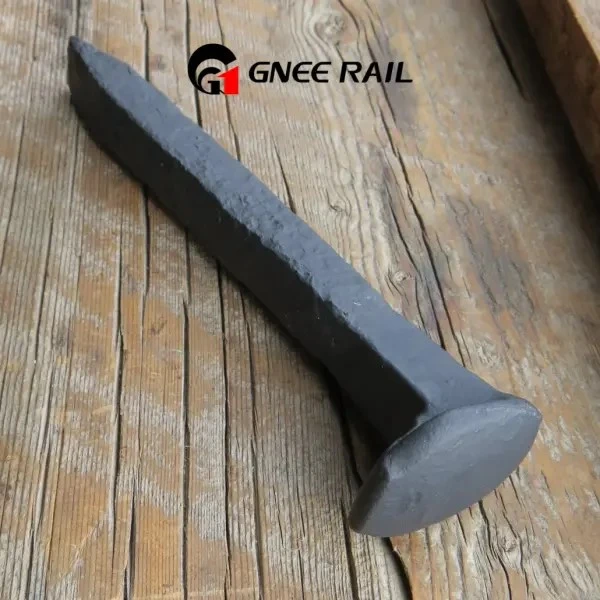
Why do concrete sleepers on heavy-haul lines need to increase the spike anchoring depth by 20mm compared with ordinary-speed lines?
Trains on heavy-haul lines have large axle loads, and the pulling force borne by the spikes can reach 1.8 times that of ordinary-speed lines, so the requirements for anchoring force are greatly increased. Increasing the anchoring depth by 20mm can increase the contact area between the spike and the concrete sleeper by about 12%, and the anchoring force can be increased by 10%-15% synchronously. The anchoring depth of 150mm for ordinary-speed lines can already meet the requirements of its pulling force, but under heavy-haul lines, the anchoring force at this depth will be insufficient, and the spike is prone to loosening. After increasing the anchoring depth, the anchoring force of the spike can exceed the actual pulling force of heavy-haul lines, meeting the safety factor requirements. At the same time, increasing the anchoring depth can also disperse the stress at the sleeper anchorage opening, reduce the risk of the sleeper being cracked under tension, and adapt to the harsh load conditions of heavy-haul lines.
During on-site construction, how to control the anchoring depth of spikes with simple tools to avoid deviations?
The most commonly used simple tool to control the anchoring depth of spikes during on-site construction is a "depth positioning fixture", which can adjust the length according to the design anchoring depth and be fixed on the spike. When installing the spike, the bottom of the fixture is attached to the sleeper surface, and the depth of the spike embedded in the sleeper is the design depth, which can effectively avoid being too deep or too shallow. For sulfur anchoring, a scale line of the anchoring depth can be drawn on the spike with paint as a reference for installation. For resin anchoring, a special anchoring sleeve can be used. The length of the sleeve is the design anchoring depth. After the spike is inserted into the sleeve, the depth can be ensured to be accurate. After construction, it is necessary to randomly select spikes and measure the actual anchoring depth with a steel tape. The deviation must be controlled within ±5mm. If the deviation exceeds, the anchoring must be re-performed.