


Indian Fishplate Steel Chemical Composition
The Indian Railways standard (IRS T-1/57) specifies the chemical composition requirements for fishplate steel. The main chemical composition of this special type of steel is as follows:
a. Carbon (C): The carbon content in steel influences its strength and hardness. In the specified range of 0.30–0.42%, carbon contributes to the steel's ability to withstand applied loads and resist deformation. Higher carbon content typically results in increased hardness and strength.
b. Manganese (Mn): Manganese serves as a deoxidizer and desulfurizer in steel production and also helps improve its strength and toughness. The maximum manganese content allowed in fishplate steel is 0.6%, ensuring sufficient manganese for these purposes without exceeding the specified limit.
c. Silicon (Si): Silicon is commonly added to steel to improve its deoxidation, strength, and hardness. However, excessive silicon content can lead to brittleness. The Indian Railways standard specifies a silicon content of not more than 0.15% to balance these considerations effectively.
d. Sulphur (S) and Phosphorus (P): Sulphur and phosphorus are impurities in steel that can adversely affect its mechanical properties, particularly toughness and ductility. Keeping their content low is crucial to ensure the desired performance of the steel. The specified limit of not more than 0.06% for both sulphur and phosphorus helps minimize their detrimental effects on fishplate steel.
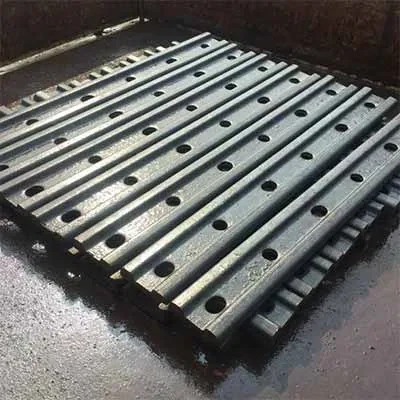
This composition ensures that the steel used for fishplates meets the necessary strength, toughness, and other mechanical properties required for railway applications. By adhering to these specifications, manufacturers can produce high-quality fishplates that meet the rigorous standards and safety requirements of the Indian Railways.