


Specifications and weight
The nominal weight of light rails is less than or equal to 30kg per meter. Common specifications include 30kg/m, 24kg/m, 22kg/m, 18kg/m, 15kg/m, 12kg/m, 8kg/m, etc. The materials are mostly Q235 and 55Q. The nominal weight of heavy rails is greater than 30kg per meter. For example, the commonly used specifications for railway trunk lines are 50kg/m, 60kg/m, and even heavier 75kg/m. The materials include U71MN U75V, etc.
| Rail Type | SIZE(mm) | ||||||||
| height | bottom width | head width | waist depth | ||||||
| Light rail | 8KG | 65 | 54 | 25 | 7 | ||||
| 9KG | 63.5 | 63.5 | 32.1 | 5.9 | |||||
| 12KG | 69.85 | 69.85 | 38.1 | 7.54 | |||||
| 15KG | 79.37 | 79.37 | 42.86 | 8.33 | |||||
| 18KG | 90 | 90 | 40 | 10 | |||||
| 22KG | 93.66 | 93.66 | 50.8 | 10.72 | |||||
| 24KG | 107 | 90 | 51 | 10.9 | |||||
| 30KG | 107.95 | 109.95 | 60.33 | 12.3 | |||||
| Heavy rail | 38KG | 134 | 114 | 68 | 13 | ||||
| 43KG | 140 | 114 | 70 | 14.5 | |||||
| 45KG | 145 | 126 | 67 | 14.5 | |||||
| 50KG | 152 | 132 | 70 | 15.5 | |||||
| 60KG | 176 | 150 | 73 | 16.5 | |||||
Mechanical properties and manufacturing process
The quality requirements of light rails are relatively low, and the main tests are chemical composition, tensile strength, hardness, and drop hammer test. Its manufacturing process is relatively simple. It is mainly made of carbon steel, and a small part uses low-alloy steel. Some light rails used in special environments (such as mines and forest areas) will add appropriate amounts of copper, chromium, phosphorus, vanadium and other alloy elements to the steel to enhance corrosion resistance. Heavy rails have strict quality requirements. In addition to ensuring the chemical composition, they also need to test mechanical properties, drop hammer tests, and acid leaching low-magnification structures. In order to withstand the pressure, impact loads, and friction during train operation, heavy rails usually use medium-carbon multi-element alloying, and improve strength, toughness, wear resistance, and fatigue resistance through quenching and other processes to meet the heavy-load and high-speed requirements of railways.

Application scenarios
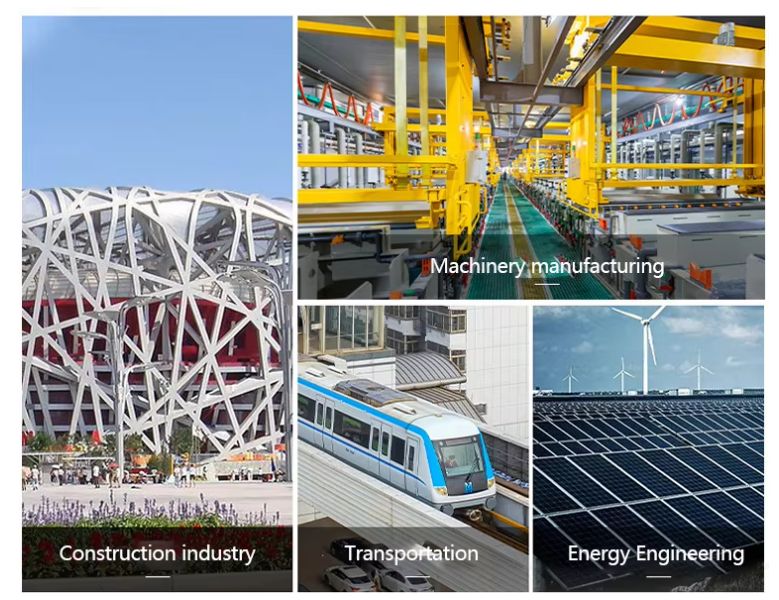
Light rails are suitable for lines with small transportation volumes and slow speeds, such as internal transportation lines in forest areas and mining areas, used to transport wood, ore, etc.; material transportation tracks inside factories to facilitate cargo transfer; and temporary transportation lines at construction sites to meet material handling during construction. Heavy rails are used for railway trunk lines with large transportation volumes and high speeds, such as passenger dedicated lines connecting cities, where high-speed trains run; heavy-duty railways are used for long-distance transportation of bulk commodities and withstand the crushing of large axle-load trains; subway lines in urban rail transit carry a large number of passengers every day, and heavy rails are needed to ensure safe operation.
Cost-effectiveness
Light rails are lightweight, have relatively simple materials and manufacturing processes, and have low raw material and manufacturing costs. They can effectively reduce construction costs in scenarios where track load requirements are not high. However, due to their limited load-bearing capacity, they cannot be used in heavy-load and high-speed scenarios. In the long run, maintenance costs may increase due to frequent replacement. Heavy rails are more expensive, but their excellent performance can withstand heavy loads and high-speed operation, reduce maintenance frequency, and can reduce the cost of the entire life cycle in long-term use, especially