


There are several differences between heavy rails and crane rails, which are as follows:
Definition and Scope
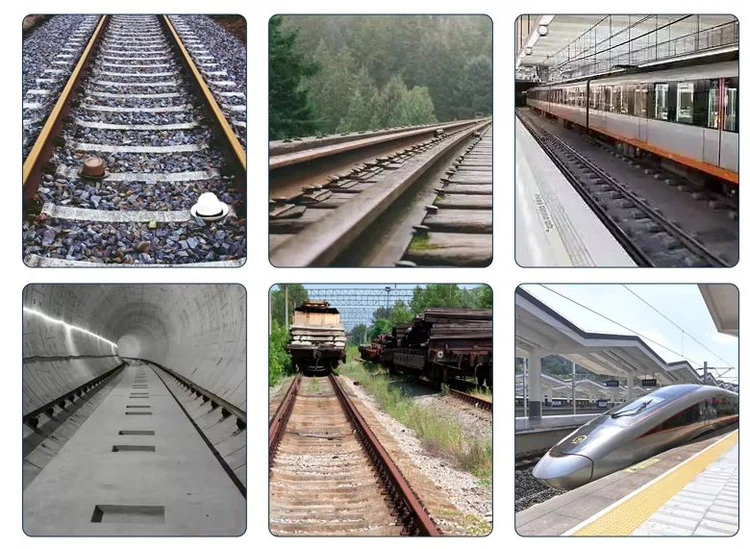
Heavy Rails: Heavy rails refer to rails with a nominal weight per meter greater than 30kg, including general rails used for laying railway main lines, special lines, curves, tunnels, etc., as well as crane rails. Heavy rails are applied to inter-regional railways, intercity railways, urban area railways, subways and other railway tracks.
Crane Rails: Crane rails are special cross-section rails used as the running tracks for the gantry and trolley of cranes, and they are a special type of heavy rails.
Appearance Dimensions
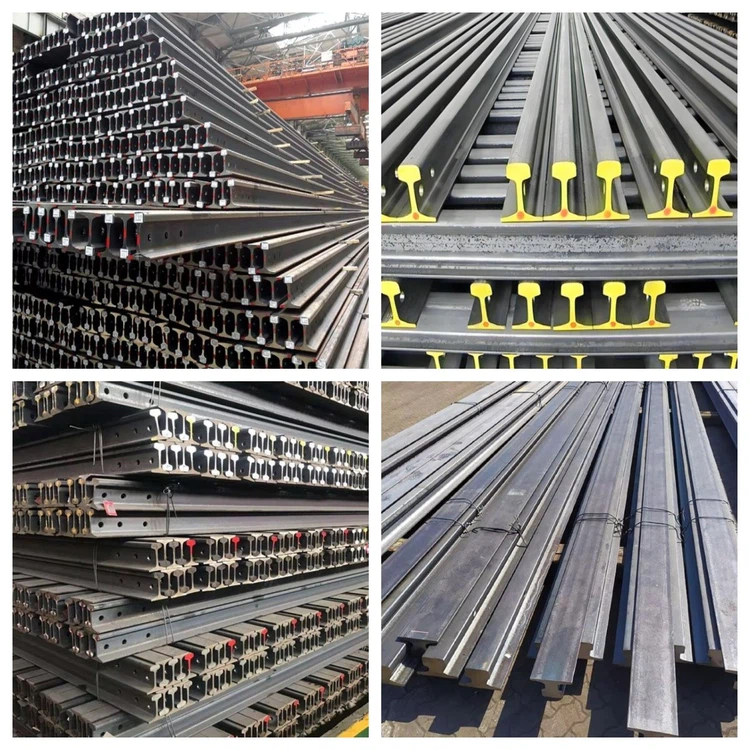
Heavy Rails: Usually, heavy rails have a relatively large height and a more standard I-shaped cross-section to meet the operation requirements of railway trains. The size ratios of the head, web and bottom are relatively balanced. Although the specific dimensions of heavy rails of different specifications vary, as a whole, they are designed to meet the requirements of the stability and load-bearing capacity of railway tracks.
Crane Rails: The height of crane rails is relatively low, but the width of the head and the thickness of the web are relatively large. This design is to better withstand the pressure and concentrated loads of the crane wheels and to adapt to the frequent lifting and moving operations of cranes. For example, common models include QU70, QU80, QU100, QU120, etc., and the number after QU represents the width of the track head.
Performance Requirements
Heavy Rails: Heavy rails need to bear the pressure, impact loads and friction during the operation of trains. They are required to have sufficient strength, toughness and wear resistance to ensure the safe operation of the railway and a long service life. At the same time, a high level of smoothness is required to reduce the vibration and noise during the operation of trains.
Crane Rails: In addition to having a certain degree of strength and toughness, crane rails place more emphasis on local compressive strength and fatigue resistance. Because when the crane is in operation, the pressure of the wheels on the track is concentrated and changes frequently. The track needs to be able to withstand this special load condition to prevent problems such as local wear, deformation or fatigue cracks.
Manufacturing Process
Heavy Rails: The production process of heavy rails is relatively complex. They are usually made of high-carbon low-alloy steel. During the production process, strict rolling, heat treatment and other processes are required to ensure the uniformity of their overall performance and the stability of their quality. At the same time, strict control is required for the surface quality and geometric dimensions of the rails to meet the laying and operation requirements of railway tracks.
Crane Rails: The chemical composition and basic manufacturing process of crane rails are similar to those of railway rails, but in some production links, more attention may be paid to the quality control of key parts such as the track head and web to ensure that they can meet the special use requirements of cranes. For example, special heat treatment or surface strengthening treatment may be carried out on the track head to improve its hardness and wear resistance.

Specification Identification
Heavy Rails: The specifications of heavy rails are expressed by the nominal weight per meter, such as 38kg/m, 43kg/m, 50kg/m, 60kg/m, 75kg/m, etc.
Crane Rails: Common specifications include QU70, QU80, QU100, QU120, etc., and the number after QU represents the width dimension of the track head.
Application Scenarios
Heavy Rails: They are mainly used in the railway transportation field, including national railway main lines, local railways, industrial and mining railways, etc. They are the main components of railway tracks and are used to bear the weight of trains and ensure the smooth operation of trains.
Crane Rails: They are specifically applied to the running tracks of various types of cranes, such as the overhead traveling cranes and gantry cranes in factory workshops, as well as the cranes in ports, mines and other places, providing stable running tracks for cranes so that they can accurately lift and transport goods.