


Control standards for the shape and position tolerance of pressure plates and the uniformity of rail clamping
What impact will the out-of-tolerance flatness of the pressure plate have on clamping?
If the flatness exceeds the tolerance, it will cause the pressure plate and the rail bottom to be partially suspended, and the clamping force will be concentrated at the contact point. This will cause local plastic deformation at the bottom of the rail, and long-term use is prone to cause cracks and fractures.

How does parallelism deviation affect the performance of the press plate in use?
Parallelism deviation will cause the pressure plate to tilt, with excessive force on one side and insufficient force on the other side. This will disrupt the uniformity of clamping, accelerate the fatigue of fasteners and the wear of the rail bottom.

What is the significance of verticality tolerance for the installation of pressure plates?
The verticality ensures that the pressure plate adheres closely to the edge of the rail bottom to prevent installation deviation. Qualified verticality can prevent the loosening of the pressure plate caused by lateral force and enhance the overall clamping stability.
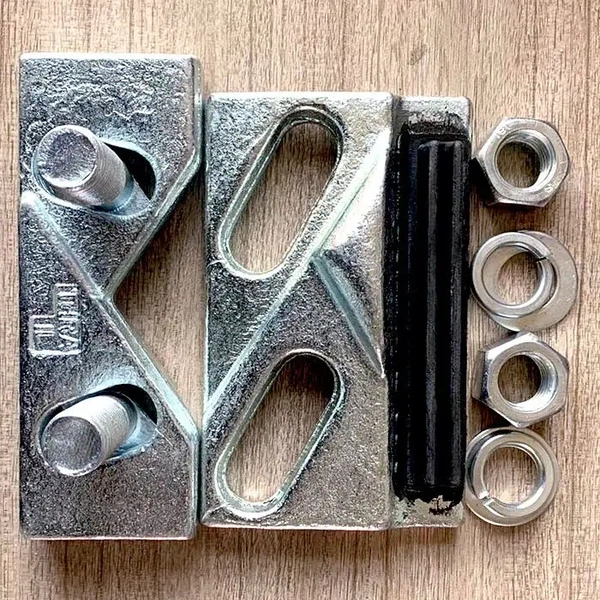
What track diseases can be caused by out-of-tolerance shape and position tolerances?
Over-tolerance can lead to stress concentration and deformation at the bottom of the rail, causing cracks in the rail waist and an increase in gauge. At the same time, it will accelerate the loosening of fasteners, reduce the geometric stability of the track, and increase maintenance costs.
How to control the shape and position tolerance of the pressure plate to ensure uniform clamping?
Adopting high-precision processing techniques, the flatness, parallelism and perpendicularity are strictly controlled. When installing, use a torque wrench to tighten evenly and ensure that the pressure plate is fully in contact with the rail bottom.