


A rail fish plate is a precision-machined steel bar that matches the rail web contour and bolt-hole pattern to securely join two rails into a single structural unit, preserving track stiffness continuity where continuous welded rail is not used. GNEE RAILWAY RAILWAY provides fish plates for international standards including GB, UIC, DIN536, QU, JIS, AS1085, BS11, and AREMA/ASCE, with optional surface treatments such as black, zinc-coated, or hot-dip galvanized for corrosion resistance.
Types of Rail joint
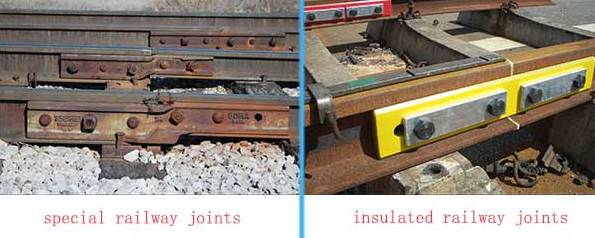
Rail joints are crucial components that connect rail ends, ensuring track continuity, strength, and safety. Main types include common (supported/suspended), insulated, and compromise joints, often secured by 4-hole or 6-hole fishplates. They are classified by position (square, staggered), performance (insulated, welded), or purpose (bridge, joggled).

| Joint Type | Key Specification / Description |
|---|---|
| Standard Rail Joint (Fish Plate) | - Profile: Matches the rail section (e.g., UIC 60, 136RE). - Length: Typically 600mm or 800mm per side. - Holes: 4 or 6 bolt holes per bar. |
| Insulated Rail Joint (IRJ) | - Material: Steel core with composite insulating end-posts/plates, or full epoxy composite. - Electrical Resistance: >10⁸ Ω. |
| Compromise Rail Joint | - Design: Connects two different rail profiles (e.g., UIC 54 to UIC 60). - Profile: Each side is machined to match its respective rail section. |
| Joggled Rail Joint | - Feature: Has a depressed (joggled) section to allow continuous rail head surface for smoother wheel passage. |
| Bridge Rail Joint | - Design: Often reinforced (thicker web/longer length) for high-stress locations like bridge approaches. |
| Glued Insulated Joint | - Construction: Steel bars bonded to composite insulation using high-strength adhesive for improved durability. |
| Welded Rail Joint (for CWR) | - Type: Flash-butt or thermite weld. - Specification: Weld must meet mechanical properties equal to or greater than the parent rail. |
| Expansion Joint (for BRE) | - Feature: Allows controlled thermal expansion in long rails on bridges or in extreme temperature zones. |
What is a glued insulated joint? Why are glued insulated joints used in railways?
A glued insulated joint (GIJ) is a specialized, high-strength railway rail connector that uses adhesive, insulated fishplates, and high-tensile bolts to join rail ends while providing robust electrical insulation. These joints ensure structural integrity, prevent rail creep, and separate track circuits for signaling, making them essential for high-speed, heavy-haul, and continuous welded rails.
Why Glued Insulated Joints are Used in Railways?
Glued insulated joints (sometimes referred to as "Insulated Rail Joint", "GIRJ", or "Block joints") are chosen for several critical reasons:
- Track Circuiting & Signaling: They electrically isolate track sections, allowing for precise, automatic signaling, train detection, and broken rail identification.
- Mechanical Strength & Stability: They provide superior structural strength compared to traditional joints, reducing maintenance and enabling use in heavy-haul, high-density traffic lines.
- Resistance to Rail Creep: Because the fishplates are glued directly to the rail, they better withstand the longitudinal forces (rail creep) found in continuous welded rails (CWR).
- Long Service Life: They offer enhanced durability, reduced wear and tear, and consistent, long-term insulation compared to older, non-glued alternatives.
How often should the insulation of glued insulated joints be checked?
Insulation on glued insulated rail joints (G3/G4) should be inspected regularly to prevent track circuit failures, with specific checks for resistance (targeting >25MΩ in dry conditions). Inspections are typically combined with tightening fish bolts, especially at the start of spring and end of summer.
Key inspection intervals and procedures for glued joints include:
- Initial Inspection: Test insulation resistance before insertion into the track.
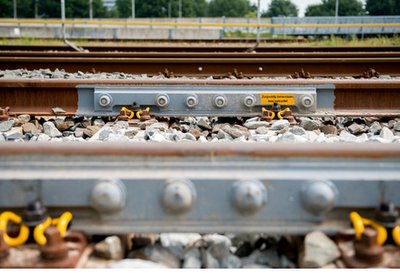
- Post-Installation: Re-check bolt tightness with a torque wrench approximately 30 minutes after installation.
- Routine Maintenance: Inspect during routine track maintenance, focusing on the integrity of the adhesive, insulating components (end posts, side channels), and bolt tightness.
- Seasonal Checks: Conduct thorough inspections during seasonal changes (spring/summer) to monitor for thermal damage or movement.
Founded in 2008, GNEE RAILWAY RAILWAY is a leading global manufacturer and supplier of railway components, specializing in high-quality rail fish plates (joint bars/splice bars) with strong production capacity and global service capabilities.
Hot Fish Plate from GNEE RAILWAY RAILWAY:
| Standard | Type | Length/Diameter | Weight /Material | |
| AREMA 2007 | 115RE | 4 hole-24" | 17.04Kg | 45# chemical |
| 115RE | 6 hole-36" | 25.56Kg | composition(%): | |
| 132-136RE | 4 hole-24" | 17.75Kg | C: 0.42-0.50 | |
| 132-136RE | 6 hole-36" | 26.63Kg | Mn: 0.50-0.80 | |
| UIC864 | UIC60 | 4 hole-630/Φ26 | 18.07Kg | Si: 0.17-0.37 |
| UIC60 | 4 hole-600/Φ28 | 17.47Kg | Cr: ≤0.25 | |
| UIC60 | 4 hole-630/Φ25 | 18.1Kg | P: ≤0.035 | |
| UIC54 | 4 hole | 14.34Kg | S: ≤0.035 | |
| UIC54 | 6 hole-800 | 19.94Kg | ||
| BS 47-1 | BS75R | 4 hole | 6.56Kg | |
| BS60A | 4 hole | 5.61Kg | ||
| BS80A | 4 hole | 6.5Kg | ||
| BS90A | 685.8/Φ26 | 13.23Kg | 50# chemical | |
| BS90A | 792.9/Φ26.2 | 15.34Kg | composition(%): | |
| BS100A | 4 hole | C: 0.62-0.70 | ||
| 90/91LB | 4 hole | 18.08Kg | Mn: 0.50-0.80 | |
| 90/91LB | 6 hole | 19.9Kg | Si: 0.17-0.37 | |
| AS | 50kg | 4 hole | 14.3Kg | Cr: ≤0.25 |
| 50kg | 6 hole | 19.5Kg | P: ≤0.035 | |
| S49 | 4 hole | 9.71Kg | S: ≤0.035 | |
Our rail fish plate portfolio is comprehensive and compliant with international standards including UIC, AREMA, BS, DIN, and GB, covering light rail (8kg-30kg), heavy rail (38kg-75kg), and crane rail (QU70-QU120) systems. We offer diverse types such as insulated joint bars, bulged fish plates, and compromise rail joints,with precise specifications (4-hole/6-hole, 24-inch/36-inch), ensuring excellent mechanical performance.We uphold strict quality control supported by ISO 9001:2015 certification, an in-house inspection center, and third-party audits by SGS and BV. Our one-stop service includes customization, production, packaging, and after-sales support, tailored to clients' project needs.