


Characteristics and functions of rail pads
- What types of under - rail pads are there? What are their respective characteristics?
The main types include rubber pads, plastic pads, and composite pads. Rubber pads have good elasticity, can effectively absorb the vibration and impact generated by train operation, and have obvious noise reduction effects, but their anti - aging performance is poor. Plastic pads have good corrosion resistance and wear resistance, with a relatively low cost, but their elasticity is relatively weak. Composite pads combine the advantages of rubber, plastic, and other materials, with both good elasticity and high strength and anti - aging properties, and are currently the most widely used type.

- How do the thickness and hardness of under - rail pads affect track performance?
The thickness of the pad affects the vertical adjustment and elasticity of the track. Thicker pads can provide greater elasticity and increase the comfort of the track, but may affect the stability of the track; thinner pads are the opposite, with good stability but weak elasticity. The hardness of the pad affects its bearing capacity and deformation. Pads with high hardness have strong bearing capacity and are not easy to deform, but their buffering performance is poor; pads with low hardness have good buffering performance, but are prone to permanent deformation under excessive loads. Therefore, the appropriate thickness and hardness need to be selected according to the actual needs of the track.
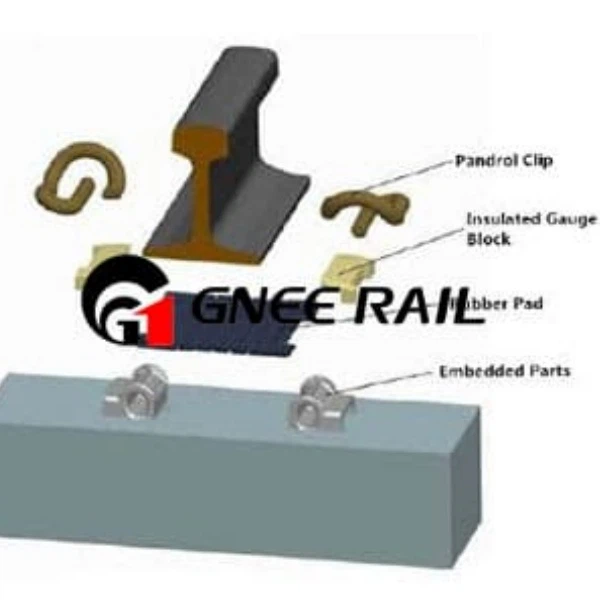
- How to select suitable under - rail pads on different railway lines?
On high - speed railways, due to the high speed and large load of trains, composite pads with good elasticity, strong durability, and high stability are required to meet the requirements for track smoothness and comfort during high - speed train operation. Heavy - haul railways pay more attention to the bearing capacity of the pads, and high - strength plastic pads or composite pads can be selected. Urban rail transit, due to frequent operation and strict requirements for vibration and noise, usually uses rubber pads or composite pads with excellent elasticity to reduce the impact on the surrounding environment.

- What damage phenomena will occur to under - rail pads during use?
Under the long - term load and vibration of trains, the pads will age and crack, resulting in a decrease in elasticity. The surface of the pads may be worn, and the thickness will decrease, affecting the vertical and elastic properties of the track. In high - temperature or low - temperature environments, the performance of the pads will change. For example, rubber pads become soft at high temperatures and hard and brittle at low temperatures, reducing the use effect of the pads. In addition, the pads may also shift or move due to improper installation.
- How to extend the service life of under - rail pads?
Select reliable and high - performance pad products, and reasonably select the type according to the characteristics and operating conditions of the railway line. During the installation process, ensure that the pads are laid flat and fit closely with the rails and sleepers to avoid gaps or displacement. Regularly check the condition of the pads and replace the aged and severely worn pads in a timely manner. Protect the pads, such as coating anti - aging coatings on the surface of rubber pads to reduce the impact of environmental factors on the pads. Optimize the track structure design, reasonably distribute the train load, and reduce the stress concentration of the pads.