


Anti-loosening and anti-corrosion technology for track fastening systems
What types of anti-loosening structures are commonly used for bolt connections?
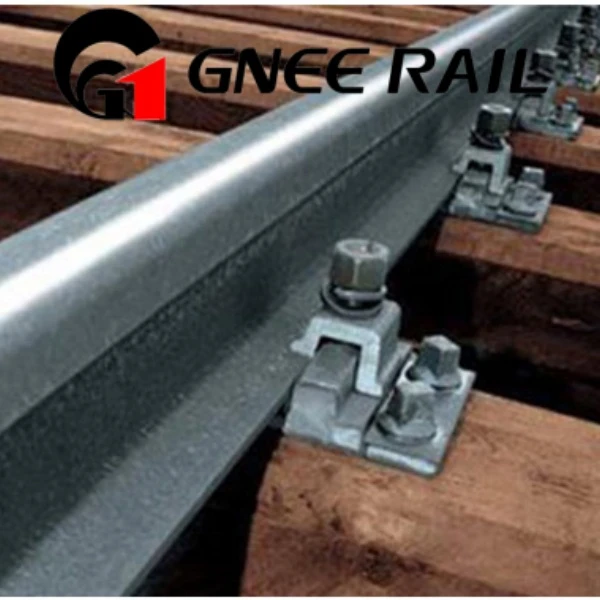
Double nuts are commonly used for anti-loosening of track bolts; they generate friction through the opposing force of two nuts to prevent thread loosening, suitable for high-load scenarios. Wedge washer anti-loosening uses the self-locking principle of wedge slopes to automatically compensate for gaps and maintain pre-tightening force under vibration, widely used in high-speed railway lines. There are also lock washers whose surface teeth can embed into the bolt and connector surfaces to form mechanical locking, with convenient installation and stable anti-loosening effect. Some heavy-haul lines adopt thread gluing, achieving permanent anti-loosening through adhesive curing.
What are the differences between surface anti-corrosion treatment methods for bolts?
Blackening treatment forms a black oxide film through oxidation, with low cost but average anti-corrosion effect, suitable for dry indoor environments or temporary use scenarios. Zinc plating (electro-galvanizing, hot-dip galvanizing) forms a zinc barrier; hot-dip galvanizing layers are over 50μm thick, with better corrosion resistance than electro-galvanizing, mostly used for ordinary railway bolts. Dacromet treatment forms a zinc-chromium coating, with salt spray resistance 3-5 times that of hot-dip galvanizing and no hydrogen embrittlement risk, suitable for high-strength bolts. Zinc diffusion coating forms an alloy layer through zinc atom diffusion, with strong bonding force, suitable for harsh outdoor environments.
What are the causes of anti-corrosion failure of elastic clips and corresponding measures?
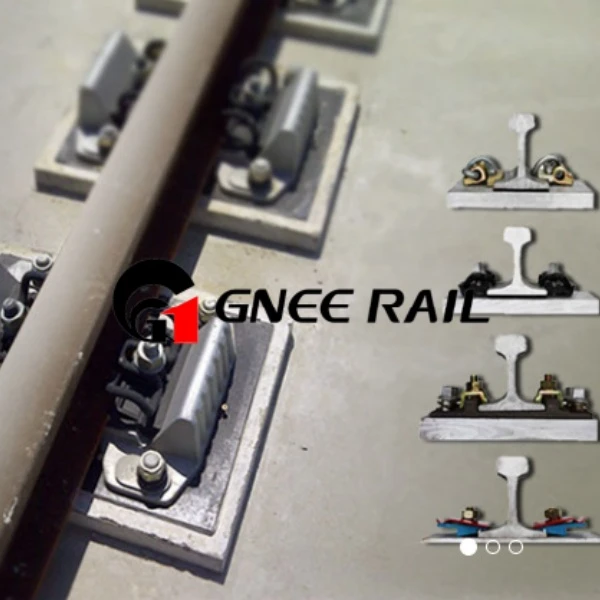
The anti-corrosion failure of elastic clips is mainly due to long-term outdoor exposure, erosion by ultraviolet rays and rainwater, leading to coating aging and peeling, and subsequent matrix rusting. Train vibration accelerates coating damage and further spreads rust. Countermeasures include using powder coatings, which have strong adhesion and good aging resistance, with a service life twice longer than traditional paint coatings. Phosphating treatment before coating can enhance the bonding force between the coating and the matrix. In coastal areas, stainless steel elastic clips or increased coating thickness can be used to strengthen anti-corrosion effects.
How do rail spikes resist stray current corrosion?
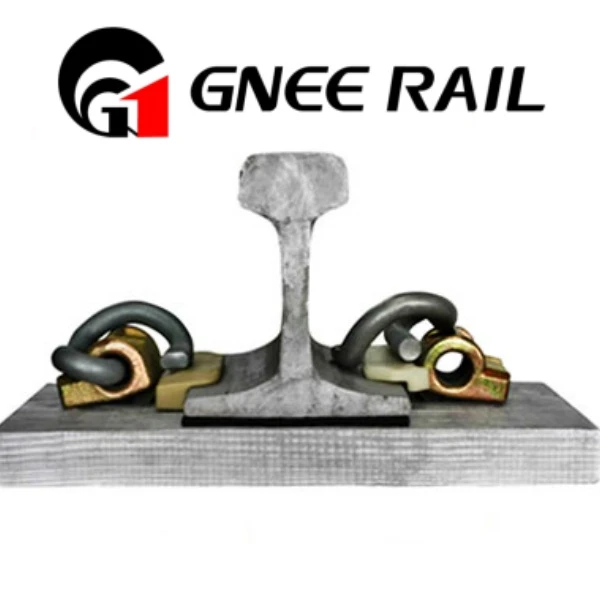
Stray current causes electrochemical corrosion of rail spikes, leading to surface rusting and strength reduction. Insulating anti-corrosion coatings can be applied on the spike surface to block the current conduction path, with epoxy resin coatings commonly used. Stainless steel spikes have good electrochemical stability and can significantly reduce corrosion rates. Optimizing track insulation design to reduce stray current generation, thereby lowering corrosion risks from the source. Regularly inspect the corrosion state of spikes and replace severely rusted ones in time to avoid failure.
What anti-corrosion measures are there for fish plates in humid environments?
Fish plates are prone to electrochemical corrosion in humid environments; hot-dip galvanizing can be used to form a dense zinc layer on the surface to isolate water and oxygen. Passivation treatment of fish plates forms an oxide film on the zinc layer surface to further improve corrosion resistance. Apply anti-rust grease on the contact surface between fish plates and rails during installation to reduce moisture intrusion. Weather-resistant steel fish plates containing alloy elements such as chromium and nickel can form a dense oxide layer for self-repair, suitable for rainy and humid areas.