


Rail spikes are fundamental yet critical components of railway fastening systems, used to secure steel rails to wooden or concrete sleepers, thereby ensuring track stability and operational safety. Common types include common spikes, screw spikes, and elastic spikes, all of which play essential roles in maintaining gauge and preventing track displacement.
As a professional supplier of railway fasteners, GNEE RAIL offers not only standard rail spikes but also a full range of fastening components such as screw spikes, gauge rods, fish bolts, rail clips, rail clamps, and rail pads etc. Custom production based on drawings is available, with services covering the global rail market.

Manufacturing Process of Rail Spikes
The production of rail spikes typically involves several key steps: material selection, cutting, heating, forming, heat treatment, and anti-corrosion finishing.
Material Selection: GNEE RAIL uses high-quality carbon steels such as Q235 or 45# steel. These materials provide an ideal balance of strength and toughness for long-term rail fastening applications.
Cutting: Steel bars are cut into blanks of the required spike length.
Heating: The blanks are then heated in medium-frequency furnaces or electric furnaces to temperatures ranging from 900°C to 1100°C, preparing them for plastic deformation.
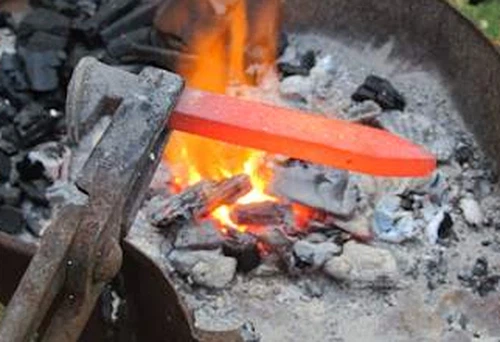
Forming: Heated blanks are forged into spike shapes using power hammers or die forging machines, followed by deburring to remove excess material.
Heat Treatment: The forged spikes undergo processes such as quenching and tempering or normalizing to enhance tensile strength, hardness, and fatigue life. This ensures the spikes remain secure and resist breakage under the vibratory stress of heavy rail traffic.

Surface Treatment: Post-heat treatment, the spikes are given anti-corrosion finishes like black oxide, hot-dip galvanizing, or Dacromet coating to enhance their weather resistance and durability.
Quality Control: Finished spikes undergo rigorous inspection procedures at GNEE RAIL, including dimensional tolerance checks, surface crack detection, tensile strength, and impact toughness tests, ensuring compliance with international standards such as AREMA, DIN, BS, and GB/T.

Global Standards and Customization
In the global rail industry, spike designs and standards vary by region. For example:
North America commonly uses AREMA-standard common spikes.
South America and Southeast Asia often prefer hot-dip galvanized screw spikes for enhanced corrosion protection.
GNEE RAIL can quickly adapt to customer-specific regional standards, offering tailored spike types and processing methods. We also support third-party certification from agencies such as SGS and BV upon request.
Related Products from GNEE RAIL
In addition to rail spikes, GNEE RAIL supplies a wide range of railway and industrial track accessories, including but not limited to:
- Rail clips: E-clips, SKL clips, Fast clips, Fist clips
- Gauge blocks, gauge rods, ballast mats
- Rail clamps, fishplates, fish bolts
- Sleeper bolts, rail nuts, threaded rods
- Crane rail clips, welded rail fixing components
- GB standard rails (43kg, 50kg, 60kg), crane rails (QU series), ASCE light rails
Whether for heavy-haul freight, urban transit, or crane rail applications, GNEE RAIL offers comprehensive solutions to meet your track fastening needs.